

Build Your Own Pass vs. Bestseller Bundles: Which Should You Choose?
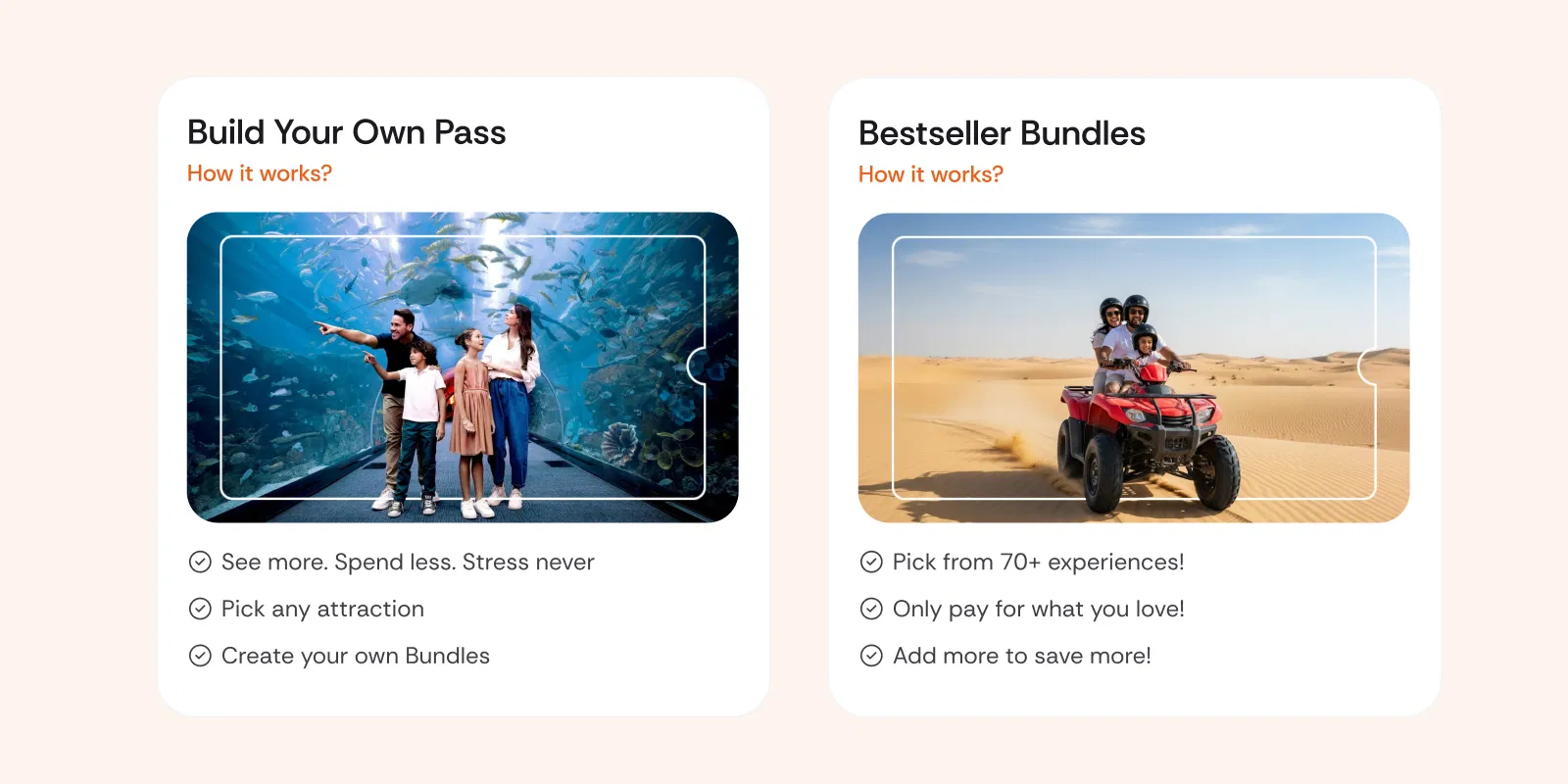
Build your own pass and a fixed bestseller bundle solve the same problem, combining several attractions into one purchase, in two different ways. A build-your-own pass lets you pick the specific attractions you want, so you only pay for what you'll actually use. A bestseller bundle is a pre-set combination someone else has already put together, usually built around the attractions most visitors choose, so there's nothing to configure. Build your own tends to suit travellers who either enjoy comparing options and shaping their own itinerary, or who already know exactly which attractions they want and just want to combine them efficiently. A fixed bundle tends to suit travellers who'd rather not decide at all and are happy trusting a popular, ready-made combination. Neither is the "better" product. The right one depends on how much you already know about your own itinerary and how much you enjoy the deciding part. You can try either approach directly on the London Tourist Pass, Dubai Tourist Pass, Melbourne Tourist Pass or Sydney Tourist Pass pages, or browse all Alike tourist passes if you're deciding between destinations first.
Why this comparison comes up
Most travellers researching a tourist pass eventually hit the same fork: some passes are sold as a fixed set of attractions, and some let you choose your own. Both are legitimate ways to package the same underlying idea: see more, book once, pay one price instead of several. But they ask something different of you as a traveller. A bundle asks you to trust that someone else's combination matches your trip. A build-your-own pass asks you to spend a few minutes deciding what belongs in yours.
Neither is inherently more valuable. A fixed bundle can be excellent value if it happens to match what you were already planning to see. A build-your-own pass can be excellent value if your list is different from the average visitor's, or if you already know precisely what you want and don't want to pay for anything else. The honest answer to "which is better" is that it depends on your list, not on the format.
How does build your own pass actually work?
A build-your-own pass works the way it sounds. Instead of buying a pre-set combination, you browse the available attractions for a destination, select the ones you want to visit, and the price adjusts to reflect that specific combination. You typically see the combined cost, and how it compares with paying for each attraction individually, before you commit to anything.
What's worth understanding is that this format genuinely works for two different kinds of travellers, and it's worth being honest about which one you are, because it changes how you should approach the page.
The traveller who likes shaping their own deal. Some travellers enjoy this part of planning. They like scrolling through what's available, weighing one attraction against another, and deciding what's worth including based on their own interests and budget. For this traveller, building the pass isn't a chore to get through before the "real" decision. It is part of the decision-making, and part of what makes the trip feel personalised before it's even started. The satisfaction comes from ending up with a combination that's genuinely theirs, not a generic one built for an average visitor who may have very different interests.
The traveller who already knows their list. Other travellers arrive with the opposite mindset. They've already decided, sometimes from a spreadsheet, sometimes just from a clear mental list, exactly which attractions they're visiting. For this traveller, build-your-own isn't about discovery at all. It's about efficiency: turning four or five separate purchases into one, seeing one combined price instead of doing the maths themselves, and moving on. The value here isn't personalisation for its own sake; it's speed and simplicity applied to a decision that's already been made.
Both are entirely valid ways to use the same product. A build-your-own pass doesn't assume you're the type who wants to browse for an hour, and it doesn't assume you've already made every decision either. It just gives you the flexibility to use it either way. If you're not sure yet which type you are for this particular trip, that's a useful thing to work out before you land on either a fixed bundle or a build-your-own list. Our guide on Who Should Buy a Tourist Pass is a good starting point if you haven't settled that question yet.
How does a bestseller bundle work?
A bestseller bundle removes the choosing step entirely. It's a fixed, pre-selected combination of attractions, usually the ones most visitors to a destination choose to see, sold at one set price. There's no configuration screen, no comparing one attraction against another, and no need to research what's included before you buy. You're trusting that the combination reflects what a typical visitor to that destination wants to see, and for a lot of first-time visitors, that assumption holds up reasonably well.
The trade-off is that a fixed bundle can't account for what makes your trip different from an average one. If you've already visited a city before and only want to tick off two attractions you missed last time, a bundle built for a first-timer will likely include things you don't need. If you have a specific interest, art, history, a theme park over a museum, a bundle optimised for broad appeal may not match it as closely as a list you'd choose yourself.
Build your own pass vs. bestseller bundle: side-by-side
| Build Your Own Pass | Bestseller Bundle | |
|---|---|---|
| How it works | You select individual attractions from what's available; price reflects your specific combination | Pre-set combination of attractions at one fixed price |
| Best for | Travellers with a specific list already in mind, or travellers who enjoy comparing options | Travellers who'd rather not decide, or first-timers happy to trust a popular combination |
| Time to decide | A few minutes of browsing and selecting | Almost none, it's a single, ready-made choice |
| Personalisation | High: only pay for what you'll actually visit | Low to moderate: fixed set, not tailored to your interests |
| Risk of paying for something you won't use | Low, if you select carefully | Higher, if the bundle includes attractions that don't interest you |
| Good fit for repeat visitors | Yes: easy to exclude attractions you've already done | Less so: bundles are usually built for first-time visitor patterns |
| Good fit for niche interests | Yes: build around a specific theme (art, history, family, adventure) | Not usually: bundles favour broad appeal over niche interest |
| Decision effort required | Some, upfront | Minimal |
| Value depends on | How well your selected list compares with buying those attractions individually | Whether the fixed combination matches what you'd have chosen anyway |
Neither column is objectively cheaper. A build-your-own pass is only good value relative to the specific attractions you include in it. The maths only works if you'd genuinely have visited those attractions anyway. A bundle is only good value if the fixed combination happens to overlap closely with your own plans. Our guide on How Tourist Pass Savings Work walks through that calculation with worked numbers, so you can check it against your own itinerary before deciding either way.
Traveller scenarios: which format fits?
Scenario 1: The researcher who's compared every attraction already. Say a traveller has spent the past two weeks reading about a destination's attractions, comparing entry costs, and narrowing down a list of five they're confident about. For this traveller, a bestseller bundle is likely to feel restrictive. It may include one or two attractions they've already decided to skip, and exclude something on their list entirely. A build-your-own pass lets them combine exactly the five they've chosen and see the combined cost against buying those five individually.
Scenario 2: The first-time visitor who wants a shortcut. Say a couple is visiting a major city for the first time, hasn't researched attractions in detail, and would rather have someone else's shortlist than build their own. A bestseller bundle removes that research step entirely. As long as the bundle reflects genuinely popular, well-regarded attractions for that destination, this traveller is likely to be satisfied without spending time comparing options.
Scenario 3: The returning visitor with a short, specific list. Say a traveller has visited a city before, has already seen the major landmarks, and this time only wants to visit two specific attractions they missed. A fixed bundle almost certainly won't fit. It's built for a first-time visitor's itinerary, not a two-attraction top-up. Build-your-own is the only format of the two that makes sense here, since it lets them combine just those two attractions into one purchase rather than buying two separate tickets.
Scenario 4: The traveller who enjoys the planning itself. Say a solo traveller treats building an itinerary as part of the trip's enjoyment: comparing options, reading about each attraction, and deciding what's worth including is part of how they get excited about the trip. For this traveller, a bestseller bundle skips a step they actually want to spend time on. Build-your-own gives them the browsing and comparing experience a fixed bundle removes.
Which one should you choose?
A few honest questions help settle this faster than any general rule.
Do you already know which attractions you want to see? If yes, build-your-own is almost always the better fit. You're not paying for anything you didn't choose, and you get one combined price instead of several separate bookings.
Are you happy trusting someone else's combination without checking it in detail? If yes, and you're a first-time visitor without strong preferences, a bestseller bundle can save you the research entirely.
Is your trip unusual in any way, a repeat visit, a niche interest, a short list, a specific budget? If yes, build-your-own gives you the flexibility a fixed bundle can't offer, since bundles are built around an average visitor, not your specific trip.
Do you enjoy comparing options as part of planning, or does it feel like a chore? Neither answer is wrong, but it points you in different directions. If you enjoy it, build-your-own rewards that time. If it feels like unnecessary effort, a well-regarded bestseller bundle exists precisely to remove that step.
If none of this settles it, a reasonable default is to check both: look at what a bestseller bundle for your destination includes, and separately price out a build-your-own list of the attractions you'd actually visit. Comparing the two directly, for your specific trip, tells you more than any general recommendation can.
A word on value, not just choice
Whichever format you lean toward, the format itself isn't what determines whether you save money. Your list is. A build-your-own pass full of attractions you were never going to visit anyway isn't better value than a bundle. It's the same mistake made with more flexibility. Before buying either, it's worth checking your list against the most common ways travellers overspend on passes. Our guide on Tourist Pass Buying Mistakes to Avoid covers this in more detail, including the specific mistake of assuming every pass is a fixed bundle when a build-your-own option might suit a shorter or more specific list better.
For travellers ready to compare both formats directly against a real destination, the London Tourist Pass, Dubai Tourist Pass, Melbourne Tourist Pass and Sydney Tourist Pass pages let you build your own combination and see the price before deciding, rather than choosing a format in the abstract.
Keep planning
Who Should Buy a Tourist Pass — and who shouldn't
How Tourist Pass Savings Work — the maths behind both formats
Tourist Pass Buying Mistakes to Avoid — how to check your list before you buy
Ready to see how either format looks for a real trip? The London Tourist Pass, Dubai Tourist Pass, Melbourne Tourist Pass and Sydney Tourist Pass pages let you build your own combination of attractions and see the price before you decide, so you can compare it against a bestseller bundle for the same destination directly.
Frequently Asked Questions (FAQ)
Is a build-your-own pass always cheaper than a bestseller bundle?
Is a build-your-own pass always cheaper than a bestseller bundle?
Can I switch from a bestseller bundle to build-your-own if the bundle doesn't fit my trip?
Can I switch from a bestseller bundle to build-your-own if the bundle doesn't fit my trip?
Do bestseller bundles include the most popular attractions in every destination?
Do bestseller bundles include the most popular attractions in every destination?
Is build-your-own only useful for travellers visiting many attractions?
Is build-your-own only useful for travellers visiting many attractions?
How do I know if my attraction list is a good fit for build-your-own instead of a bundle?
How do I know if my attraction list is a good fit for build-your-own instead of a bundle?
What if I don't know which attractions I want yet?
What if I don't know which attractions I want yet?