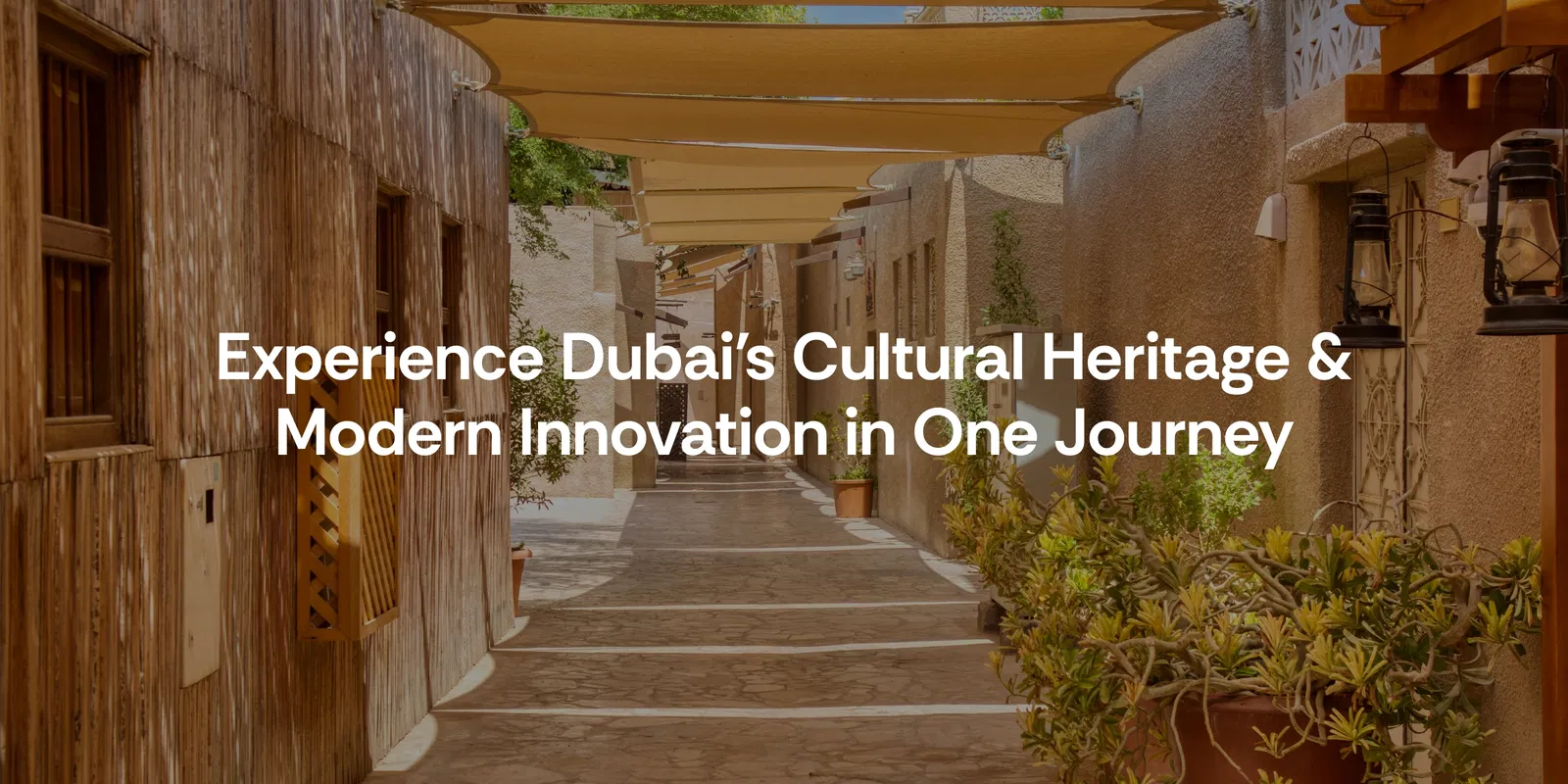
Experience Dubai's Cultural Heritage and Modern Innovation in One Journey
Dubai tells two stories simultaneously. One rooted in centuries-old traditions, the other pushing boldly into the future. For travellers seeking to understand this city's true character, the journey must include both.
Whether you're walking through narrow souks that smell of spices and oud perfume or standing before cutting-edge architecture, Dubai's heritage and modern innovation work together seamlessly. This guide helps you experience both sides in a single trip.
Why Dubai culture and traditions matter to modern travellers
Understanding Dubai culture and traditions reveals the deeper story behind this remarkable city's transformation. The connection between past and present shapes how Dubai welcomes visitors today.
The pearl diving and spice trading era
Dubai was a trading post built on pearls, spices, and Bedouin merchant ingenuity. That heritage remains woven into the city's fabric.
The traditional way of life teaches practical lessons: resourcefulness, hospitality, and respect for community. When you experience the Dubai old city tour attractions, you're learning how desert communities thrived through intelligence and collaboration.
Pearl diving was the primary livelihood before oil discovery. Families spent months at sea extracting pearls, developing sophisticated underwater techniques passed through generations.
Why locals still embrace traditional values
Modern Dubai respects its foundation. The city hasn't erased its past; it's positioned heritage and progress as complementary forces.
Understanding Dubai's arts and culture helps you appreciate why locals cherish customs even whilst embracing innovation. This balance defines the city's unique character.
Respect for tradition isn't nostalgia. It's practical wisdom. The values that helped merchants survive the desert guide modern business practices today.
The heart of Dubai heritage: Must-visit cultural zones
Dubai's heritage isn't confined to museums. It lives in districts, markets, and waterways where authentic culture thrives alongside contemporary life.
Al Bastakiya and the Creek District
This is where old Dubai's soul remains visible. The Al Bastakiya Quarter dates to the nineteenth century and shows how residents adapted to extreme conditions.
Traditional wind towers catch desert breezes, cooling homes naturally before air conditioning existed. Narrow lanes lined with restored haveli-style buildings now house art galleries, traditional tea houses, and cultural centres.
Walking through Al Bastakiya, you'll notice restored coral-stone buildings with distinctive wind-tower architecture. These towers funnel cool breezes down into living spaces, a brilliant low-tech solution to desert heat.
Traditional majlis seating areas remain where locals gathered for conversation and business. Art exhibitions and cultural showcases fill heritage buildings, keeping culture alive and relevant.
Understanding the creek's historical importance
The nearby Dubai Creek remains the lifeblood of old Dubai. This natural waterway marks where the first Emirati settlements emerged, separating Bur Dubai and Deira.
Two historic districts thrived here simultaneously, each with a distinct character. Bur Dubai served as the residential heart, whilst Deira became the commercial hub for pearls and spices.
Today, the creek's waterfront still connects heritage to modernity. Abra boats (traditional wooden vessels) continue operating, offering both transport and cultural experience.
Gold and spice souks: Living markets of Dubai culture and traditions
The Gold Souk sparkles with craftsmanship accumulated over generations. Thousands of shops display intricate jewellery designs reflecting both traditional Arabian and contemporary aesthetics.
Here, Dubai's arts and culture manifest in the skilled hands of craftspeople who've perfected their trade across decades. Each piece tells stories of heritage and technique.
The Spice Souk overwhelms the senses in the best way possible. Mountains of saffron, cardamom, frankincense, and oud create an olfactory experience connecting you directly to Dubai's trading heritage.
Prices vary widely throughout the souk; expect to negotiate. Haggling remains part of the cultural experience. Start at 50% of the asking price and work upward.
Souk shopping quick reference:
| Item | Average price | Best for |
|---|---|---|
| Saffron (per gram) | AED 8-15 (₹170-320/£1.70-3.20) | Cooking, gifting |
| Oud Perfume (per ml) | AED 50-200+ (₹1,070-4,280/£10-40) | Personal use, gifts |
| Dried Dates (per kg) | AED 20-60 (₹430-1,290/£4-12) | Snacking, gifts |
| Traditional Coffee | AED 3-5 per cup (₹65-107/£0.60-1) | Quick experience |
| Spice Mixes (per kg) | AED 15-40 (₹320-860/£3-8) | Cooking, souvenirs |
Dubai Old City tour attractions worth your time
Old Dubai's museums and heritage sites offer genuine insight into how people lived, worked, and built this city from a desert trading post to a modern metropolis.
Heritage and Diving Village
This open-air museum recreates traditional Emirati life authentically. Mud-brick houses, wind towers, and authentic furnishings show how communities adapted to extreme conditions.
The village demonstrates intelligent desert design and communal living principles. Visitors see traditional weapons, vintage diving equipment, and reconstructed domestic spaces.
What to expect: 1.5 to 2 hours for a complete visit. Photography is encouraged throughout. The setting feels like stepping into a historical film, except everything is meticulously accurate.
Al Fahidi Fort (Dubai Museum)
Built in 1787, this fort served as Dubai's seat of power and defence. Today, it houses exhibits showing pearl diving equipment, traditional garments, historical documents, and archaeological artefacts.
The museum tells the story of Dubai before oil changed everything. Understanding pre-oil Dubai reveals the ingenuity required to thrive in harsh conditions.
Key exhibits include pearl diving apparatus and vessels, traditional textile and jewellery collections, historical photographs and manuscripts, reconstructed souks, and information on Bedouin desert life.
Entry is remarkably affordable at AED 3 (₹64/£0.60) for adults, exceptional value for such authentic cultural content.
Sheikh Saeed Al Maktoum House
This waterfront mansion belonged to a former Dubai ruler. Traditional Emirati architecture reaches its finest expression here.
The house demonstrates how wealthy merchant families lived, with rooms arranged around a central courtyard. This design provided ventilation and privacy in the desert climate.
Original furnishings and photographs provide insight into early twentieth-century Emirati life. The house reveals how traders and leaders lived before modern luxury reshaped the cityscape.
Balancing heritage with modern innovation
Dubai's true genius lies in refusing to choose between past and future. Heritage and progress work as complementary forces here.
The connection between traditional and modern
Dubai culture and traditions inform the city's approach to innovation directly. The resourcefulness of desert traders mirrors the business acumen that built modern Dubai.
The community-first mentality of traditional Emirati society appears in how the city prioritises hospitality and customer service today.
Walking through Dubai heritage sites, then visiting contemporary museums, reveals how values transcend eras. Both old and new Dubai emphasise excellence, welcome visitors warmly, and show that tradition and progress aren't opposing forces.
Museums bridging past and present
Several institutions combine heritage education with forward-thinking curatorial approaches thoughtfully. These spaces use technology to make historical content engaging without losing authenticity.
Interactive exhibits, augmented reality experiences, and multimedia presentations help visitors connect emotionally with Dubai's arts and culture.
Modern museums don't replace traditional sites. They enhance understanding by adding context and perspective to heritage narratives.
The practical Dubai old city tour itinerary
Planning your heritage experience requires balancing depth with realistic time constraints. These itineraries suit different trip lengths and interests.
Half-day morning heritage route (4-5 hours)
Start early to beat crowds and enjoy cooler temperatures. This itinerary prioritises the most significant heritage attractions.
Route sequence:
- Al Fahidi Fort and Dubai Museum (1 hour)
- Walk through Al Bastakiya Quarter and art galleries (1 hour)
- Tea break at a traditional café with creek views (30 minutes)
- Gold Souk and Spice Souk exploration (1.5-2 hours)
- Optional: Abra (traditional boat) ride across Dubai Creek (15 minutes, AED 1/₹21/£0.20)
Full-day comprehensive experience (8-9 hours)
This deeper dive suits travellers wanting a thorough cultural immersion. Pace yourself to absorb details rather than rush through.
Suggested timeline:
- Morning: Heritage and Diving Village (2 hours)
- Late morning: Sheikh Saeed Al Maktoum House (1.5 hours)
- Lunch: Traditional Emirati restaurant in Bastakiya (1 hour)
- Afternoon: Gold and Spice Souks (2 hours)
- Late afternoon: Al Fahidi Fort (1 hour)
- Evening: Dhow cruise dinner along Dubai Creek (2.5 hours, AED 70-150/₹1,500-3,215/£14-30)
Understanding Dubai culture and traditions through local perspectives
The best way to grasp Dubai's heritage is through conversations with locals and cultural guides. Many heritage sites employ knowledgeable staff who share family stories and personal connections.
Respectful cultural practices matter
Don't hesitate to ask questions. Emiratis generally enjoy explaining their culture to genuinely curious visitors. Respect deepens the experience significantly.
Common cultural practices to respect:
- Ramadan is a sacred month; adjust activity timing accordingly
- Dress modestly, especially in heritage areas and mosques
- Remove shoes when entering someone's home
- Accept coffee and dates when offered; refusal is considered rude
- Photography etiquette: ask before photographing people
- Avoid pointing with one finger (use an open hand instead)
Learning from heritage site staff
Heritage site employees often have family connections to the places they work. They share stories that museums can't convey.
Ask about changes they've witnessed, family traditions, and how modern life blends with heritage practices. These conversations reveal Dubai's authentic character.
Dubai heritage sites at a glance
| Site | Duration | Best time |
|---|---|---|
| Al Fahidi Fort | 1-1.5 hrs | Early morning |
| Al Bastakiya Quarter | 1-2 hrs | Late afternoon |
| Sheikh Saeed House | 1-1.5 hrs | Morning |
| Heritage Village | 1.5-2 hrs | Afternoon |
| Gold Souk | 1-3 hrs | Evening |
| Spice Souk | 1-2 hrs | Evening |
Making the most of Dubai's arts and culture without rushing
Many visitors allocate too little time to heritage experiences, treating them as quick checkpoints rather than genuine immersions.
Why pacing matters for cultural understanding
Dubai culture and traditions deserve space to reveal themselves naturally. Spend 30 minutes simply sitting in a heritage café, observing how locals interact.
Listen to shopkeepers' stories. Notice architectural details. Photograph details that interest you personally, not just famous landmarks.
This pace allows understanding rather than mere observation. You'll notice how traditional values of hospitality, craftsmanship, and community resilience persist throughout modern Dubai.
Creating meaningful heritage memories
The best heritage experiences are personal and unhurried. A conversation with a Qahwa shop owner teaches more than a rushed museum visit.
Allowing flexibility in your itinerary creates space for unexpected discoveries and authentic interactions with locals.
Unlock Dubai heritage with the Dubai Tourist Pass
Want to experience both Dubai culture and traditions and modern attractions seamlessly? The Dubai Tourist Pass offers access to 70+ experiences, including heritage sites, museums, and contemporary attractions, with savings up to 50%.
Build your own pass by selecting a minimum of two attractions, or choose from 25+ pre-curated bestseller bundles combining popular sites.
Receive a single QR code for instant entry. No multiple checkouts, no hidden fees. Perfect for time-conscious travellers balancing cultural immersion with modern attractions.
Book your Dubai Tourist Pass today and experience the complete Dubai story in one journey.
Disclaimer: All prices mentioned are approximate, tentative and subject to change.
Frequently Asked Questions
What's the best time to visit the Dubai old city tour sites?
What's the best time to visit the Dubai old city tour sites?
Can I visit heritage sites during Ramadan?
Can I visit heritage sites during Ramadan?
Is photography allowed in Dubai heritage sites?
Is photography allowed in Dubai heritage sites?
How much should I budget for a heritage day?
How much should I budget for a heritage day?
Are there guided tours for the Dubai heritage?
Are there guided tours for the Dubai heritage?