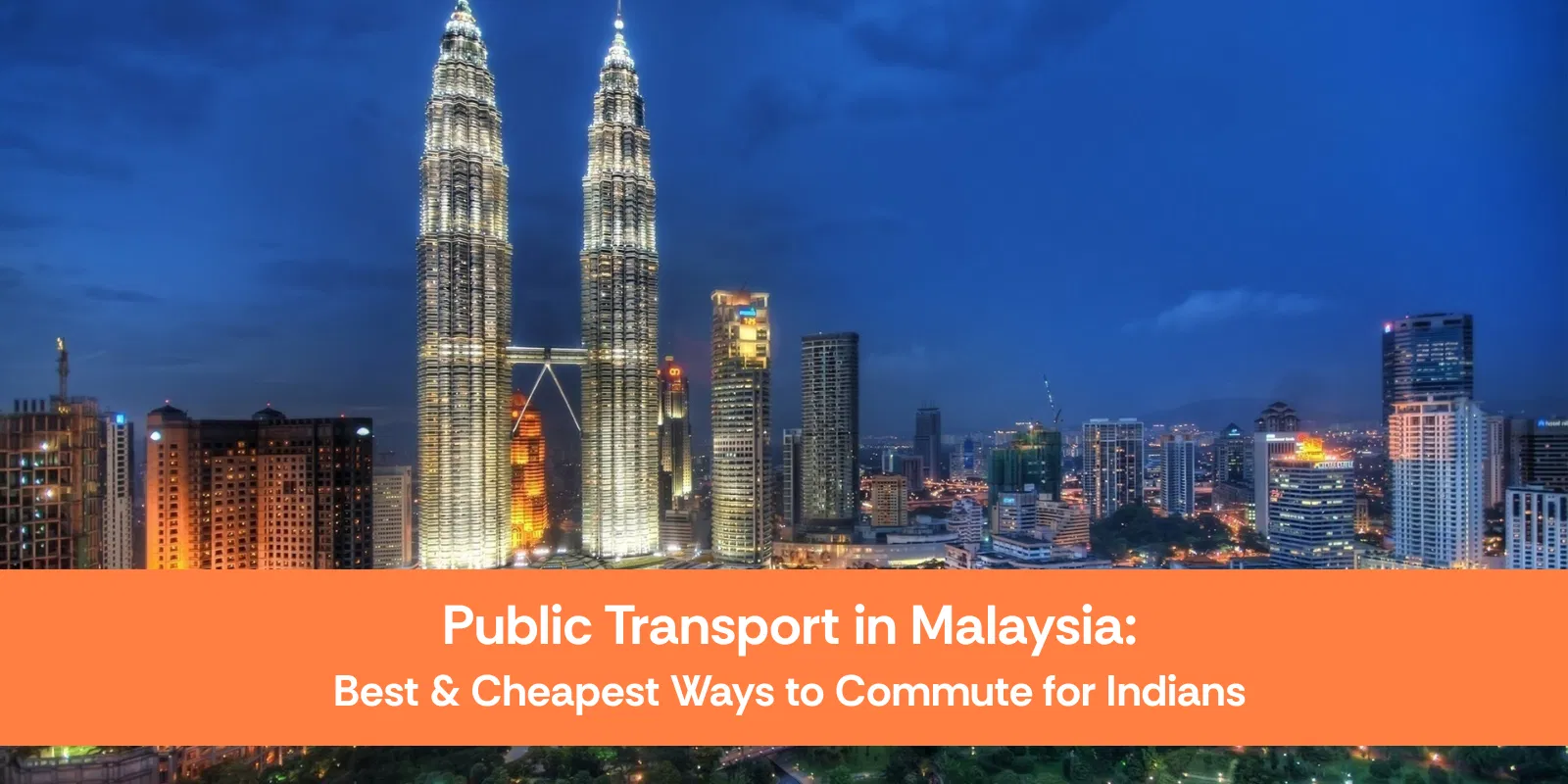
Public transport in Malaysia: Best & cheapest ways to commute for Indians
So, you've landed in Malaysia—or maybe you're planning your trip and already wondering, "How do I actually get around without burning a hole in my pocket?" Good question. Malaysia is one of those places where the transport system is surprisingly efficient, affordable, and friendly to first-timers.
If you're an Indian traveller, this guide is designed to give you all the insider details you'll want before stepping onto a bus, train, or even a ferry. Let's break it down.
Why Malaysia's public transport will surprise you
For many Indians, travelling abroad often comes with the fear of high taxi fares and confusing metro systems. Malaysia flips that worry on its head. Think well-connected trains, clean buses, and wallet-friendly tickets. What's more, English is widely spoken here, so asking for directions won't feel like a guessing game.
Additionally, Malaysia has invested heavily in making its public transport tourist-friendly, particularly in Kuala Lumpur (KL), where most visitors begin their journey.
The ultimate backbone: Kuala Lumpur's rail network
Let's start with the crown jewel—the rail. KL has a multi-layered train system that looks intimidating on the map but is super easy once you're on the ground.
Here's what you need to know:
- KTM Komuter – Best for suburban routes, connecting areas outside KL like Batu Caves (a must-visit). Tickets start at just RM2.
- LRT (Light Rail Transit) – Perfect for zipping across the city. Expect air-conditioned rides and frequent stops.
- MRT (Mass Rapid Transit) – Sleek, modern, and expanding rapidly. It connects key areas like Bukit Bintang and KL Sentral.
- KL Monorail – Short and sweet, this one covers popular tourist hubs like Bukit Bintang, Chow Kit, and KL Sentral.
Cost check: Most single rides cost between RM1.20 to RM6 (₹20–₹100). That's cheaper than an auto ride back home! If you're staying for a few days, pick up a Touch 'n Go card, Malaysia's version of a prepaid metro card. Load money once, and just tap to ride across buses and trains.
Buses that go almost everywhere
After trains, buses are your next best bet—especially for routes not covered by the metro.
- RapidKL buses dominate Kuala Lumpur, with routes covering almost every nook and cranny. Tickets start at RM1.
- For intercity travel, long-distance coaches like Aeroline or Transnasional are comfortable and often cheaper than domestic flights. Think plush seats, air-conditioning, and onboard Wi-Fi.
Tip: Use Google Maps or the Moovit app to check bus timings. Unlike Indian buses, these usually stick to their schedule.
Taxis, Grab and why you should avoid hailing cabs randomly
Yes, taxis are available in Malaysia, but here's the catch: not all use the meter. And no traveller likes arguing about fares in a new city.
Enter Grab—Southeast Asia's answer to Uber. Just download the app, punch in your destination, and you'll get a fair price upfront. For short distances, Grab is still budget-friendly, but if you're hopping across the city, trains are better value.
The ferry life: Island hopping made easy
Malaysia isn't just KL—it's also about dreamy islands like Langkawi, Penang, and Tioman. To reach these, ferries are your go-to.
- Langkawi Ferry Services connect Langkawi to Penang and Kuala Perlis.
- Penang Ferry runs between George Town (Penang Island) and Butterworth.
Tickets usually cost between RM15 to RM30 (₹250–₹500). Affordable and scenic—two birds, one ferry.
Cycling and walking in Malaysian cities
If you're in George Town, Penang, or Melaka, walking is actually one of the best ways to explore. Streets here are lined with colourful murals, colonial architecture, and food stalls at every corner.
For a quirky twist, try bike-sharing services like LinkBike in Penang. Cheap, eco-friendly, and you'll get to explore lanes where cars can't squeeze in.
How much does it really cost to get around?
Here's a quick snapshot for budget planning (as of 2025):
- Metro/LRT/MRT rides: RM1.20–RM6 (₹20–₹100)
- Bus fares: RM1–RM5 (₹15–₹80)
- Grab rides: RM5–RM20 (₹80–₹350), depending on distance
- Ferries: RM15–RM30 (₹250–₹500)
On average, budget about RM20–RM30 (₹350–₹550) per day for public transport if you're exploring cities. That's far cheaper than hiring taxis all day.
Extra tips every Indian traveller should know
- Touch 'n Go card: Absolutely worth buying if you'll use trains or buses more than twice a day.
- Language: Don't worry—announcements on trains are usually in Malay and English.
- Cash vs card: While trains and Grab rides are cashless, some buses and ferries still prefer cash. Keep small notes handy.
- Airport transfers: KLIA Ekspres train whisks you from the airport to KL Sentral in 30 minutes for RM55 (₹950). A Grab may be cheaper if you're in a group.
- Food pitstops: Stations like KL Sentral and Bukit Bintang double as foodie havens. Don't miss a quick roti canai or nasi lemak while changing trains.
Should you even rent a car?
If you're sticking to KL, Penang, or Melaka—skip the car. Traffic jams, confusing parking rules, and tolls will make you regret it. But if you're planning a countryside road trip to Cameron Highlands or exploring Borneo, renting a car could be fun. Just remember: Malaysians drive on the left, just like in India.
Making the most of Malaysia's public transport
Here's the beauty of it: public transport in Malaysia isn't just about getting from point A to B—it's an experience in itself. Whether it's people-watching on the LRT, chatting with locals on a bus, or sipping teh tarik before catching a ferry, these journeys often become part of your travel story.
For Indian travellers, the affordability is a bonus. With trains cheaper than a cup of coffee and buses that actually run on time, commuting here is both practical and fun.
Final word
Public transport in Malaysia is a traveller's dream—cheap, reliable, and designed to make exploring easy. For Indians, it feels both familiar (with its bustle) and refreshing (with its punctuality). So pack your curiosity, grab a Touch 'n Go card, and let Malaysia's buses, trains, and ferries do the heavy lifting while you focus on soaking in the sights.
And if you'd like to make it even simpler, you can plan your trip with Eia – your AI trip planner that helps map routes, book attractions, and craft itineraries tailored just for you.