Sapa in Spring: Trekking Rice Terraces When They're Greener Than Any Photo
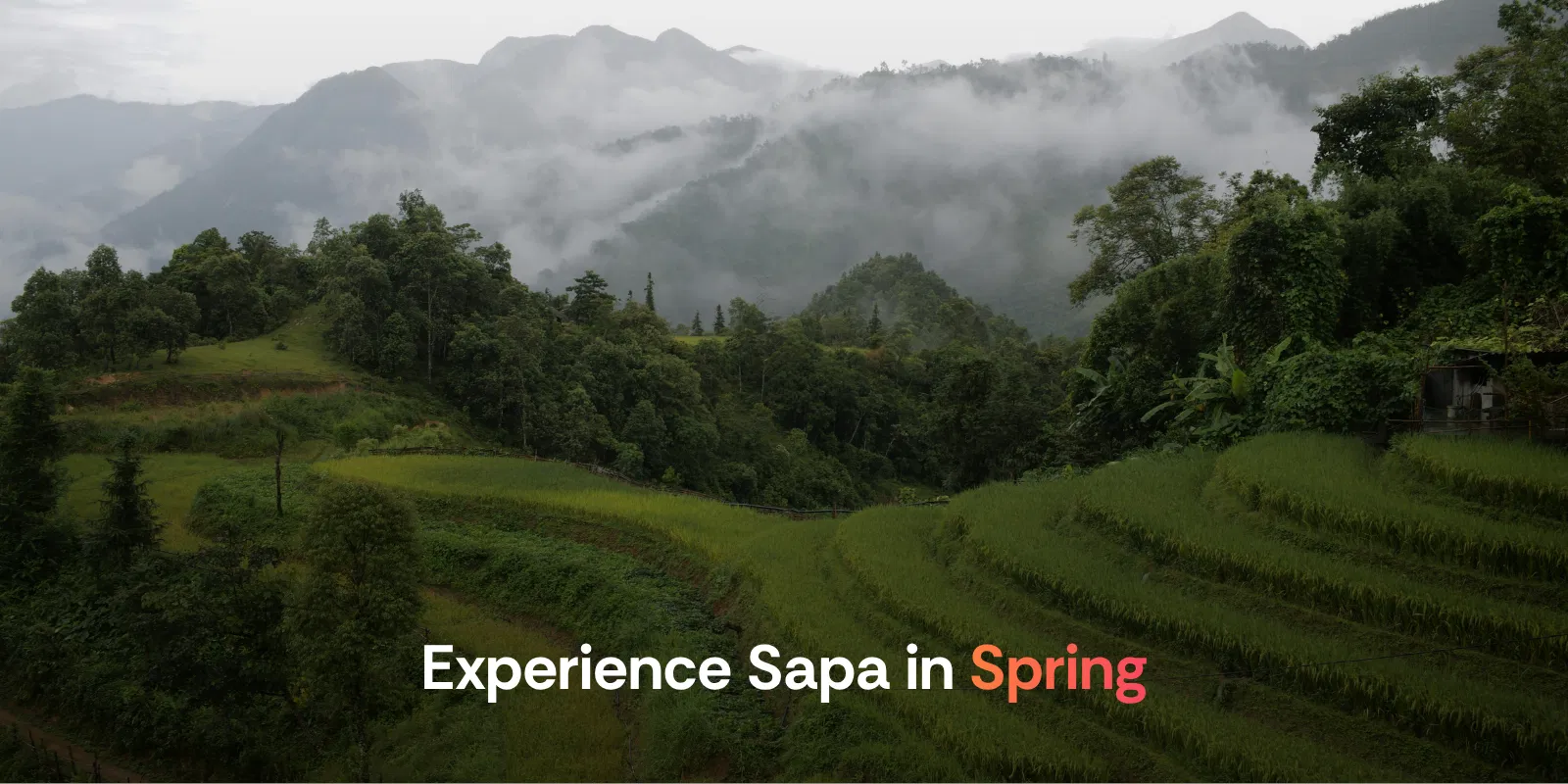
"Núi cao biển rộng" – Mountains are high, seas are wide. This Vietnamese saying captures the dramatic landscape you'll encounter in Sapa, where rice terraces cascade down mountainsides in ribbons of brilliant green, and morning mist clings to valleys like cotton wool refusing to let go.
But here's the thing about Sapa in spring that travel brochures somehow never quite capture: the photographs don't do it justice. Those postcards showing emerald terraces stacked like nature's amphitheatre? In March through May, when spring rains have filled the paddies and young rice shoots explode in vivid green growth, the real thing looks impossibly more vibrant. It's as if someone turned the saturation up to levels that shouldn't exist in nature, yet there it is—stretching across the Hoàng Liên Son mountain range in waves of green so intense it almost hurts to look at.
Sapa Vietnam sits in the country's far northwest, just 38 kilometres from the Chinese border at elevations reaching 1,600 metres. This isn't beach-and-cocktails Vietnam; this is tribal villages, trekking boots, and homestays where you sleep on wooden floors listening to rain drum on tin roofs. Spring transforms the landscape from the golden-brown of winter harvests into this explosion of green that makes every step feel like walking through a living painting. And unlike summer's muggy heat or winter's bone-chilling fog, spring delivers that Goldilocks-zone weather perfect for all-day trekking without collapsing from heat exhaustion or shivering through the night.
Book your Sa Pa holiday in Spring here.
What is Sapa in spring?
Sapa is a mountain town in Lào Cai Province, northern Vietnam, situated in the Hoàng Liên Son mountain range. Originally developed by French colonists in the 1920s as a hill station escape from Hanoi's summer heat, it's now Vietnam's premier trekking destination, famous for terraced rice paddies, ethnic minority villages, and Fansipan Mountain—Southeast Asia's highest peak at 3,147 metres.
Spring in Sapa runs from March through May, with April being the absolute champion month. During this period, you experience:
- Vivid green rice terraces: Farmers plant rice in March, and by April the young shoots create that iconic emerald colour photographers obsess over
- Perfect trekking weather: Temperatures between 15°C–25°C (59°F–77°F), with occasional spring showers that clear quickly
- Blooming wildflowers: Hillsides dotted with peach blossoms, plum flowers, and wild orchids
- Clear mountain views: Spring offers better visibility than the thick fog of winter, though mornings can still be delightfully misty
- Active village life: Planting season means you'll see farmers working the terraces, buffalo ploughing, and authentic agricultural rhythms
The terraces look dramatically different across seasons: winter shows golden-brown harvested fields, spring delivers electric green young rice, summer brings deep emerald mature crops, and autumn presents golden-yellow pre-harvest landscapes. Spring captures that fresh, vibrant moment when nature feels most alive.
Why spring is the absolute best season for Sapa
The rice terraces reach peak green
This isn't subtle. After March planting, the rice shoots grow rapidly through April and early May, creating terraces so green they look digitally enhanced. This is the moment every Sapa Vietnam tour operator photographs for promotional materials—and the moment you should actually be there to see it in person rather than scrolling through Instagram. By June, the rice matures into deeper, less vibrant tones; by September it turns golden for harvest; and winter leaves the terraces brown and bare until the cycle begins again.
Weather cooperates with trekking plans
Spring temperatures hover in the comfortable range for all-day hiking. You'll want layers—mornings can be cool around 15°C (59°F), midday warms to 20°C–25°C (68°F–77°F), and evenings cool down again. This is vastly preferable to summer's 30°C+ heat with high humidity that makes steep climbs exhausting, or winter's frequent sub-10°C temperatures with persistent fog that obscures valley views. Spring rain does occur, but typically in short afternoon showers that refresh rather than ruin trekking plans, and often create dramatic cloud movements through valleys that add atmosphere rather than frustration.
Villages are accessible and welcoming
During peak summer (June–August), heavy monsoon rains can make some trekking routes muddy and difficult, while winter cold keeps many tourists indoors rather than exploring villages. Spring's moderate weather means both travellers and locals are more actively engaged—farmers work the terraces, markets bustle with fresh produce, and Sapa homestay families prepare guesthouses after the quieter winter months. You'll encounter more authentic interactions without the crowds of summer school holidays or the winter fog that limits visibility and activity.
Fewer crowds than peak seasons
While Sapa sees visitors year-round, spring is shoulder season compared to summer's European and Vietnamese school holiday rush (July–August) and the October festival period. This means more availability for quality sapa homestay accommodation, easier booking for guided treks, and less crowded trails—you can actually photograph those terraces without waiting for groups of tourists to move out of frame.
Fansipan climbing conditions ideal
Fansipan Mountain, Indochina's highest peak, becomes more accessible in spring. Winter can bring frost and occasionally snow at the summit, making the cable car ride spectacular but the actual peak uncomfortably cold. Summer heat and thick clouds often obscure views even after the cable car ride up. Spring offers clear skies more frequently, comfortable summit temperatures, and better chances of seeing the surrounding mountain panorama that makes the trip worthwhile. For those hiking rather than taking the cable car, spring temperatures make the gruelling 2-day trek feasible without heat exhaustion or hypothermia risks.
How to reach Sapa from Hanoi, India, and the GCC
From Hanoi to Sapa
Most Sapa Vietnam journeys begin in Hanoi, Vietnam's capital, located approximately 315 kilometres southeast. You have several transport options:
Overnight sleeper train (most popular): Depart Hanoi around 9:30–10 PM, arrive Lào Cai station at 5:30–6 AM, then take a 1-hour bus or taxi to Sapa town. The train journey costs approximately €20–35 (₹1,700–2,970 or AED 75–130) depending on berth class (6-berth vs 4-berth cabins). Soft sleeper cabins offer air-con and relative comfort; hard sleepers are budget-friendly but more basic. Book through Vietnam Railways or tour operators who include pickup/drop-off.
Bus (budget option): Multiple operators run Hanoi–Sapa buses with sleeper seats, departing evenings and arriving early morning (6–7 hours). Costs range €8–15 (₹680–1,270) but comfort varies significantly between operators. Premium options like Sapa Express or Hung Thanh offer better seats and cleanliness.
Private car (luxury/family option): Hire a private driver for the 5–6 hour journey during daylight, allowing stops at scenic viewpoints. Costs approximately €80–120 (₹6,800–10,200) for the vehicle, comfortable for families or small groups wanting flexibility.
Helicopter (ultra-luxury): Some operators offer helicopter transfers from Hanoi to Sapa for approximately €300–500 per person (₹25,500–42,500), dramatically reducing travel time to 45 minutes but at premium cost.
Most travellers choose the overnight train for cost efficiency and the experience itself—waking up as the train climbs into misty mountains creates a memorable transition from lowland Hanoi to highland Sapa.
From India and the GCC
| Origin | Route | Typical Flight Time | Approximate Prices |
|---|---|---|---|
| Delhi/Mumbai to Hanoi | Direct flights available (IndiGo, VietJet, Vietnam Airlines) | 4–5 hours | ₹22,000–38,000 return |
| Dubai/Abu Dhabi to Hanoi | Via Bangkok or direct (Emirates, Vietnam Airlines) | 7–8 hours (via Bangkok) or 6 hours (direct) | AED 1,400–2,400 return |
| Bengaluru/Chennai to Hanoi | One-stop via Bangkok, Singapore, or Kuala Lumpur | 6–7 hours total | ₹25,000–42,000 return |
Once in Hanoi, allocate 1–2 days to explore the capital's Old Quarter, Hoan Kiem Lake, and street food scene before taking the overnight train to Sapa. This breaks up the journey and adds cultural depth to your Vietnam experience. For comprehensive northern Vietnam planning, explore our guide to the best things to do in Vietnam.
Visa requirements: Indian and GCC nationals require a Vietnam e-visa (60 days, approximately €40 or ₹3,400 or AED 150) processed online in 3 working days via Vietnam's official e-visa portal.
Getting around Sapa town and villages
Sapa town itself is walkable, but reaching trekking trailheads and villages requires transport:
- Motorbike taxis (xe ôm): €3–8 (₹250–680) for village transfers
- Private car/van hire: €30–50 (₹2,550–4,250) per day for group transport
- Trekking from town: Some routes begin walking distance from Sapa centre
- Tour operator pickups: Most sapa tour packages include transport to/from trailheads
Things to do in Sapa: the essential experiences
Trek the rice terraces
This is why you came. Things to do in Sapa always start with trekking through terraced valleys, and spring showcases this landscape at peak beauty. Routes range from gentle 2–3 hour walks suitable for families to challenging full-day treks covering 15–20 kilometres through multiple villages. You'll descend from Sapa town (1,600m elevation) into valleys where terraces cascade down mountainsides in geometric precision, cross bamboo bridges over streams, and climb back up steep paths that reward effort with panoramic valley views.
Popular trekking destinations include:
- Cat Cat Village: Easiest trek (3km from town), Black H'mong village with waterfalls and traditional crafts demonstrations
- Lao Chai and Ta Van villages: Moderate 8–12km loop through two ethnic villages (H'mong and Giay tribes) with spectacular terrace views
- Y Linh Ho and Lao Chai: Longer route (15–18km) passing through multiple villages and rice terrace systems
- Ta Phin Village: Red Dao tribe village known for herbal baths and textile weaving, 12km return trek
Experience ethnic minority culture
Sapa Vietnam is home to five main ethnic groups: H'mong (Black H'mong, Flower H'mong), Red Dao, Giay, Xa Pho, and Tay people, each with distinct languages, clothing, and customs. Sapa homestay experiences allow overnight stays with local families, typically in traditional wooden stilt houses. You'll share meals (often featuring fresh vegetables, pork, and locally made rice wine), observe daily life, and perhaps learn basic textile weaving or traditional music.
Spring coincides with agricultural planting season, so homestays often include opportunities to help with rice planting, buffalo ploughing, or vegetable cultivation—genuine cultural exchange rather than staged performances. Many homestay hosts speak limited English, but communication through gestures, smiles, and shared activities transcends language barriers.
Make your Sapa trip using Eia - Alike’s AI Trip Planner.
Know more about the trip planner here.
Conquer Fansipan Mountain
Fansipan Mountain (3,147m), nicknamed "the Roof of Indochina," stands as Southeast Asia's highest peak. You have two approach options:
Cable car route: The Sun World Fansipan Legend cable car (opened 2016) claims the world's longest three-rope cable car system and highest ascent (1,410m vertical rise). The 20-minute ride delivers spectacular views across mountain ranges and valleys. At the top, climb 600 steps to the actual summit marked by a pagoda and summit monument. Cable car tickets cost approximately €35–40 return (₹2,970–3,400) for adults, with additional funicular train ride at the upper station (€5–7 or ₹425–595). The entire experience takes 4–5 hours including summit exploration.
Trekking route: Traditional 2-day summit trek covers 19 kilometres round trip with 2,800m cumulative elevation gain. This requires good fitness, proper gear, and usually a guide (mandatory for most tour operators). Overnight camping at 2,800m altitude tests endurance but delivers genuine mountaineering achievement. Costs range €80–150 (₹6,800–12,700) per person for guided 2-day treks including guide, porter, camping gear, and meals. Spring weather provides the best trekking window—winter can be freezing at altitude, summer brings heavy rain and cloud cover obscuring views.
For broader Southeast Asia inspiration, check out our Thailand 3-day itinerary, Singapore 5-day itinerary, and best things to do in Vietnam.
Visit Sapa's Saturday market
The central market reaches peak activity on Saturday mornings when ethnic minority villagers descend from surrounding mountains to trade livestock, produce, textiles, and handicrafts. This isn't a tourist market (though tourists certainly attend); it's a functioning economic hub where you'll see H'mong women in indigo-dyed traditional dress bargaining over live chickens, farmers selling fresh vegetables grown on terraced plots, and textile traders displaying embroidered bags and scarves. Arrive early (6–8 AM) for the most authentic atmosphere before day-trippers arrive.
Sample local specialities
Things to do in Sapa Vietnam must include trying regional dishes rarely found elsewhere:
- Thắng cố: Horse meat hotpot with organs, vegetables, and aromatic herbs—controversial but traditional H'mong speciality
- Cá suối nướng: Grilled stream fish caught fresh from mountain rivers
- Xôi ngũ sắc: Five-colour sticky rice dyed with natural plant extracts, creating red, yellow, green, purple, and white layers
- Rượu ngô: Corn wine, strong local alcohol served in homestays and restaurants
- Lẩu cá hồi: Salmon hotpot featuring fish farmed in cool mountain streams
Spring brings fresh spring vegetables, bamboo shoots, and wild mushrooms to restaurant menus—seasonal ingredients that add variety to the standard Vietnamese cuisine visitors encounter in lowland cities.
Trekking routes and rice terrace walks
Easy routes (suitable for families and beginners)
Cat Cat Village (3km, 2–3 hours): Paved path descending from Sapa town through terraces to a Black H'mong village. Features a waterfall, old French hydroelectric station, and craft demonstrations. Well-maintained trail suitable for moderate fitness levels.
Ham Rong Mountain (in Sapa town): Short climb to orchid gardens, limestone formations, and panoramic viewpoints over Sapa valley. Takes 2–3 hours, mostly stairs and maintained paths.
Moderate routes (half-day to full-day)
Lao Chai – Ta Van loop (12km, 5–6 hours): The most popular moderate trek, descending through rice terraces to Lao Chai (Black H'mong village), following the valley to Ta Van (Giay village), then climbing back. Spring showcases the terraces at their greenest. Most hikers arrange homestay in Ta Van for overnight stays.
Y Linh Ho – Lao Chai (14km, 6–7 hours): Similar terrain but longer, passing through Y Linh Ho village before reaching Lao Chai. More extensive terrace views and fewer tourists than the shorter Lao Chai–Ta Van route.
Muong Hoa Valley (10–15km, 5–7 hours): Follows the Muong Hoa River through the valley floor, passing ancient rock carvings, terraced slopes, and multiple ethnic villages. Relatively flat valley walk with optional climbs to viewpoints.
Challenging routes (for experienced trekkers)
Ta Phin Village circuit (18km, 7–8 hours): Long route through Red Dao villages with significant elevation changes. Includes steep climbs, river crossings, and remote sections with limited infrastructure. Rewards with authentic village experiences and dramatic landscape views.
Multi-day trekking: Some operators offer 2–4 day treks combining multiple villages, valley systems, and mountain passes. These require camping or homestay accommodation, porters for luggage, and good fitness levels. Spring's moderate weather makes multi-day treks most comfortable.
Guided vs independent trekking
Guided treks (recommended for first-timers): Local guides provide navigation, cultural context, homestay arrangements, and support if weather turns or injuries occur. Costs range €15–40 (₹1,270–3,400) per person per day depending on group size and route difficulty. Many guides are ethnic minority women from the villages themselves, offering authentic cultural insights.
Independent trekking: Possible on well-marked routes like Cat Cat or Lao Chai–Ta Van using downloaded maps (Maps.me works well offline). However, navigation can be tricky in rural areas, and getting lost in rice terrace complexes happens easily. Independent trekkers miss cultural explanations that guides provide and may inadvertently trespass on private land or disrespect local customs unknowingly.
Conquering Fansipan Mountain: Indochina's roof
Fansipan Mountain deserves its own section as Sapa's most challenging and rewarding experience beyond rice terrace trekking.
Cable car experience (easier option)
The Sun World Fansipan Legend cable car journey from Sapa town covers 6.3 kilometres with a 1,410-metre vertical ascent over 20 minutes. Cabins hold 30 passengers, and queues can extend to 30–60 minutes during peak hours (arrive early, before 9 AM, to avoid crowds). The ride itself provides spectacular views across the Hoàng Liên Son range, with valleys dropping away beneath transparent cabin floors—not recommended for those with height phobias.
At the upper station (2,800m), a funicular train transports visitors the remaining distance to near the summit. From there, 600 stone steps climb to the 3,147m peak, marked by a three-tiered pagoda and stone summit monument engraved with "Fansipan 3143m VNDĐ" (the elevation was later corrected to 3,147m but the monument wasn't changed).
Spring conditions usually deliver clear summit views, though early morning often brings cloud cover that burns off by 10–11 AM. Summit temperatures run 5°C–15°C cooler than Sapa town, so bring warm layers even if Sapa itself feels mild. Total experience including cable car, summit time, and return takes 4–5 hours. Tickets cost approximately €35–40 (₹2,970–3,400 or AED 130–150) for adults, €18–25 (₹1,530–2,120) for children.
Traditional trekking route (challenging option)
The original Fansipan summit route covers approximately 19 kilometres round trip with 2,800 metres cumulative elevation gain, typically completed over 2 days/1 night. This requires:
- Good fitness: Steep, sustained climbing with heavy packs (if carrying own gear)
- Proper equipment: Waterproof trekking boots, warm sleeping bag rated for near-freezing temperatures, layers, rain gear
- Licensed guide: Mandatory through most tour operators for safety and navigation
- Porter service (optional): Carries camping gear and food, allowing you to hike with lighter day packs
Day 1 (6–8 hours): Trek from Tram Ton Pass (1,900m) through bamboo forest and rhododendron groves, ascending to Camp 1 at 2,800m. Camp in tents, cook dinner, and sleep at altitude (expect cold nights even in spring).
Day 2 (8–10 hours): Pre-dawn summit push (3–4 hours up) to catch sunrise from 3,147m, then descend back to Tram Ton Pass (4–6 hours down). Long, exhausting day requiring sustained effort.
Spring offers the best trekking conditions: winter can bring snow and ice at altitude requiring crampons, while summer monsoons turn trails into mudslides and obscure summit views with thick cloud. Guided 2-day treks cost €80–150 (₹6,800–12,700) per person including guide, porter, camping gear, all meals, and park permits.
Wildlife note: The Hoàng Liên National Park surrounding Fansipan protects rare species including the Tonkin snub-nosed monkey (one of the world's 25 most endangered primates) and various endemic birds. You likely won't spot endangered mammals, but spring brings active birdlife and blooming rhododendrons along trekking routes.
Sapa homestay experiences with ethnic minorities
Sapa homestay accommodation provides the most immersive cultural experience available, allowing overnight stays with ethnic minority families in their traditional homes.
What to expect
Homestays typically involve:
- Stilt houses: Traditional wooden structures raised on pillars, with communal sleeping areas using mattresses on floors, mosquito nets, and shared bathrooms
- Family meals: Dinner and breakfast included, featuring home-cooked Vietnamese and ethnic dishes—fresh vegetables, pork or chicken, rice, and sometimes home-brewed corn wine
- Basic facilities: Shared bathrooms (Western or squat toilets), cold or lukewarm showers (hot water not guaranteed), electricity limited to evening hours
- Cultural exchange: Conversation with host families (basic English or through guides), demonstrations of textile weaving or embroidery, traditional music performances
Popular homestay villages
Ta Van Village (Giay minority): Most developed homestay infrastructure, moderate trekking distance from Sapa (12km), comfortable facilities while maintaining authentic atmosphere. Homestays cost €8–15 (₹680–1,270) per person including dinner and breakfast.
Lao Chai Village (Black H'mong): More rustic than Ta Van, closer to traditional village life, stunning terrace views. Slightly more basic facilities but genuine cultural immersion.
Ta Phin Village (Red Dao): Known for herbal bath experiences using traditional medicinal plants, textile weaving demonstrations, and quieter atmosphere with fewer tourists. Further from Sapa (15km) so feels more remote.
Cat Cat Village: Closest to Sapa town, most commercialised, but convenient for those wanting homestay experience without long trekking. Better facilities but less authentic village atmosphere.
Homestay etiquette
- Remove shoes before entering homes
- Accept offered food and drink (at least try everything; refusing can seem rude)
- Ask permission before photographing people, especially inside homes
- Dress modestly, particularly in bedrooms and bathrooms
- Bring small gifts: Fresh fruit, candies for children, or school supplies are appreciated more than money
- Respect sleeping arrangements: Men and women often sleep separately in traditional homestays
- Learn basic Vietnamese phrases: Xin chào (hello), Cảm ơn (thank you), Ngon (delicious) help build rapport
Booking homestays
Many travellers book homestays through sapa tour operators who handle logistics, guide services, and host family coordination. Independent bookings are possible but require more effort navigating language barriers and transport arrangements. Spring's moderate crowds mean homestays remain available without advance booking, though coordinating through guides ensures higher quality accommodation and smoother experiences.
What to eat and where to stay
Sapa town accommodation
Budget (€10–25 or ₹850–2,120/night): Hostels and guesthouses along main streets, offering dorm beds or basic private rooms with shared or private bathrooms. Good for backpackers and budget-conscious travellers.
Mid-range (€25–70 or ₹2,120–5,950/night): Three-star hotels with valley views, breakfast included, hot water, Western bathrooms, and helpful staff. Properties like Sapa Eden View Hotel or Sapa Elegance Hotel offer excellent value with comfortable rooms and central locations.
Luxury (€70–200+ or ₹5,950–17,000+/night): Boutique hotels and resorts such as Hotel de la Coupole MGallery (French colonial elegance), Topas Ecolodge (hillside bungalows with panoramic terrace views 18km from town), or Aira Boutique Sapa Hotel & Spa. These provide spa facilities, fine dining, mountain-view rooms, and tour coordination services.
Spring shoulder season often brings 20–30% discounts compared to peak summer or autumn rates. Book 2–3 weeks ahead for mid-range hotels; luxury properties can sometimes be secured last-minute with deals.
Restaurants and food
Local specialities to try:
- Sapa Market area: Street food stalls selling grilled meats, bánh mì, and local snacks (€1–3 or ₹85–255 per item)
- Hill Station Deli & Boutique: Western comfort food, excellent coffee, baked goods—popular with travellers (€5–10 or ₹425–850 per meal)
- Red Dao House: Traditional Red Dao cuisine in atmospheric setting (€8–15 or ₹680–1,270 per person)
- Sapa Rooms: Upscale dining with Vietnamese fusion dishes and valley views (€12–25 or ₹1,020–2,120 per person)
- Nature View Restaurant: Local Vietnamese and ethnic minority dishes, good value (€5–10 or ₹425–850 per meal)
Spring brings fresh seasonal vegetables and bamboo shoots to menus. Don't miss trying thang co (the controversial horse meat hotpot) if you're adventurous, or stick to safer options like grilled fish, stir-fried vegetables, and various Vietnamese noodle soups.
Practical eating tips
- Restaurants close early: Many shut by 9–10 PM; plan dinner accordingly
- Hygiene standards vary: Stick to busy establishments with visible food preparation for street food safety
- Altitude affects appetite: Higher elevation can suppress hunger; lighter meals might feel better than heavy portions
- Local wine: Corn wine (rượu ngô) is strong—pace yourself at homestay dinners
Sapa tour options: guided vs independent trekking
Group tours from Hanoi
2-day/1-night packages: Most common option for first-time Sapa visitors. Includes overnight train from Hanoi, full-day guided trekking through rice terraces and villages, homestay accommodation or hotel, meals, and return train to Hanoi. Costs range €60–120 (₹5,100–10,200) per person depending on group size, accommodation quality, and operator reputation. Budget tours use larger groups (15–20 people) and basic homestays; mid-range tours offer smaller groups (8–12), better guides, and comfortable hotels.
3-day/2-night packages: Add Fansipan summit via cable car, additional trekking routes, or more village exploration time. Costs €90–180 (₹7,650–15,300) per person. Allows less rushed experience with time to explore Sapa town and adjust to altitude.
Private tours
Custom itineraries with private guides offer maximum flexibility. Families, couples, or small friend groups can design routes matching fitness levels and interests. Private sapa vietnam tour packages cost €150–300+ (₹12,700–25,500+) for 2-day trips per group (not per person), making them economical for 4+ people and worthwhile for tailored experiences.
Independent travel
Possible and rewarding for experienced travellers comfortable with:
- Language barriers: Limited English outside main tourist zones
- Navigation: Downloading offline maps and GPS tracks (Maps.me, AllTrails)
- Homestay booking: Coordinating directly with village families or guesthouse owners
- Transport: Arranging motorbike taxis or car hire to trailheads
Independent travel saves 30–50% compared to packaged tours but requires more effort and research. Spring's moderate crowds and weather make independent trekking safer than winter (when fog makes navigation difficult) or summer (when heavy rain creates hazardous trail conditions).
Recommended tour operators
- Sapa O'Chau: Social enterprise employing ethnic minority guides, excellent cultural insights, responsible tourism model
- Ethos Spirit: Focus on sustainable tourism and authentic cultural exchange
- Topas Adventure: Established operator with variety of trekking options and quality guides
- Local Alike: Multi-destination operator offering Vietnam packages that include Sapa alongside coastal destinations like Hoi An for comprehensive country exploration
Photography tips for spring rice terraces
Spring delivers Sapa's most photogenic conditions, but capturing the landscape effectively requires technique:
Best times of day
Dawn (5:30–7 AM): Morning mist fills valleys, creating ethereal layers separating terrace levels. Soft light prevents harsh shadows. Requires early wake-up but rewards with magical atmospheric shots.
Late afternoon (4–6 PM): Golden hour light washes terraces in warm tones, while side-lighting emphasizes terrace contours and creates depth through shadows. Less crowded than midday viewpoints.
Avoid midday: Harsh overhead sun flattens terraces, creates excessive contrast, and makes green rice appear washed out.
Key viewpoints
Muong Hoa Valley viewpoints: Multiple pullouts along the road from Sapa to Lao Chai offer elevated terrace perspectives. Stop at several to find compositions you prefer.
O Quy Ho Pass: 15km from Sapa, this mountain pass provides sweeping valley views encompassing terraced mountainsides. Clear spring days reveal multi-layered terraces extending for kilometres.
Village vantage points: Elevated positions within Ta Van, Lao Chai, or Y Linh Ho provide intimate terrace views with village life in foreground—farmers working, buffalo grazing, houses integrated into landscape.
Technical tips
- Use polarising filter: Cuts glare from water-filled paddies, deepens blue skies, and enhances green saturation in rice shoots
- Shoot in RAW: Allows post-processing flexibility to balance terrace greens, sky blues, and shadow details
- Include scale elements: People working terraces, buffalo, or houses provide size reference showing terrace magnitude
- Experiment with vertical compositions: Terraces' layered geometry often works better in portrait orientation than landscape
- Capture working life: Farmers planting rice, buffalo ploughing, or women carrying baskets add human context and cultural authenticity
Drone photography
Some areas permit drone use for aerial terrace perspectives, but verify local regulations first. Hoàng Liên National Park restricts drones in protected zones, and flying over villages without permission is considered disrespectful. When permitted, aerial views reveal terrace patterns impossible to capture from ground level.
Cultural sensitivity
- Always ask permission before photographing ethnic minority people, especially close-up portraits
- Offer to share photos: Exchange contact info and send images to villagers you photograph
- Don't photograph children without parental consent
- Avoid "safari-style" photography treating villagers as exotic subjects rather than people
What to pack for spring mountain weather
Spring Sapa weather requires layered clothing to handle temperature swings from cool mornings (12°C–15°C) to warm midday (22°C–25°C) and back to cool evenings.
Essential clothing
- Base layers: Moisture-wicking shirts and leggings for trekking
- Insulating mid-layer: Fleece or light down jacket for mornings and evenings
- Waterproof rain jacket: Spring showers arrive suddenly; packable rain gear essential
- Trekking pants: Quick-drying, preferably zip-off convertible trousers
- Warm hat and gloves: For early morning starts or Fansipan summit attempts
- Sun hat and sunglasses: Midday sun at altitude can be intense despite cool temperatures
Footwear
- Waterproof hiking boots: Ankle support crucial for steep, uneven trails; waterproofing protects from muddy sections and stream crossings
- Camp shoes/sandals: Lightweight footwear for homestay evenings and relaxing after trekking
Trekking gear
- Daypack (25–35L): Carrying water, snacks, extra layers, camera, and rain protection
- Trekking poles: Reduce knee strain on steep descents and improve stability on uneven terrain
- Water bottles (1–2L capacity): Hydration crucial at altitude; refill opportunities limited on trails
- Headlamp/torch: Essential for homestays with limited electricity and early morning starts
- First aid kit: Blister treatment, pain relievers, antiseptic wipes, altitude sickness medication (Diamox)
Miscellaneous
- Sunscreen (SPF 30+): Altitude intensifies UV exposure despite moderate temperatures
- Insect repellent: Mosquitoes and leeches (rare but possible) in forested areas
- Power bank: Charging opportunities limited in villages and during trekking
- Cash (Vietnamese Dong): ATMs in Sapa town but none in villages; homestays and local guides accept cash only
- Toilet paper: Public facilities and homestays may lack supplies
- Hand sanitiser: Limited handwashing facilities on trails
What to leave behind
- Heavy luggage: Store unnecessary bags in Hanoi or Sapa hotel; trek with daypack only
- Valuables: Leave expensive jewellery and watches in hotel safes
- Perfume/cologne: Strong scents attract insects and seem incongruous in rural settings
Nearby attractions and multi-day itineraries
Bac Ha Market (Sunday market)
Located 80 kilometres northeast of Sapa, Bac Ha hosts northern Vietnam's largest ethnic minority market every Sunday. Flower H'mong, Phu La, and Nung people converge to trade livestock (buffalo, horses, dogs), vegetables, textiles, and handicrafts. More authentic and less touristy than Sapa's Saturday market, though requiring early morning departure (6–7 AM) for 2-hour drive. Tour operators offer Bac Ha day trips from Sapa combining market visit with village trekking.
Bac Ha to Sapa trek (3–4 days)
Multi-day trekking route connecting Bac Ha to Sapa through remote villages and mountain passes. Passes through areas rarely visited by tourists, staying in basic homestays, and requires good fitness and experienced guides. Spring conditions make this route accessible before summer rains turn trails muddy.
Ha Giang Province (extending north)
Vietnam's extreme north, Ha Giang offers even more dramatic mountain scenery including the Dong Van Karst Plateau Global Geopark (UNESCO designation). The Ha Giang Loop—a 300-kilometre motorbike route through mountain passes and minority villages—ranks among Vietnam's most spectacular journeys. Typically requires 3–5 days from Sapa, riding or as passenger on motorbike taxis. Spring's dry weather provides ideal conditions before summer monsoons make mountain roads dangerous.
Sample 7-day northern Vietnam itinerary
Day 1: Arrive Hanoi, explore Old Quarter and street food scene Day 2: Hanoi sightseeing (Ho Chi Minh Mausoleum, Temple of Literature, Hoan Kiem Lake), evening overnight train to Lào Cai Day 3: Arrive Sapa, half-day trekking to Cat Cat Village, afternoon explore Sapa town Day 4: Full-day trek through Lao Chai–Ta Van loop, overnight homestay in Ta Van Day 5: Morning trek return to Sapa, afternoon Fansipan cable car summit Day 6: Morning free or optional Bac Ha market trip, evening train return to Hanoi Day 7: Arrive Hanoi, day free before international departure
This itinerary balances trekking intensity, cultural immersion, and landmark experiences while allowing recovery time. For travellers combining northern Vietnam with coastal destinations, consider extending to Halong Bay (4-hour bus from Hanoi) or flying south to Hoi An—read about spring in Hoi An for timing comparisons between mountain and coastal Vietnam in spring.
Planning your northern Vietnam adventure
Sapa forms part of northern Vietnam's trekking circuit that can include Hanoi as base, Ha Giang for extreme mountain scenery, and Halong Bay for coastal limestone karsts. Spring creates ideal conditions across this entire region—avoiding winter's cold fog and summer's heavy monsoons.
For comprehensive Vietnam trip planning beyond Sapa, explore our detailed Vietnam travel guide covering all regions from north to south. If you're building a multi-country Southeast Asia itinerary, consider how Sapa's mountain climate and trekking focus contrasts with beach destinations—perhaps combining northern Vietnam mountains with southern Thailand islands or Malaysian highlands.
Use Eia – Alike's AI Trip Planner to optimise complex itineraries combining mountain trekking, cultural cities, and beach relaxation, or browse curated Vietnam holiday packages tailored for Indian and GCC travellers that include Sapa alongside other highlights like Hoi An and Ho Chi Minh City.
Typical Sapa allocation: Most travellers spend 2–3 nights in Sapa (allowing 1–2 full trekking days), though trekking enthusiasts and photographers can easily fill 4–5 nights exploring multiple routes and villages. When combined with Hanoi (2–3 nights) and optional Ha Giang extension (3–4 nights), northern Vietnam easily occupies 7–10 days of a comprehensive Vietnam journey.
Spring's weather reliability means fewer weather-forced itinerary changes compared to summer monsoons or winter fog. This makes planning more predictable and reduces the risk of missed experiences due to poor conditions—critical when coordinating international flights and limited vacation time.
Frequently Asked Questions (FAQ)
Why is spring specifically the best time for Sapa, and what makes it better than other seasons?
Why is spring specifically the best time for Sapa, and what makes it better than other seasons?
How difficult are Sapa treks, and can beginners or families handle them?
How difficult are Sapa treks, and can beginners or families handle them?
What's the realistic cost for a 3-day Sapa trip from Hanoi including trekking, homestay, and Fansipan?
What's the realistic cost for a 3-day Sapa trip from Hanoi including trekking, homestay, and Fansipan?
Can I visit Sapa independently without joining organised tours, and is it safe?
Can I visit Sapa independently without joining organised tours, and is it safe?
How does Sapa compare to other mountain destinations in Southeast Asia for trekking and scenery?
How does Sapa compare to other mountain destinations in Southeast Asia for trekking and scenery?
What are the best free or low-cost activities in Sapa beyond paid trekking tours?
What are the best free or low-cost activities in Sapa beyond paid trekking tours?