
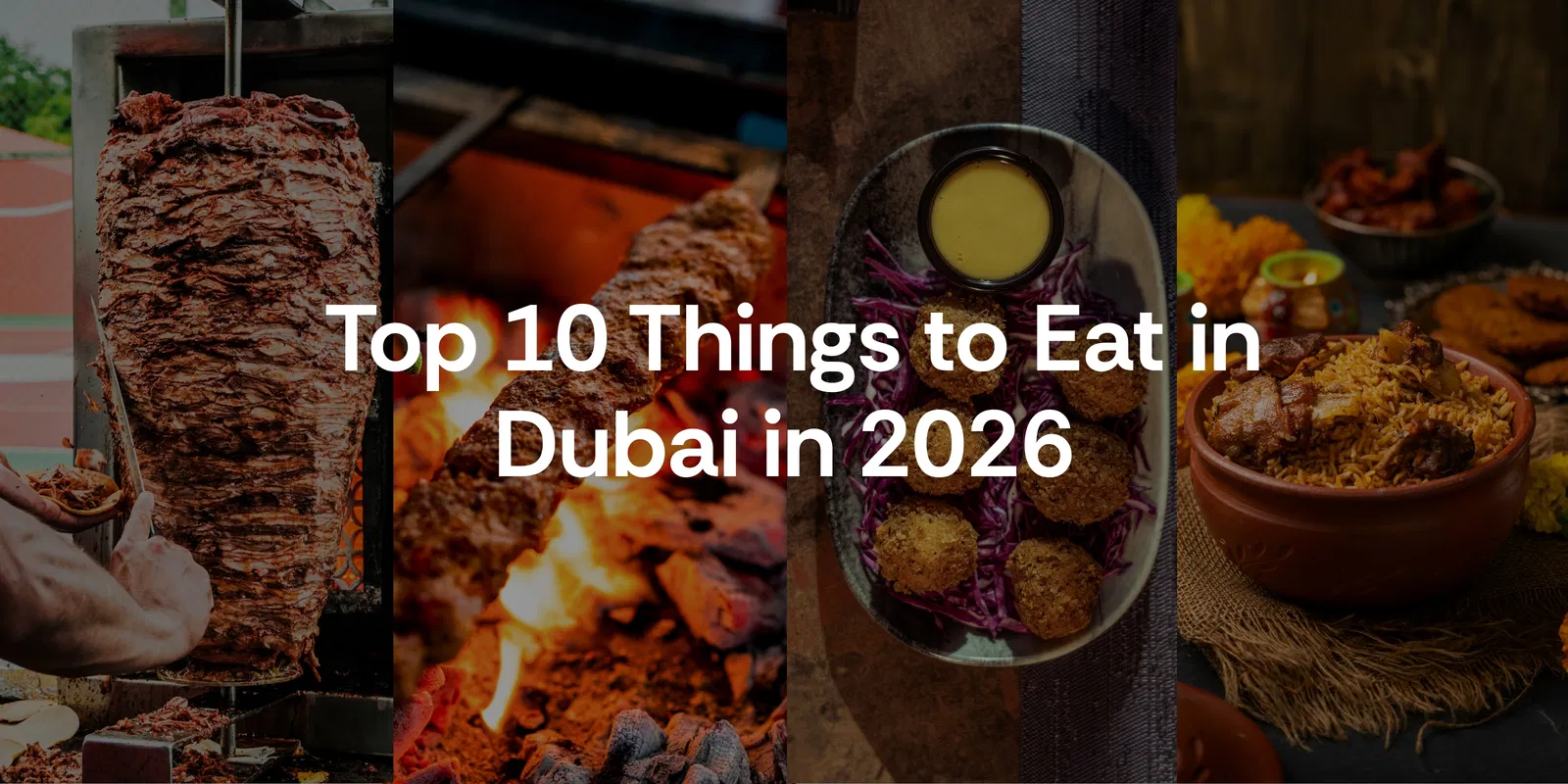
Top 10 Things to Eat in Dubai in 2026
Dubai has transformed into one of the world's most exciting food destinations. Whether you're hunting for Dubai's famous food, authentic Dubai street food, or comfortable dining spots, this city delivers across every budget and preference. The culinary scene here reflects the city's multicultural identity, blending Emirati traditions with international influences.
If you're planning a visit and wondering what to eat in Dubai, you've come to the right place. We've compiled the top 10 dishes that define Dubai food culture and showcase why this city has become essential for every serious food traveller. From vegetarian Dubai food options to indulgent street eats, here's what you absolutely cannot miss.
Understanding Dubai Food Culture
Dubai's food culture is built on hospitality and quality. The city's position as a global hub means you'll find everything from traditional Emirati fare to cutting-edge international cuisine. What makes eating in Dubai special isn't just the flavours. It's the experience.
The cost of food in Dubai varies dramatically depending on where you eat. You can grab authentic street meals for as little as AED 15 (₹300/£3.70), or experience world-class dining at AED 500+ (₹10,000/£122). Most travellers find the best value in hawker-style eateries and local restaurants tucked away from touristy zones.
Top 10 things to eat in Dubai
When in Dubai, these 10 things are a must-try.
1. Shawarma: Dubai street food that defines quick meals
When locals talk about Dubai street food, shawarma is usually the first dish mentioned. This isn't fancy cooking. It's pure, honest flavour wrapped in warm bread.
Shawarma consists of marinated meat (usually chicken or lamb) slow-roasted on a vertical spit, then sliced and served with tahini sauce, hummus, pickled vegetables, and fresh tomatoes. The magic lies in the spice blend and the quality of the meat.
Where to try it: Al Mallah, Shawarma Twist, Al Reef Bakery
Dubai food prices: AED 20 to 35 (₹400 to 700/£4.90 to 8.60)
Best time: Evening, when the meat has been cooking all day
2. Chelo Kebab: The aromatic rice and meat combination
Chelo kebab represents traditional Persian cuisine that's deeply embedded in Dubai food culture. This dish pairs fragrant saffron-infused basmati rice with perfectly charred meat kebabs.
The rice is cooked with butter and served with a pat of golden ghee on top. The kebab, usually made from minced lamb or chicken, is seasoned with aromatic spices including saffron, cumin, and cinnamon. It's the kind of Dubai food that satisfies both appetite and soul.
Where to try it: Zaroob, Shahrzad Restaurant
Dubai food prices: AED 50 to 80 (₹1,000 to 1,600/£12.20 to 19.60)
Pro tip: Ask for extra sumac (a tangy spice) on the side; it brightens every bite
3. Al Machboos: The national dish worth your time
This Emirati rice dish sits at the heart of Dubai food culture. Al Machboos combines fragrant long-grain rice with tender meat (traditionally lamb or chicken), onions, and a distinctive blend of spices, including loomi (dried lime), which gives it a unique tanginess.
What makes this dish special is its simplicity. There's no fancy technique; just quality ingredients cooked together until the flavours meld perfectly. Locals often say this is how they eat at home.
Where to try it: Al Reef Bakery, Al Manara Restaurant, Arabian Tea House
Dubai food prices: AED 35 to 55 (₹700 to 1,100/£8.60 to 13.50)
Vegetarian version: Available with vegetables instead of meat
4. Falafel: The vegetarian option that wins hearts
For those seeking vegetarian Dubai food, falafel offers genuine satisfaction. These deep-fried balls made from chickpeas or fava beans are seasoned with herbs, garlic, and spices.
The best falafel has a crispy exterior and a creamy, herb-filled interior. In Dubai, it's typically served with tahini sauce, hummus, fresh salad, and warm flatbread. You'll find it everywhere, from street vendors to upscale restaurants, because it's universally loved.
Where to try it: Zaroob, Zaika
Dubai food prices: AED 10 to 20 (₹200 to 400/£2.45 to 4.90)
Best served: With fresh lemon juice and hot sauce
5. Hummus: The creamy starter you'll return to
This chickpea-based dip appears on virtually every Dubai menu. Hummus starts as a simple dish, chickpeas blended with tahini, lemon juice, and garlic, but the quality difference is enormous between mediocre and excellent versions.
The best hummus has an almost impossibly smooth texture, achieved through patient blending and the right balance of ingredients. In Dubai's top restaurants, it's often topped with olive oil, pomegranate seeds, and pine nuts.
Where to try it: Al Reef Bakery, Arabian Tea House
Dubai food prices: AED 15 to 30 (₹300 to 600/£3.70 to 7.35)
Pair with: Warm pita bread for the complete experience
6. Tabbouleh: Fresh salad for the health-conscious
When you want something lighter, tabbouleh delivers. This Levantine salad combines fresh parsley, tomatoes, onions, and bulgur wheat, dressed with lemon juice and olive oil.
It's refreshing, nutritious, and genuinely delicious. Unlike heavy meat dishes, tabbouleh leaves you satisfied but energised, perfect if you've been exploring the city all day.
Where to try it: Al Reef Bakery, Arabian Tea House, Zaroob
Dubai food prices: AED 18 to 28 (₹360 to 560/£4.40 to 6.85)
Vegetarian: Naturally vegan and vegetarian-friendly
7. Machboos Chicken: Light and flavourful
This variation uses chicken instead of lamb or beef, making it lighter while maintaining authentic flavour. The spicing remains the same, that crucial dried lime, cumin, and cinnamon, but the overall dish feels less heavy.
Machboos chicken is particularly popular with families and appears frequently at celebrations and gatherings throughout Dubai.
Where to try it: Most Emirati restaurants offer this
Dubai food prices: AED 40 to 65 (₹800 to 1,300/£9.80 to 15.90)
Portion size: Generous, often enough for two people
8. Manakish: The breakfast/snack essential
Manakish (also spelt manaeesh) is a flatbread topped with either zaatar (a herb and spice blend) or labneh (strained yoghurt cheese). It's warm, aromatic, and completely addictive.
This is true Dubai street food: cheap, quick, and surprisingly satisfying. Locals grab it for breakfast, and tourists quickly become fans after trying their first bite.
Where to try it: Every neighbourhood has a manakish vendor; Zaroob does excellent versions
Dubai food prices: AED 8 to 15 (₹160 to 300/£1.95 to 3.70)
Best eaten: Immediately after cooking, whilst still warm
9. Biryani: The aromatic rice masterpiece
This South Asian classic has become thoroughly integrated into Dubai food culture, particularly because of the large Indian expatriate community. Traditional biryani involves layers of fragrant rice, meat, and aromatic spices like cardamom, cinnamon, and bay leaves.
Indian food places in Dubai often excel at biryani. The best versions have distinct layers you can taste, each element shines rather than blending into one flavour.
Where to try it: Zaika, Al Mallah, and local Indian restaurants in Deira
Dubai food prices: AED 25 to 40 (₹500 to 800/£6.10 to 9.80)
Varieties: Chicken, lamb, mutton, and vegetarian versions available
10. Knafeh: The dessert that ends meals right
Knafeh is the dessert that converts people who claim they don't really like sweets. This Palestinian pastry consists of shredded phyllo dough (knafeh) layered with melted cheese (usually white cheese or mozzarella), soaked in rose or orange blossom syrup, and topped with pistachios.
It's warm, crispy, sweet, and utterly compelling. The combination of textures: crunchy pastry, creamy cheese, sticky syrup, creates something unforgettable.
Where to try it: Arabian Tea House, Al Reef Bakery, most traditional restaurants
Dubai food prices: AED 20 to 40
Served: Warm, sometimes with vanilla ice cream
Dubai street food vs. restaurant dining
| Aspect | Street food | Mid-range restaurants | Fine dining |
|---|---|---|---|
| Average cost per meal | AED 15 to 30 (₹300 to 600/£3.70 to 7.35) | AED 60 to 120 (₹1,200 to 2,400/£14.70 to 29.40) | AED 250+ (₹5,000+/£61+) |
| Authenticity | Highest | Good | Variable |
| Speed | 5 to 10 minutes | 20 to 30 minutes | 45 to 90 minutes |
| Atmosphere | Casual, fast-paced | Comfortable | Upscale |
| Best for | Quick meals, exploration | Balanced experience | Special occasions |
Where to eat: Neighbourhood guide
Deira
Home to traditional souks and authentic restaurants. This is where locals eat, prices stay reasonable, and Dubai street food feels most genuine.
Old Town (Al Fahidi)
Restored heritage area with charming restaurants serving traditional Emirati food. Perfect for understanding Dubai's food culture through history.
Downtown
Modern restaurants with international options. Good for midrange dining where you'll find fusion cuisine and contemporary takes on traditional dishes.
Indian food places in Dubai
Dubai's large Indian population means Indian food places in Dubai offer exceptional quality. Zaika, Al Reef Bakery's Indian selections, and local curry houses throughout Deira deliver authentic flavours at reasonable Dubai food prices.
Vegetarian food options in Dubai
Vegetarian Dubai food is easier to find than many expect:
- Hummus, baba ganoush, tabbouleh: Naturally meat-free
- Falafel: Available everywhere
- Manakish with labneh: Cheese-based, satisfying
- Vegetable biryani: Found in Indian restaurants
- Grilled halloumi cheese: Traditional Middle Eastern choice
- Mixed vegetable salads: Fresh and abundant
Understanding Dubai food prices
The cost of food in Dubai breaks down roughly as:
- Budget meals (street food): AED 10 to 35 (₹200 to 700/£2.45 to 8.60)
- Mid-range restaurants: AED 50 to 150 (₹1,000–3,000/£12.20–36.70)
- Fine dining: AED 250–600+ (₹5,000–12,000+/£61–147+)
Most travellers find excellent value in local restaurants rather than hotel dining, where Dubai food prices inflate significantly.
Smart Dubai travel: The Dubai tourist pass advantage
Rather than booking attractions individually whilst sampling Dubai's food scene, consider the Dubai Tourist Pass. This curated pass gives you access to over 70+ experiences with savings up to 50%, letting you allocate more budget toward culinary exploration.
The pass works simply: choose your preferred attractions (whether that's Burj Khalifa views between meals or museum visits), get a single QR code, and skip queues.
The simplicity means less planning stress and more time enjoying what Dubai's food culture has to offer. With your Dubai Tourist Pass, you're not choosing between experiences and food; you're doing both smartly.
Practical eating tips in Dubai
- Cash remains essential: Many street vendors and small restaurants only accept cash
- Ask locals: Hotel staff rarely know the best authentic spots
- Eat during peak hours: Restaurants serve fresher food when busy
- Order family-style: Many dishes are meant for sharing
- Don't skip tea: Traditional coffee or tea costs AED 2 to 4 (₹40 to 80/£0.50 to 0.98)
Ready to experience Dubai's food scene?
Dubai food culture isn't something to read about. It's something to taste, experience, and remember. Start with shawarma from a street vendor, progress to chelo kebab at a proper restaurant, and finish with knafeh as the sun sets.
Every dish tells a story of Dubai's multicultural heritage. Every meal is an opportunity to connect with the city's identity.
Begin your Dubai culinary journey today. Your taste buds are ready for this adventure.
Disclaimer: All prices mentioned are approximate, tentative and subject to change.
Frequently Asked Questions (FAQ)
Is street food safe in Dubai?
Is street food safe in Dubai?
Where do locals actually eat in Dubai?
Where do locals actually eat in Dubai?
Can I find vegetarian options easily?
Can I find vegetarian options easily?
What's the best time to eat authentic food?
What's the best time to eat authentic food?
Do I need to tip in Dubai?
Do I need to tip in Dubai?