Tower of London Guide: Everything You Need to Know Before You Go
There are few places on earth that pack quite as much history, drama, and genuine spectacle into a single square kilometre as the Tower of London. Kings were crowned. Queens were executed. The Crown Jewels have been locked here for centuries. And yet, despite being one of the most visited attractions in the entire country, a surprising number of people show up underprepared – wrong day, wrong time, wrong expectations – and miss what makes it genuinely extraordinary.
This Tower of London guide is here to fix that. Whether you're visiting solo, with family, on a honeymoon, or navigating it with a school-age child in tow, here's everything you need to know to make the most of one of London's most unmissable attractions.
Abbreviation to note: Build Your Own Pass (BYOP)
Tower of London: Key facts at a glance
| Detail | Information |
|---|---|
| Full name | His Majesty's Royal Palace and Fortress of the Tower of London |
| Address | Tower Hill, London EC3N 4AB |
| Nearest Tube | Tower Hill (District / Circle line): 3-minute walk |
| Opening hours (Tue–Sat) | 9:00am – 5:30pm (last entry 5:00pm) |
| Opening hours (Sun–Mon) | 10:00am – 5:30pm (last entry 5:00pm) |
| Closed | 24–26 December and 1 January |
| Recommended visit time | 3–4 hours minimum; half a day for first-timers |
| Walk-up ticket price (adult) | ~£34–36 |
| Walk-up ticket price (child 5–15) | ~£17–18 |
| Family ticket (2 adults + 3 children) | ~£87–93 |
| With London Tourist Pass | Included – save approximately 20–25% |
| Best time to visit | Tuesday–Thursday, arriving before 10am |
| Accessibility | Partial – cobblestone paths; full accessibility map available on site |
Why visit the Tower of London? A brief (and gripping) history
Founded by William the Conqueror in 1066, the Tower of London has served as a royal palace, a military fortress, a prison, a place of execution, a Royal Mint, and a zoo – yes, a zoo. Lions, bears, and a polar bear were kept here for centuries as gifts to the monarchy. There is an anecdote that a polar bear was apparently allowed to fish in the Thames on a long chain. London has always had range.
What makes the Tower of London genuinely different from other historic sites is that it never feels like a relic. The Yeoman Warders (the famous Beefeaters, who must have at least 22 years of military service to qualify) still live on site. The ravens – whose presence is said to protect the Crown and the Tower itself – still strut the grounds under the care of a Ravenmaster. The Crown Jewels are actively used in state ceremonies. This is a living institution, not a museum piece. That energy is palpable the moment you cross the drawbridge.
What to See Inside the Tower of London
The Crown Jewels – Non-Negotiable
The single most visited element of the Tower is the Crown Jewels, housed in the Jewel House. More than 23,000 gemstones set across crowns, orbs, sceptres, and ceremonial objects – including St Edward's Crown (used at coronations), the Imperial State Crown, and the Sovereign's Sceptre with Cross, which contains the Cullinan I diamond at 530 carats.
Practical tip: The Jewel House gets extraordinarily busy by mid-morning. Arrive when the Tower opens and head there first. Moving walkways carry visitors past the displays, which can feel rushed in peak hours – arriving early means you can linger. In school holiday periods, queues for the Jewel House alone can reach 45–60 minutes.
The White Tower
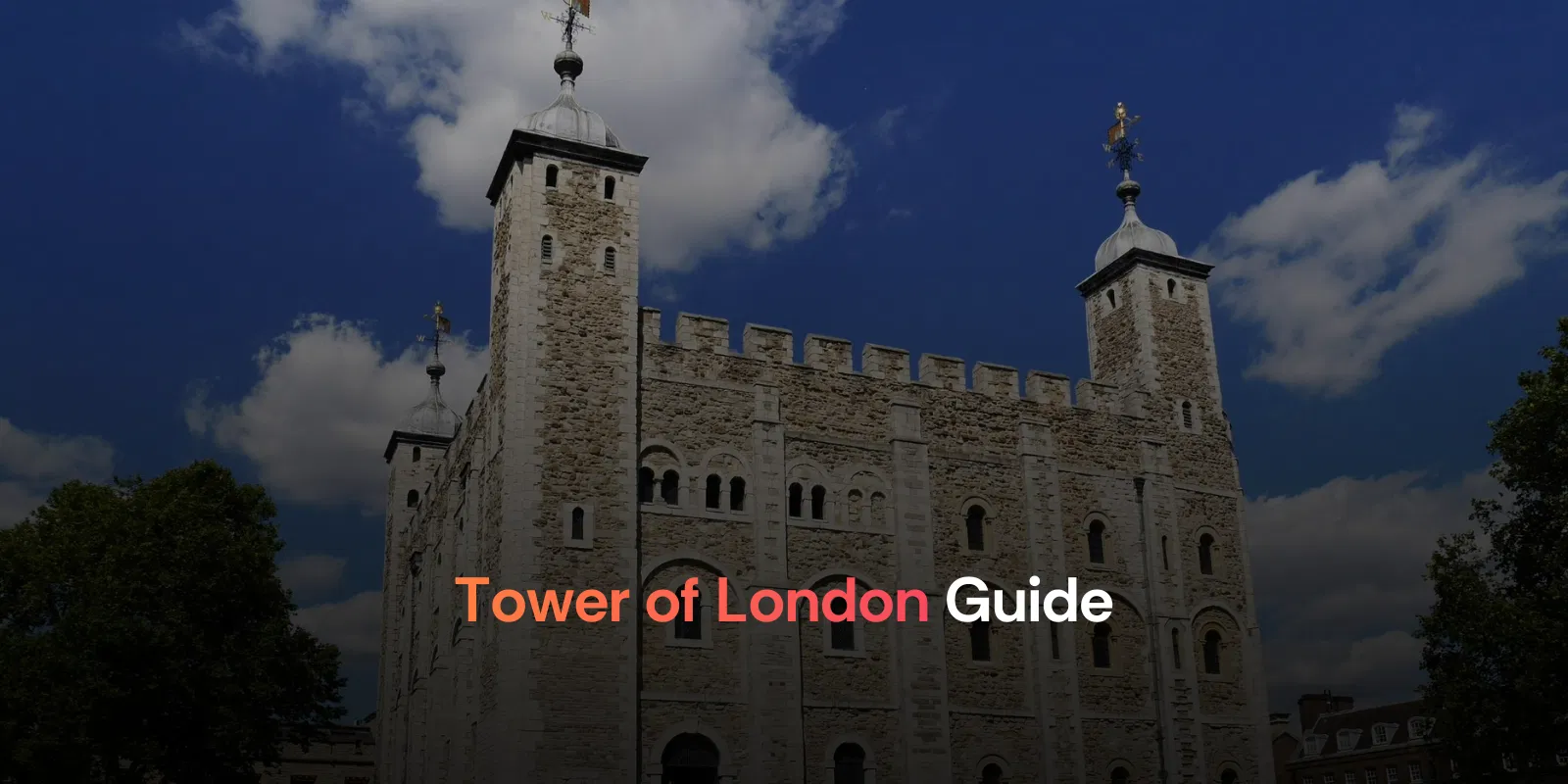
The original Norman keep at the heart of the complex is one of the best-preserved examples of Norman architecture in Europe. Inside is a magnificent collection of arms, armour, and weapons spanning eight centuries – including Henry VIII's enormous tournament armour (a poignant visual reminder that he wasn't always the sedentary figure of later portraits). The chapel of St John the Evangelist on the upper floor is startlingly beautiful and rarely crowded.
The Medieval Palace
Step inside the reconstructed medieval living quarters to see what royal life at the Tower actually looked like – not the sanitised version, but the real thing: tapestries, period furniture, and throne rooms that communicate genuine power. Interactive elements throughout make this particularly engaging for children and families.
The Bloody Tower
This is where the story of the Tower's most famous prisoners – including Sir Walter Raleigh and the doomed Princes in the Tower – is told in full. The Bloody Tower takes its grim name seriously, and the storytelling is exceptional. Allow at least 30 minutes here.
Tower Green and the Execution Site
This grassy courtyard is where seven notable prisoners, including Anne Boleyn and Catherine Howard, were executed privately (rather than on the more public Tower Hill). A glass memorial marks the spot. It's quiet, sobering, and unexpectedly moving.
A Suggested Itinerary: How to Spend Your Time
| Time | Activity | Tips |
|---|---|---|
| On arrival | Yeoman Warder Tour | Free with entry; departs regularly from the main entrance. Unmissable. |
| First 45 minutes | Crown Jewels | Head here immediately – queues build fast |
| Next 45–60 minutes | White Tower | Ground floor to top; don't skip St John's Chapel |
| Next 30–45 minutes | Medieval Palace | Good for families; interactive elements throughout |
| Next 30 minutes | The Bloody Tower | Sit with the Princes in the Tower story |
| Final 30 minutes | Traitors' Gate, Tower Green, Ravens | Walk the outer walls; find the ravens |
| After exit | Tower Bridge | A 5-minute walk; add it to your London Tourist Pass BYOP |
Tower of London for Families: What Works and What to Prepare For
The Tower of London is excellent for families, but it rewards some planning. Here's what parents travelling with children should know:
| Age Group | What Works Best | Tips |
|---|---|---|
| Under 5s | Crown Jewels (visual spectacle), Ravens | Keep expectations realistic; cobblestones challenging for pushchairs |
| 5–10 | Yeoman Warder Tour, Medieval Palace, Armoury | The costumed guides are fantastic with this age group |
| 11–15 | Bloody Tower, White Tower, Execution Site | The history is genuinely gripping at this age |
| 16+ | Everything, especially early morning | Arrive at opening for the most peaceful experience |
A family of four visiting the Tower of London at walk-up prices will typically spend £87–93 on entry alone. Add this to the London Eye, Madame Tussauds, and Westminster Abbey, and you're easily looking at £350–400+ in attraction costs for the family. The London Tourist Pass significantly reduces that figure – at five attractions, savings of approximately 40% mean the pass pays for itself many times over on a family visit.
Seasonal Appeal: When to Visit the Tower of London
| Season | Pros | Cons |
|---|---|---|
| March–May (Spring) | Shorter queues; pleasant weather; good light for photography | Easter period gets busy |
| June–August (Summer) | Special evening events; Ceremony of the Keys access ballot; lively atmosphere | Peak crowds; highest prices; book everything in advance |
| September–November (Autumn) | Thinner crowds; lower prices; atmospheric lighting | Shorter opening windows |
| December–February (Winter) | Fewest crowds; atmospheric fog; romantic for honeymooners | Reduced hours; some events paused |
For honeymooners: The Tower of London at dusk, particularly in winter, is one of London's most quietly atmospheric experiences. The Ceremony of the Keys – a 700-year-old nightly locking ceremony – is available by free ticket ballot and is genuinely spectacular for couples who want something beyond the tourist trail.
For backpackers and long-stay visitors: The Tower is typically highest on the priority list of first-time London visitors. If you're on a longer European trip passing through London, it's one of only a handful of paid attractions in the city worth budgeting for – the others being the London Eye, Warner Bros. Studio Tour, and Westminster Abbey. Building all four into a London Tourist Pass BYOP is the most economical way to cover them.
Direct flights note: London is served by six airports – Heathrow (LHR), Gatwick (LGW), Stansted (STN), Luton (LTN), City (LCY), and Southend (SEN). For visitors from North America, direct services to Heathrow are most common. From Heathrow, Tower Hill is approximately 50 minutes via the Piccadilly Line and District Line. From Gatwick, it's a Gatwick Express to London Bridge or Victoria, then onward by Tube.
How to Book via the London Tourist Pass
Booking the Tower of London through the London Tourist Pass is straightforward:
- Visit London Tourist Pass.
- Select the Tower of London as one of your BYOP attractions
- Watch your real-time savings update as you add further attractions (the more you add, the better it gets)
- Choose your visit date and check out
- Receive your e-tickets by email – same-day delivery for urgent visits, within 48 hours otherwise
- Present your digital ticket at the Tower entrance – no queue at a box office, no scrambling for a printer
The Tower of London pairs exceptionally well with Tower Bridge (a 5-minute walk), and both can be added to the same BYOP pass for compounding savings. A Westminster day – Westminster Abbey, the London Eye, and Buckingham Palace area – is an equally popular BYOP cluster.
Current free inclusion with every pass: a free eSIM for international visitors. This means you arrive in London with full UK data connectivity – useful for navigating to Tower Hill, accessing your e-tickets, and planning your next stop.
Practical Tips from People Who've Been
- Wear comfortable shoes. The Tower grounds are predominantly cobblestone. Beautiful to look at; genuinely painful in inadequate footwear after three hours.
- Book a Yeoman Warder Tour slot in advance if possible. Tours depart throughout the day and are free with entry, but can fill up quickly in peak season. The Tower's website lists tour times.
- The Ceremony of the Keys is free but requires a ballot. Apply at least 2–3 months in advance at the Historic Royal Palaces website. It's worth it.
- Visit the café early or late. The Tower's café is excellent but fills rapidly at lunchtime. Either eat before midday or wait until after 2pm.
- Don't neglect the outer walls. Many visitors stay in the central courtyard area and miss the wall walks entirely. The views from the outer battlements – including a direct line of sight to Tower Bridge – are among the best free perspectives in London.
- Ravenmaster talks are impromptu. If you see the Ravenmaster with the ravens, stop and listen. These talks aren't scheduled, they're spontaneous, and they're wonderful.
Add the Tower of London to your London Tourist Pass – and save more the more you add.
Frequently Asked Questions (FAQ)
How much do Tower of London tickets cost in 2026?
How much do Tower of London tickets cost in 2026?
What are the Tower of London's opening hours in 2026?
What are the Tower of London's opening hours in 2026?
How long does a visit to the Tower of London take?
How long does a visit to the Tower of London take?
What is the best time of day to visit the Tower of London to avoid queues?
What is the best time of day to visit the Tower of London to avoid queues?
Is the Tower of London suitable for young children and families?
Is the Tower of London suitable for young children and families?
Can I visit the Tower of London and Tower Bridge on the same day?
Can I visit the Tower of London and Tower Bridge on the same day?