What's Inside Big Buddha, Phuket?
The road twists upward through coconut trees, scooters hum past, and the scent of incense mixes with sea breeze. Somewhere above the canopy, a marble figure catches the sunlight. Locals call it Phuket Big Buddha, but once you’re there, you realise it’s not just a monument — it’s the island’s quiet pulse.
Whether you’re planning a winter escape from Europe, a long weekend from the GCC, or a culture-rich day out from Patong or Karon, this insider guide brings Big Buddha Nakkerd Hill to life — stories, details, and real traveller wisdom.
What is Big Buddha Phuket?
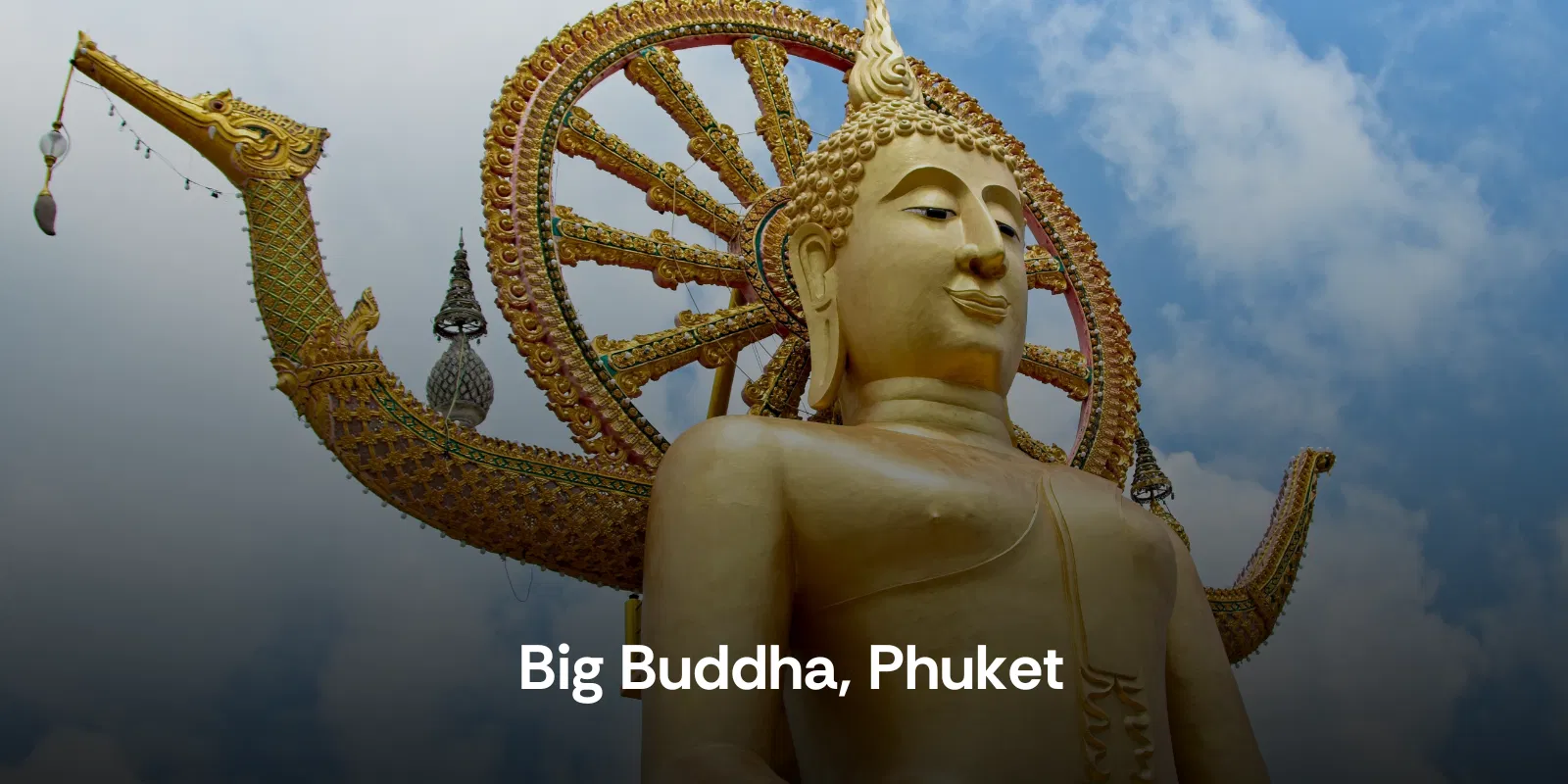
Big Buddha Phuket, officially known as Phra Phutta Ming Mongkol Eknakiri, is one of the most recognisable Phuket spiritual landmarks. It rises 45 metres high on Nakkerd Hill, between Chalong and Kata, visible from much of the southern coast.
Built in 2004, the Big Buddha statue is made from reinforced concrete and covered in Burmese white jade marble, giving it that serene glow that changes with the day’s light. Beneath the statue lies a small meditation hall, donation area, and displays about Buddhism in Phuket and the project’s history.
It’s part temple, part viewpoint, part living space of prayer — a Phuket cultural site that blends quiet faith with incredible island panoramas.
Why travellers love it — and what you’ll actually feel there
Indian families come for its peaceful energy and open spaces; GCC travellers enjoy its cultural depth paired with those famous Big Buddha views; European solo visitors often come to meditate or watch the sunset over Karon Bay.
Step onto the marble terrace and the noise of engines fades. The wind hums against bells, monks chant softly, and visitors tie saffron ribbons for luck. No loud vendors, no pushy tour guides — just a calm, airy rhythm that feels miles away from Phuket’s nightlife.
Insider note: arrive at 6:30 am — when locals climb barefoot, light incense, and watch the first orange streaks of sun slide over Chalong Bay. It’s easily the most moving time to be there.
If you are a solo woman travelling to Thailand, read this guide!
Location and accessibility
Phuket Big Buddha location: Nakkerd Hill, between Chalong and Kata. Google Maps: “The Great Buddha of Phuket (Big Buddha Phuket)”.
| From | Travel time | How to get there | Approx. cost (2025) |
|---|---|---|---|
| Patong | 30–40 min | Taxi / Grab / Bolt | THB 400–600 (£9–13 / ₹930–1,400) |
| Karon / Kata | 20 min | Local taxi or rented scooter | THB 250–400 (£5.50–9 / ₹580–930) |
| Phuket Town | 35 min | Taxi / car | THB 500 (£11 / ₹1,160) |
| Chalong | 15 min | Drive / Tuk-tuk | THB 150 (£3.30 / ₹350) |
Roads are paved but winding; the final stretch climbs steeply, so scooters need confident riders. Parking is free at the top.
What you’ll find inside and around the site
At first glance, it’s a giant seated Buddha. But walk around and you’ll uncover several layers that make it far more than a viewpoint.
1. The Terrace
Panoramic views of Chalong Bay, Kata Beach, and Phuket Town. Locals say you can spot the Andaman Sea on one side and forested hills on the other — a full sweep of the island.
2. The Chapel Hall
Inside the base is a small Big Buddha temple, housing golden Buddha images, donation boxes, and monks who perform blessings. You can receive a short water blessing (small donation appreciated).
3. The Donor Wall
Hundreds of tiles inscribed with visitors’ names — a touching symbol of shared faith. For THB 300–500 (£6.50–11 / ₹700–1,160), you can add your name and support maintenance.
4. The Meditation Hall
Quiet, dimly lit space where monks and locals sit cross-legged in silence. Even five minutes here can calm a restless traveller’s mind.
5. The Outer Path
A walking route looping around the base, dotted with smaller Buddhist statues and Naga serpent motifs guarding staircases — a common feature in Buddhist temples in Phuket.
6. The Bell Corridor
Rows of bronze bells that you can gently tap for luck. The sound ripples through the valley below — subtle, soothing, unforgettable.
Table: Essential visitor details (2025)
| Category | Information |
|---|---|
| Opening hours | 6:30 am – 6:30 pm daily |
| Entry fee | Free (donations appreciated) |
| Dress code | Shoulders and knees covered; free sarongs available at entrance |
| Best visiting time | Early morning (6:30–8:30 am) or late afternoon (4:30–6 pm) |
| Accessibility | Moderate climb; stairs and ramps; not fully wheelchair accessible |
| Facilities | Toilets, souvenir stalls, parking area |
| Average visit duration | 1–1.5 hours |
| Wi-Fi / SIM signal | Good 4G coverage; local SIM cards available on Alike for travellers |
Hidden gem: the monk blessing corner
Few tourists notice the small wooden hut beside the donation desk. Inside, a monk sits quietly with a silver bowl. For a THB 100 (£2.20 / ₹230) donation, he’ll sprinkle holy water on your head while chanting. You’ll receive a white cotton bracelet tied around your wrist — meant to protect you for the rest of your trip. It’s one of the most personal experiences you can have in Phuket.
Learn about public transportation in Thailand before planning your trip!
What to eat, shop and experience nearby
The hillside road has a handful of small cafés and stalls:
- Nak Kerd Café – wooden deck, iced Thai coffee, and views over Kata.
- The Big View Restaurant – simple Thai dishes; perfect for lunch after visiting the temple.
- Baan Chalong Café – local coconut ice cream stop halfway down.
Souvenir stands near the car park sell small Buddha figurines, wooden bells, sarongs, and amulets. Prices start around THB 100 (£2.20 / ₹230).
Insider tip: avoid buying Buddha head statues — Thai law discourages exporting Buddha heads; buy full-figure icons instead.
Best time to visit Big Buddha Phuket
| Month | Weather | Traveller notes |
|---|---|---|
| Nov – Feb | Cool, clear skies | Ideal for outdoor visits; peak tourist season. |
| Mar – May | Hot, humid | Visit early morning; carry water. |
| Jun – Oct | Occasional rain | Cloudy days make photos softer and crowds thinner. |
GCC travellers often prefer December–February, when evenings hover around 25 °C. European travellers escaping winter find it comfortable for day trips and temple visits.
Insider travel tips
- Dress modestly – shoulders and knees covered; no tight or sheer clothing.
- Bring small change – for donations or buying incense.
- Beware of monkeys – they may grab snacks or sunglasses.
- Don’t point your feet at Buddha statues; it’s considered disrespectful.
- Avoid drones – the site is a no-fly zone.
- Go weekday mornings – fewer tour buses, more silence.
- Stay for the sound – when the wind rings all the bells at once, it’s genuinely moving.
Also read - Best time to visit Thailand on Budget
Attractions near Big Buddha Phuket
Make your day richer with these stops nearby:
| Attraction | Distance | Why visit |
|---|---|---|
| Wat Chalong | 15 min | Phuket’s largest and most sacred Buddhist temple. |
| Kata Viewpoint | 20 min | Three-beach view over Kata Noi, Kata, and Karon bays. |
| Karon Beach | 25 min | Long, golden beach; calm for swimming. |
| Phuket Old Town | 35 min | Sino-Portuguese architecture, cafés, and night markets. |
Many Phuket sightseeing tours combine these with Big Buddha for a balanced mix of culture and coastline.
A simple half-day itinerary
| Time | Activity |
|---|---|
| 6:30 am | Arrive at Big Buddha, enjoy sunrise and quiet prayer bells. |
| 8:00 am | Walk around terrace, receive monk blessing, donate a tile. |
| 9:30 am | Breakfast at Nak Kerd Café overlooking Chalong Bay. |
| 10:30 am | Head to Wat Chalong for temple visit. |
| 12:00 pm | Lunch in Chalong or Kata. |
Costs to expect (2025)
| Item | Cost (THB) | GBP | INR |
|---|---|---|---|
| Taxi from Patong (one way) | 500 | £11 | ₹1,160 |
| Donation / Blessing | 100 | £2.20 | ₹230 |
| Tile inscription | 300–500 | £6.50–11 | ₹700–1,160 |
| Iced coffee at Nak Kerd Café | 80 | £1.80 | ₹185 |
| Souvenir amulet | 150 | £3.30 | ₹350 |
All prices updated as of October 2025 and may vary slightly by season.
Local culture and etiquette
Thailand follows Theravāda Buddhism, and the Big Buddha is an active place of worship. Keep voices low, remove hats, and always step down lower than any monk passing by. Couples — even married ones — are asked not to embrace within the temple area.
GCC and European travellers often remark how respectful and peaceful the site feels — a contrast to Phuket’s resort bustle.
Sustainable travel at Big Buddha
Donations fund ongoing maintenance and environmental clean-ups on Nakkerd Hill. Visitors can support by:
- Buying reusable water bottles at the café.
- Using designated bins — recycling is clearly marked.
- Donating for marble restoration rather than leaving paper offerings.
- Joining the local volunteer group “Keep Nakkerd Clean” on weekend mornings.
Photography and best viewpoints
Golden hour (just before sunset) lights the marble in gold tones, while mornings bring soft mist over Chalong. Top spots:
- East side of the terrace for sunrise shots.
- South railing for panoramic coastline.
- Lower car park viewpoint for a wide-angle of the entire statue.
Tripod use is allowed outside the main terrace; drones are banned without written permission.
Every traveller leaves with a slightly different memory — a monk’s blessing thread, a sound of bells in the breeze, a photo of the marble against blue sky. For me, it was the moment when a cloud drifted behind the Buddha’s head and sunlight rimmed the entire statue — silent, simple, complete.
Big Buddha Phuket doesn’t ask you to believe in anything — just to pause long enough to notice.
FAQs
What time does Big Buddha Phuket open?
What time does Big Buddha Phuket open?
How much does it cost to visit?
How much does it cost to visit?
What’s the best way to get there?
What’s the best way to get there?
Can families or solo travellers visit comfortably?
Can families or solo travellers visit comfortably?
What should I wear?
What should I wear?