Desert Safari Dubai Guide: Morning vs Evening, and How to Avoid the Tourist Traps
A desert safari in Dubai is a half-day or evening trip out to the desert, usually the Al Marmoom or Lahbab area southeast of the city, built around dune bashing in a 4x4, a stop for photos, and either a short daytime activity list or a full evening camp experience with dinner and entertainment. Morning safaris are shorter, cooler, calmer and better suited to families with young children or anyone short on time. Evening and overnight safaris are longer, built around sunset dune bashing and a desert camp with a barbecue dinner, live entertainment and (usually) camel rides, and suit travellers who want the fuller experience rather than a quick add-on. Pricing varies enormously by operator, vehicle-sharing arrangement and what's genuinely included, so this guide deliberately doesn't quote a number. What matters more is knowing what you're comparing before you pay for anything.
The bigger risk with a desert safari isn't picking morning over evening. It's booking on price alone and finding out on the day that half the "included" experience is actually a paid upsell. That's the part most guides skip, and it's covered in detail below. If you're building a full Dubai trip rather than booking activities piecemeal, a holiday package that bundles a vetted desert safari removes most of that risk before you even start comparing operators.
What actually happens on a desert safari
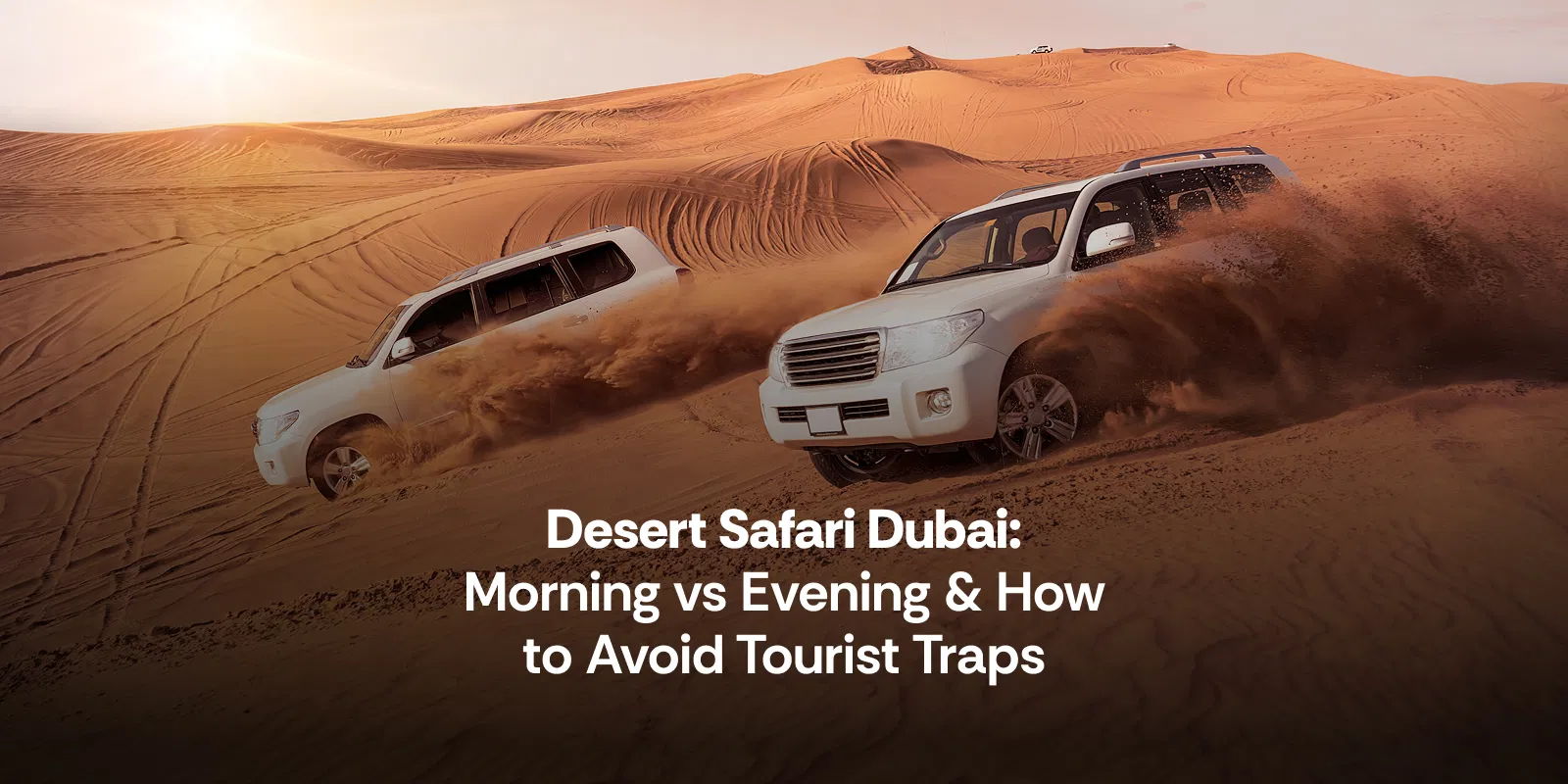
Most Dubai desert safaris follow a similar shape regardless of which company runs it, because most operators are pulling from the same handful of desert conservation areas and the same basic activity list. A vehicle, usually a Toyota Land Cruiser modified for dune driving, picks you up from your hotel or a central meeting point, drives out to the desert (typically 45 minutes to an hour from most Dubai hotels), and spends anywhere from 20 minutes to an hour doing dune bashing: a driver takes the vehicle up, down and across the dunes at speed, which is the part most people either love or find genuinely unsettling.
From there, the itinerary depends on which safari you've booked:
- A short stop for sunset or landscape photos, usually at a high dune with a view
- Sandboarding on a soft dune, sometimes included, sometimes a paid add-on
- Camel photo opportunities, occasionally a short ride
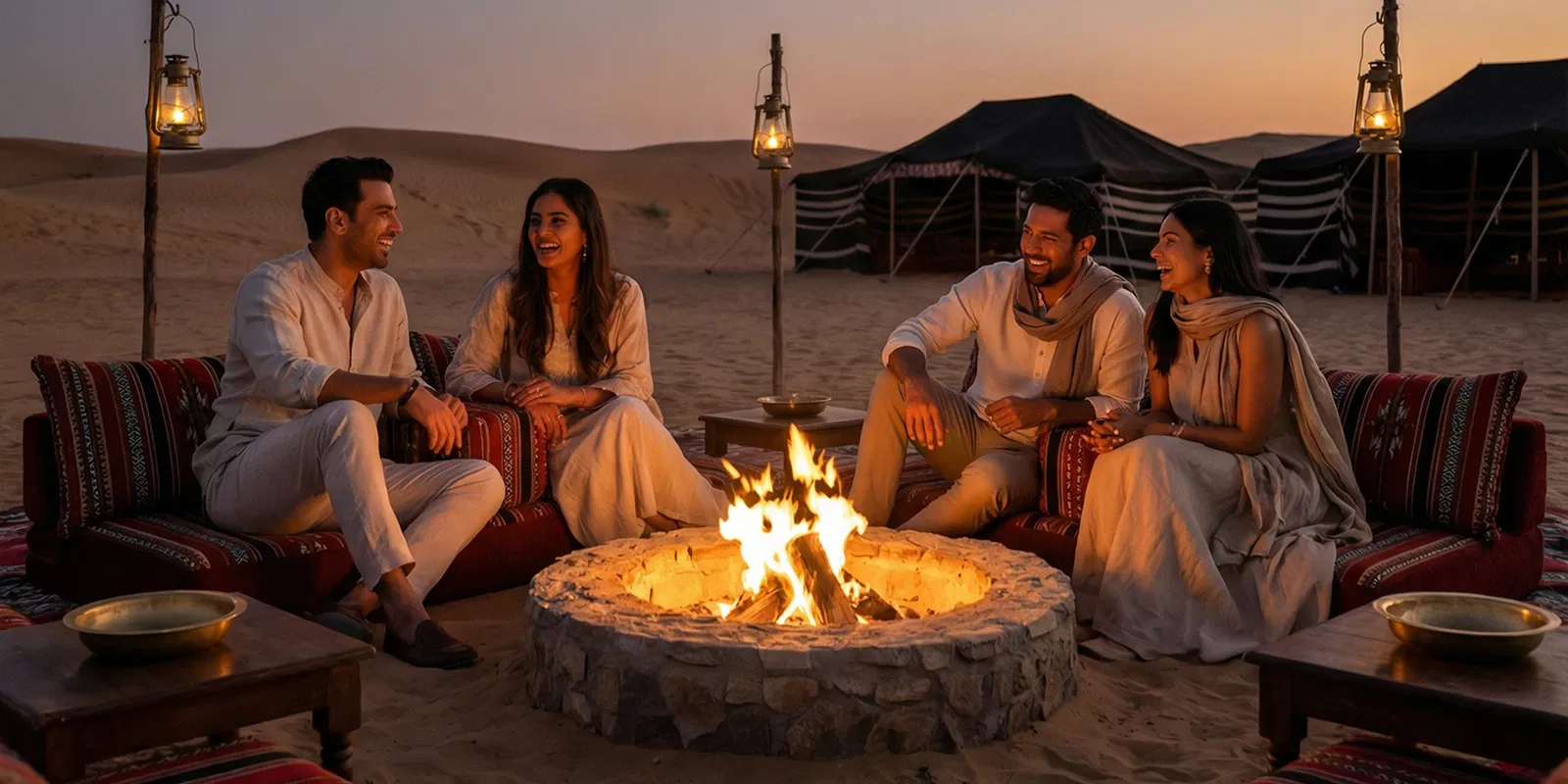
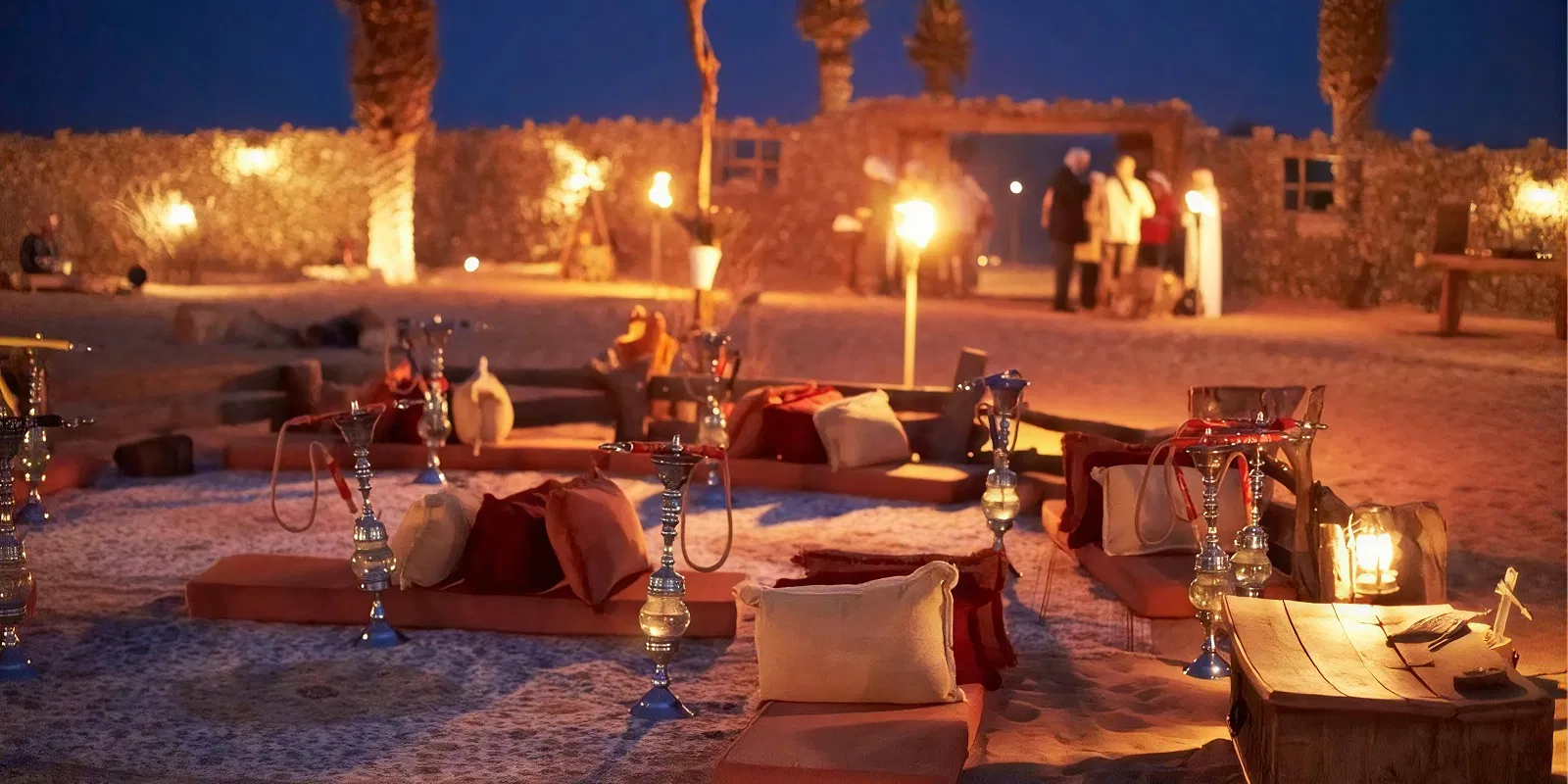
- For evening trips, arrival at a desert camp: seating (majlis-style cushions or plastic chairs depending on the operator), a buffet-style barbecue dinner, and entertainment that typically includes a tanoura (spinning) dance and sometimes belly dancing
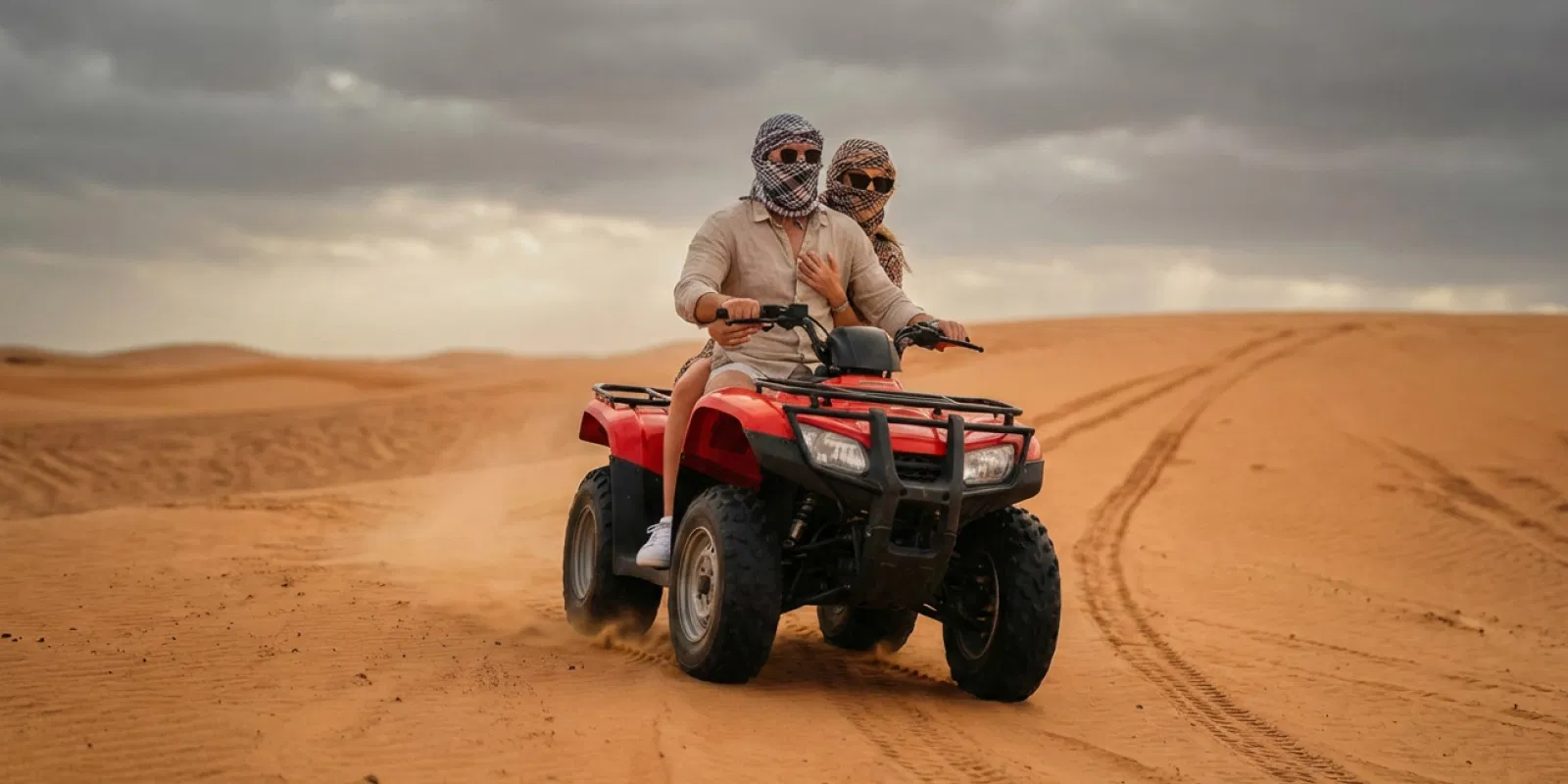
- Optional extras that are almost always charged separately even when a base package is cheap: quad biking, dune buggies, falconry photos, and professional photography packages
None of this requires you to book through any specific company to be true. It's the standard structure of the product across nearly every operator in Dubai, from budget shared tours to private luxury camps. What differs enormously is the quality of execution at each step, which is the part covered in the warning section further down.
Morning vs evening safari: what each actually gives you
This is the first real decision, and it depends more on who you're travelling with and what you want out of the day than on price.
| Morning Safari | Evening / Overnight Safari | |
|---|---|---|
| Typical timing | Pickup around 7–9am, return by early afternoon | Pickup mid-to-late afternoon, return around 9–10pm (overnight options return the following morning) |
| Duration | Roughly 4–6 hours | Roughly 6–7 hours (longer for overnight camping options) |
| Heat exposure | Cooler part of the day, but still direct desert sun with little shade | Dune bashing happens near sunset; the sit-down camp portion is after dark and noticeably cooler |
| What's typically included | Dune bashing, a photo stop, sometimes sandboarding or a camel photo stop | Dune bashing, sunset photo stop, desert camp with BBQ dinner, live entertainment, camel rides |
| Atmosphere | Quieter, fewer other groups at each stop, more practical than experiential | Livelier, built around the "experience": dinner, music, dancing, shisha at most camps |
| Best suited to | Families with young children, travellers with limited time, anyone prone to overheating or motion sickness who wants a shorter dune-bashing window | Couples wanting a sunset-and-dinner experience, groups of friends, travellers who want the full evening rather than a quick add-on |
| Downsides to know about | Fewer "wow" moments: no camp, no dinner, no entertainment | Longer day, later return time, and the parts people find most magical (sunset, camp atmosphere) are exactly the parts that get compromised first at budget operators |
Who tends to do better with which
Families travelling with children under six generally have an easier time with a morning safari. Dune bashing itself can be uncomfortable or frightening for very young children, and an evening safari means a tired, overstimulated child at a noisy camp well past a normal bedtime. If a family wants the camp experience, ask specifically whether the operator runs an early-evening slot that returns before 8pm rather than the standard late-evening departure.
Couples and travellers prioritising the sunset-and-dinner experience are almost always better off with evening safaris. That's genuinely the stronger version of the product, and it's the one most marketing photography is built around. Solo travellers and small groups who mainly want the adrenaline of dune bashing without the dinner and entertainment can save time (though not necessarily money, since evening safaris aren't reliably more expensive) by choosing a shorter morning slot instead.
Overnight desert safaris, where you sleep in a desert camp rather than returning to the city, are a smaller niche product, generally suited to travellers with an extra day to spare and a genuine interest in stargazing and a slower pace, rather than anyone trying to fit a safari around a tight Dubai itinerary.
Best time of year to go
Dubai's climate makes timing matter more for a desert safari than for most other attractions in the city. From roughly June through September, daytime desert temperatures regularly climb well above what most travellers find comfortable for outdoor activity, and dune bashing in the middle of the day during this period can be genuinely draining rather than fun. Evening safaris are the more sensible choice during the hottest months, since dune bashing happens as temperatures start dropping toward sunset.
From roughly November through March, daytime temperatures are far more manageable, which is why this window is generally considered the strongest time for a morning safari specifically. Evenings during these cooler months can also drop enough that the "bring a layer" advice below genuinely matters, not just as a precaution.
If you're travelling in peak summer and a desert safari is a priority, evening is the safer choice on comfort grounds alone, regardless of which safari style you'd otherwise prefer.
The upsell and quality warning (read this before you book anything)
This is the part of desert safari planning most guides gloss over, and it's where most of the real disappointment happens. It's not that desert safaris are a bad product; it's that the category has a well-documented pattern of bait pricing.
Watch for these patterns with any operator, not just the cheapest ones:
- A very low advertised base price that excludes almost everything memorable. Quad biking, sandboarding equipment, professional photography, and sometimes even the camel ride are sold as on-the-day add-ons at some operators, often at a noticeable markup once you're already standing in the desert with your group and limited alternatives.
- Overcrowded shared vehicles. A "shared" safari can mean six people crammed into a vehicle designed for that number but with no spare space for bags, cameras or comfort during an hour of dune bashing. Ask specifically how many passengers per vehicle before booking, not just "is it shared or private."
- "Luxury desert camp" marketing that doesn't match delivery. Photos showing spacious majlis seating, shaded lounge areas and a generous buffet spread are sometimes used across multiple tiers of the same operator's offerings, including their budget tier. The camp you're actually delivered to may have plastic garden chairs, minimal shade and a smaller, simpler buffet than advertised.
- Vague inclusion lists. Terms like "refreshments," "entertainment," or "activities included" without specifics are a signal to ask follow-up questions, not a reason to assume the best.
What to check before booking, regardless of who you book through:
- Ask exactly how many people will be in your vehicle, and whether that number is fixed or a maximum. Most shared Land Cruisers run around six passengers, but confirm it for your specific booking.
- Ask what's included in the base price versus what's a paid add-on, itemised, not a general "yes, activities are included."
- Ask whether dinner is a buffet or a set menu, and roughly what it includes.
- Ask whether the camp has covered or shaded seating, particularly if you're travelling with older relatives or young children.
- Check recent reviews specifically for mentions of on-the-day upselling or overcrowding, not just an overall star rating.
- If booking through a marketplace rather than directly with an operator, check whether the listing has been vetted or is simply an unmoderated third-party listing.
None of this means budget operators are automatically worse. Some run a tight, honest operation at a lower price point than premium camps. The problem is inconsistency: within the same price bracket, delivery genuinely varies operator to operator, which is exactly why itemised inclusions and recent reviews matter more than the price on its own.
What to wear and bring
Desert conditions create a few practical needs that don't apply to most other Dubai activities:
- Closed-toe shoes for dune bashing and any sandboarding, since sand gets everywhere in open sandals, and closed shoes matter more than most people expect when climbing in and out of a 4x4 on soft sand.
- Sun protection: sunscreen, sunglasses and a hat or light scarf, even for evening safaris, since the drive out and initial dune bashing usually happens before sunset.
- Light, loose clothing that covers shoulders and knees comfortably, practical for sun exposure and generally more culturally appropriate at a camp with mixed company.
- A light layer for the evening, particularly outside the hottest summer months, since desert temperatures drop noticeably after dark, more than people expect coming from a hot city day.
- A dust-tolerant bag or cover for cameras and phones, since dune bashing kicks up genuine dust, especially in an open-window or convertible-style vehicle.
- Motion sickness precautions if you're prone to it, since dune bashing is closer to an off-road rally experience than a scenic drive, and it catches some travellers off guard.
Budget and planning advice
Desert safari pricing varies too widely across operators, vehicle types (shared versus private), inclusions and season to state a meaningful number here. Treat any article that quotes a single "typical price" for Dubai desert safaris with some scepticism, since the range between a basic shared morning safari and a private premium evening camp experience is substantial. The better question isn't what this should cost, it's what you're actually being compared against. Always compare like-for-like inclusions (same vehicle type, same meal format, same activity list) before comparing price.
A few planning notes worth knowing:
- Book at least a few days ahead during peak travel season (roughly November through March), when camp capacity fills up faster than the low-season months.
- Private vehicles cost more than shared ones but remove the overcrowding risk entirely and usually offer more flexible pickup timing.
- Groups of friends or families booking together can sometimes book a private vehicle for close to what several shared seats would cost, which is worth asking about directly rather than assuming shared is always cheaper.
- A desert safari is usually a half-day or evening commitment, not a full day, so it pairs naturally with a lighter morning or afternoon elsewhere in the city rather than needing its own dedicated day.
Accessibility guidance
Dune bashing itself is physically demanding on the vehicle's occupants, with sustained sharp turns, dips and drops at speed, and isn't a good fit for pregnant travellers, anyone with a back, neck or spinal condition, recent surgery, or motion sickness sensitivity. Most operators ask about this at booking or before departure, but it's worth raising proactively rather than assuming it will come up.
For travellers with mobility needs who still want the desert camp experience without the dune bashing itself, ask specifically whether an operator offers a "scenic drive" or camp-only option that reaches the site by a paved or gentler route. This exists at some operators but isn't universally offered, so confirm before booking rather than assuming.
Desert camps are set up on natural sand, which makes wheelchair and mobility-aid navigation genuinely difficult regardless of how accessible the operator's marketing sounds. If this is a concern, ask directly what surface the seating area sits on and how far it is from the vehicle drop-off point.
Where a desert safari fits into a Dubai trip
A desert safari sits outside most city-attraction sightseeing and works better as a standalone booking than something bundled tightly into a packed sightseeing day. The pickup times, the dust, and (for evening trips) the late return all make it a poor fit for stacking against a full day at Burj Khalifa or the Dubai Mall. If you're building a broader Dubai itinerary and deciding how to balance a desert day against the city's cultural side, our Old Dubai guide covers how a half-day exploring Al Fahidi and the Dubai Creek pairs naturally against a half-day or evening desert booking, without either one crowding the other out.
Because a desert safari isn't one of the standard ticketed city attractions, it typically sits alongside a Dubai Tourist Pass rather than inside it. The pass is built for entry to attractions like Burj Khalifa, the Museum of the Future and Dubai Frame, while a desert safari is usually booked separately or as part of a wider holiday package. If you're planning a full trip rather than booking activities one at a time, a holiday package that bundles a vetted desert safari alongside your accommodation and city attractions removes a lot of the operator-vetting work covered in the warning section above. And if you're still working out how a desert day fits against everything else on your list, Eia can help sequence your Dubai days so a late-return evening safari doesn't collide with an early flight or a full sightseeing day either side of it.
Related reading
Frequently Asked Questions (FAQ)
Is a desert safari in Dubai worth doing?
Is a desert safari in Dubai worth doing?
Is morning or evening better for a desert safari?
Is morning or evening better for a desert safari?
Is dune bashing safe?
Is dune bashing safe?
What should I wear on a desert safari?
What should I wear on a desert safari?
Is quad biking included in a desert safari?
Is quad biking included in a desert safari?
How much does a Dubai desert safari cost?
How much does a Dubai desert safari cost?