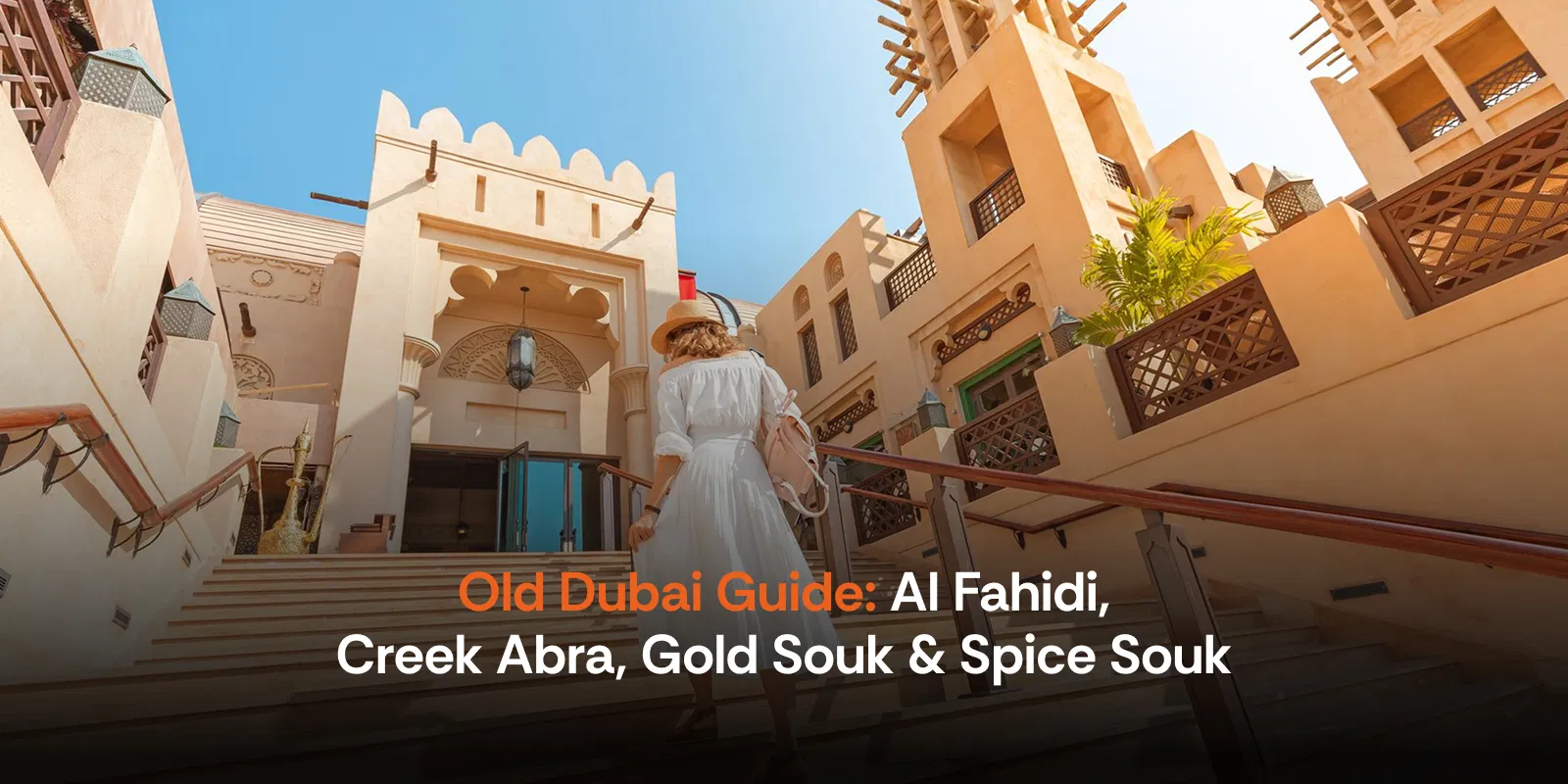
Old Dubai Guide: Al Fahidi, the Creek Abra, Gold Souk and Spice Souk
Old Dubai is the stretch of the city that predates the skyline: the wind-tower houses of Al Fahidi, the working waterway of Dubai Creek, and the trading souks of Deira that gave the city its start as a port before oil or towers entered the picture. It's compact enough to cover in half a day on foot and by boat, and it's one of the few parts of Dubai where the Metro, a AED 1 boat ride and your own legs get you further than a taxi will. If you're building this into a wider Dubai trip, our Dubai Tourist Pass covers where paid attractions fit around a largely free morning like this one.
This guide covers one continuous route: Al Fahidi Historic District on the Bur Dubai side of the Creek, the abra crossing itself, and the Gold Souk to Spice Souk walk on the Deira side, plus which Metro stations serve each stop, what to wear, and where photography needs a second thought.
Getting oriented: Bur Dubai and Deira, either side of the Creek
Dubai Creek splits the old city into two districts. Al Fahidi Historic District sits on the Bur Dubai side: this is the wind-tower neighbourhood, largely restored, with narrow lanes, courtyard cafés and a handful of small museums and galleries. Cross the Creek by abra and you land in Deira, home to the Gold Souk and Spice Souk, still functioning trading markets rather than reconstructions.
The natural order is Al Fahidi first, then the abra crossing, then Gold Souk and Spice Souk, roughly north to south becomes west to east once you're on the water. Budget half a day for an unhurried version of all three; it compresses to two to three hours if you're moving quickly and skipping the paid stops.
Al Fahidi Historic District: wind towers, lanes and what's actually worth stopping for
Al Fahidi (also called Bastakiya) is Dubai's best-preserved example of barjeel wind-tower architecture: the tall, slatted towers built into the roofline of traditional Gulf houses to funnel air down into the rooms below, decades before air conditioning existed. Walking the district means walking narrow sikkas (alleyways) between coral-stone and gypsum buildings, most now restored and repurposed as galleries, cafés and cultural centres rather than private homes, though some sections remain residential.
A sensible walking order:
- Enter from Al Fahidi Street and work through the lanes toward the Creek. There's no single fixed path; part of the appeal is that the alleys loop and cross, and getting slightly lost for ten minutes is normal.
- Al Fahidi Fort / Dubai Museum: Dubai's oldest surviving building and, historically, the city's main history museum. As of publication it has been closed for restoration for an extended period; an earlier reopening target of the first half of 2026 has now passed without a confirmed public date. Check its current status before building a visit around it.
- XVA Gallery and Hotel: a courtyard gallery showing contemporary Middle Eastern art, free to walk through during opening hours, with a café in the same courtyard that's a good stop for shade and water.
- Dubai Coffee Museum and the Coin Museum: two small, single-room museums inside restored houses; both are genuinely quick stops (15–20 minutes each) rather than must-do detours.
- Sheikh Mohammed Centre for Cultural Understanding (SMCCU): runs guided walking tours and a cultural breakfast or lunch specifically aimed at non-Muslim visitors who want direct, respectful Q&A about Emirati culture and Islam. These need booking ahead rather than turning up, and they're one of the few structured ways to ask questions you might otherwise feel awkward asking.
None of these stops requires more than an hour combined if the Fort remains closed. The value of Al Fahidi is mostly in the walk itself, the architecture, the quiet lanes away from the main tourist flow, and the contrast with the rest of the city, rather than any single ticketed attraction.
Al Fahidi by Metro
| Station | Line | Walk to Al Fahidi Historic District |
|---|---|---|
| Al Fahidi | Green | 2–4 minutes, the closest station |
| Al Ghubaiba | Green | 10–15 minutes, but closer to the Bur Dubai abra landing (roughly 5 minutes) |
If you're doing Al Fahidi first and the abra second, get off at Al Fahidi station, walk the district, then walk on to the Creek rather than backtracking to Al Ghubaiba. The abra landing is roughly as close from the district as the station is.
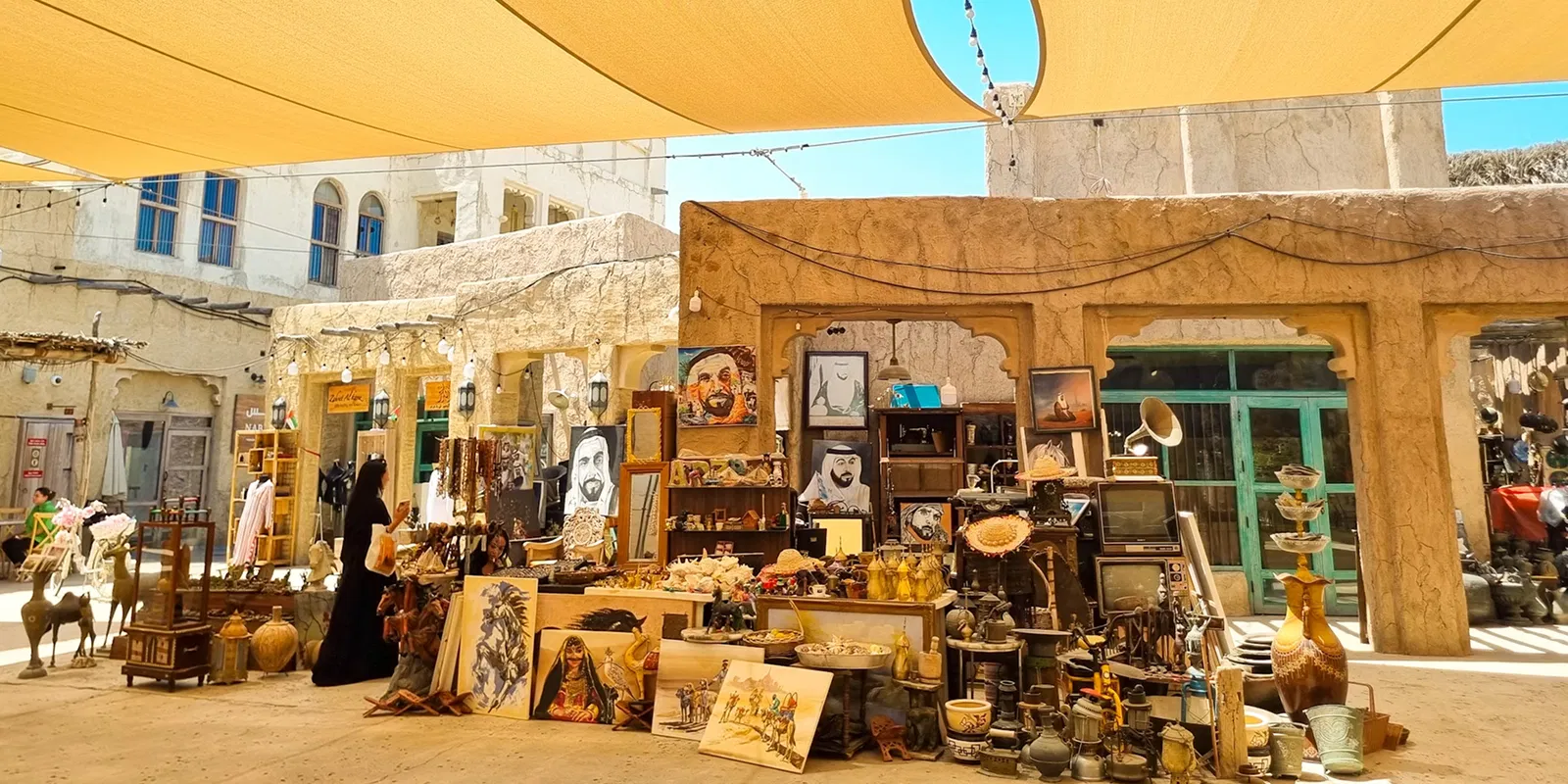
The Dubai Creek abra crossing
An abra is a small wooden ferry, unchanged in basic design for generations, that's still the primary way locals and traders cross the Creek, not just a tourist novelty laid on top of the area. The shared, traditional crossing costs AED 1 per person, one-way, paid in cash directly to the abra operator once you're aboard (RTA's official marine transport page confirms this fare and that it's cash-only). Boats run continuously from the two designated abra stations rather than on a timetable; you simply board the next one that's filling up. Services generally run from early morning into the night, though exact last-crossing times vary by station, so check locally if you're planning a very late crossing.
This is worth doing deliberately, not just as a means of getting from one souk to the other:
- It's the way the crossing has always been made. Bridges and the Metro route around the Creek; the abra crosses it directly, and at AED 1 it costs less than almost anything else you'll do in Dubai.
- It's faster than it looks. The crossing itself takes only a few minutes; walking to either bridge and back across adds far more time than the boat does, and a taxi around the Creek in traffic is usually slower still.
- The view is the point. From the water you see both the restored wind-tower skyline of Bur Dubai and the trading harbour of Deira, wooden dhows still loaded by hand with cargo bound for Iran, India and East Africa, in a way neither bank shows you on its own.
Board at the Bur Dubai (Old Souk) Abra Station, near Al Fahidi, and land at the Deira (Old Souk) Abra Station, a short walk from both the Gold Souk and Spice Souk. Boats aren't assigned seats; you board when there's space, and the ride is shared with locals commuting, not just other visitors.
Gold Souk to Spice Souk: the Deira walking route
From the Deira abra landing, the Gold Souk and Spice Souk sit close enough together to walk both without backtracking.
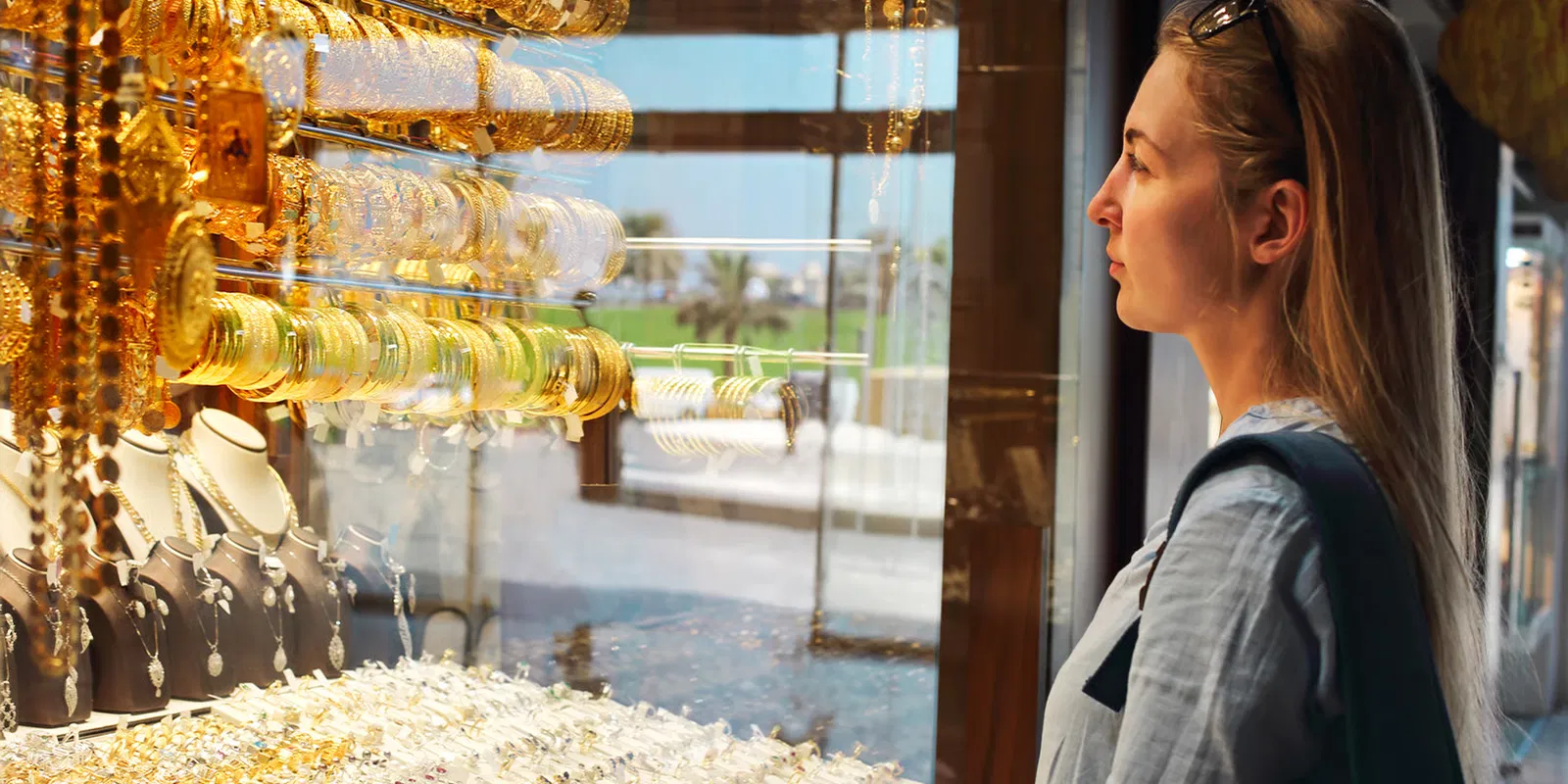
Gold Souk: a covered arcade of jewellery shops, mostly gold and precious stones, a short walk from the abra landing. It's worth walking through even without buying: window displays here are dense and elaborate in a way most jewellery districts aren't, and shopkeepers expect negotiation on price rather than fixed tags.
Spice Souk: a few minutes' walk from the Gold Souk, smaller and more atmospheric, with open sacks of saffron, frankincense, dried limes and cardamom lining narrow covered lanes. It's a working market for local buyers as much as a visitor stop, so mornings tend to be quieter and more functional than late afternoon.
Both souks are free to walk through; you're only spending money if you choose to buy.
Gold Souk and Spice Souk by Metro
| Station | Line | Notes |
|---|---|---|
| Gold Souq | Green | Closest station to both souks, a few minutes' walk to each |
| Baniyas Square | Green | Slightly further out; also close to Naif Souk if you want to extend the walk |
If you'd rather not double back on the abra, both souks are within walking distance of Gold Souq Metro Station, so you can finish the loop by Metro instead of crossing the Creek again.
Etiquette: this is a residential and historic district, not a backdrop
Al Fahidi in particular still has residents living alongside its galleries and cafés, and parts of Deira function as a working port and market, not a staged attraction. A few things matter more here than they do on, say, a beachfront promenade.
- Dress modestly. Shoulders and knees covered is the safe default for both men and women in Al Fahidi and the souks. This isn't a beach or a mall, and modest dress is a sign of respect in a district that's still partly residential.
- Ask before photographing people. Shopkeepers, abra operators and residents are going about ordinary days, not posing for visitors. A quick, friendly ask before pointing a camera at someone, rather than at a building, goes a long way, and a "no" should be respected without argument.
- Some lanes in Al Fahidi are still private homes, even where the district feels open to walk through. Stick to the clearly public lanes and courtyards rather than wandering into doorways that look interesting.
- Friday mornings are quieter across the souks, since Friday is the main day of prayer; expect some shops closed or opening later than usual.
None of this requires special planning, just the same awareness you'd bring to any residential neighbourhood you're a guest in.
Budget and timing
Old Dubai is one of the least expensive things to do in the city, which makes it a natural low-cost anchor for a day that gets more expensive later (a dhow dinner cruise, a desert safari, an observation deck).
| Item | Approximate cost |
|---|---|
| Metro (per Nol card journey) | AED 3–7.50, depending on zones crossed, with a daily cap of AED 14 |
| Abra crossing (traditional, shared) | AED 1 per person, one-way |
| Al Fahidi walking district | Free |
| XVA Gallery | Free to browse |
| Gold Souk / Spice Souk | Free to walk; spend only if you buy |
| SMCCU tour or cultural meal | Paid, advance booking required; confirm current pricing directly with SMCCU |
A realistic half-day covering Al Fahidi, the abra crossing and both souks costs under AED 10 in transport if you skip any paid museum stops or tours. The district rewards time, not spending.
Traveller scenario: a family with two children doing this as a morning activity before an afternoon indoors (heat permitting) should expect the walking pace to be closer to the "under 5s" end of planning than the "teenagers" end. Narrow, occasionally crowded lanes and market stalls hold a young child's attention in short bursts, and there's shade in Al Fahidi's lanes but very little in the souks themselves. Late morning in summer gets genuinely hot; an early start (before 10am) or a late afternoon slot works better than midday between May and September.
Accessibility notes
Al Fahidi's lanes are mostly flat but narrow and paved in a mix of stone and packed sand, manageable for most wheelchairs and pushchairs with some care, but not smooth throughout, and a few doorways into galleries have a small step up. The abra itself requires stepping down from a fixed jetty into a boat that sits slightly below it and shifts with the water; this isn't step-free, and operators generally help but there's no ramp or lift. The Gold Souk and Spice Souk arcades are flat and covered, but aisles narrow considerably when the markets are busy, which can be tight for a wheelchair or a larger pushchair at peak times. If step-free access is essential for the crossing itself, the Al Maktoum Bridge or Al Shindagha Tunnel are the alternative ways across the Creek, though both add walking time compared to the abra.
Where the Dubai Tourist Pass fits
Most of what makes Old Dubai worth a visit, the walk through Al Fahidi, the abra, both souks, is free or close to it, so a pass isn't the right tool for this half of a Dubai itinerary and we're not going to pretend otherwise. Where it does help is the rest of the day around it: if your trip also includes ticketed stops like the Museum of the Future, Burj Khalifa's observation decks or a dhow dinner cruise, building those into one Dubai Tourist Pass keeps entry times and bookings in a single place instead of several separate confirmations, and it's worth comparing against individual ticket prices for whatever list you're actually planning.
If you're pairing a culture-focused morning in Old Dubai with a desert afternoon or evening, a common way to split a Dubai day, our desert safari guide covers what to expect from the drive, dinner and activities so the two halves of the day don't compete on timing.
Related reading
Desert Safari Dubai Guide — a natural pairing for the second half of an Old Dubai day
Dubai Tourist Pass — build a list of paid Dubai attractions and compare it against individual ticket prices before you commit
If you're sequencing Old Dubai against a desert safari, Burj Khalifa or the Museum of the Future in the same trip, Eia, Alike's AI trip planner, can help lay out realistic timing across your available days.
Frequently Asked Questions (FAQ)
How much does the abra cost across Dubai Creek?
How much does the abra cost across Dubai Creek?
What is the nearest Metro station to Al Fahidi Historic District?
What is the nearest Metro station to Al Fahidi Historic District?
Is Al Fahidi Fort (Dubai Museum) open?
Is Al Fahidi Fort (Dubai Museum) open?
Do I need to cover my shoulders and knees in Old Dubai?
Do I need to cover my shoulders and knees in Old Dubai?
What's the nearest Metro station to the Gold Souk and Spice Souk?
What's the nearest Metro station to the Gold Souk and Spice Souk?
Can I do Al Fahidi, the abra and both souks in one morning?
Can I do Al Fahidi, the abra and both souks in one morning?