What's Inside Grand Palace, Bangkok?
Picture this: you arrive at the Grand Palace just as the gates open at 8:30 am. The sun is soft, the air is still humid, and only a handful of tour groups drift in ahead of you. A monk passes by on one side, and a palace guard in full regalia stands at attention near gilded spires. You pause, take a deep breath, and think: “So this is it – the Bangkok royal residence I’ve long seen in photos.” That early hour gives you space to absorb details – murals, golden rooftops, statues – before the midday heat and crowds press in.
Inside those walls, there’s far more than just a palace. It’s a layered story of kings, religion, art, and ceremony. Let me take you through everything you’d want to know – from what to look out for, to sorting out tickets, to sneaky insider tips.
Why the Grand Palace matters
Before we talk rooms and halls, here’s why this place is essential for your Bangkok itinerary:
- It served as the seat of the Thai royal court and government from 1782 (when King Rama I moved the capital to Bangkok) until 1925.
- Though the king and government no longer live here full-time, the site is still used for state functions and royal ceremonies.
- It houses the Temple of the Emerald Buddha (Wat Phra Kaew), home to Thailand’s most sacred statue.
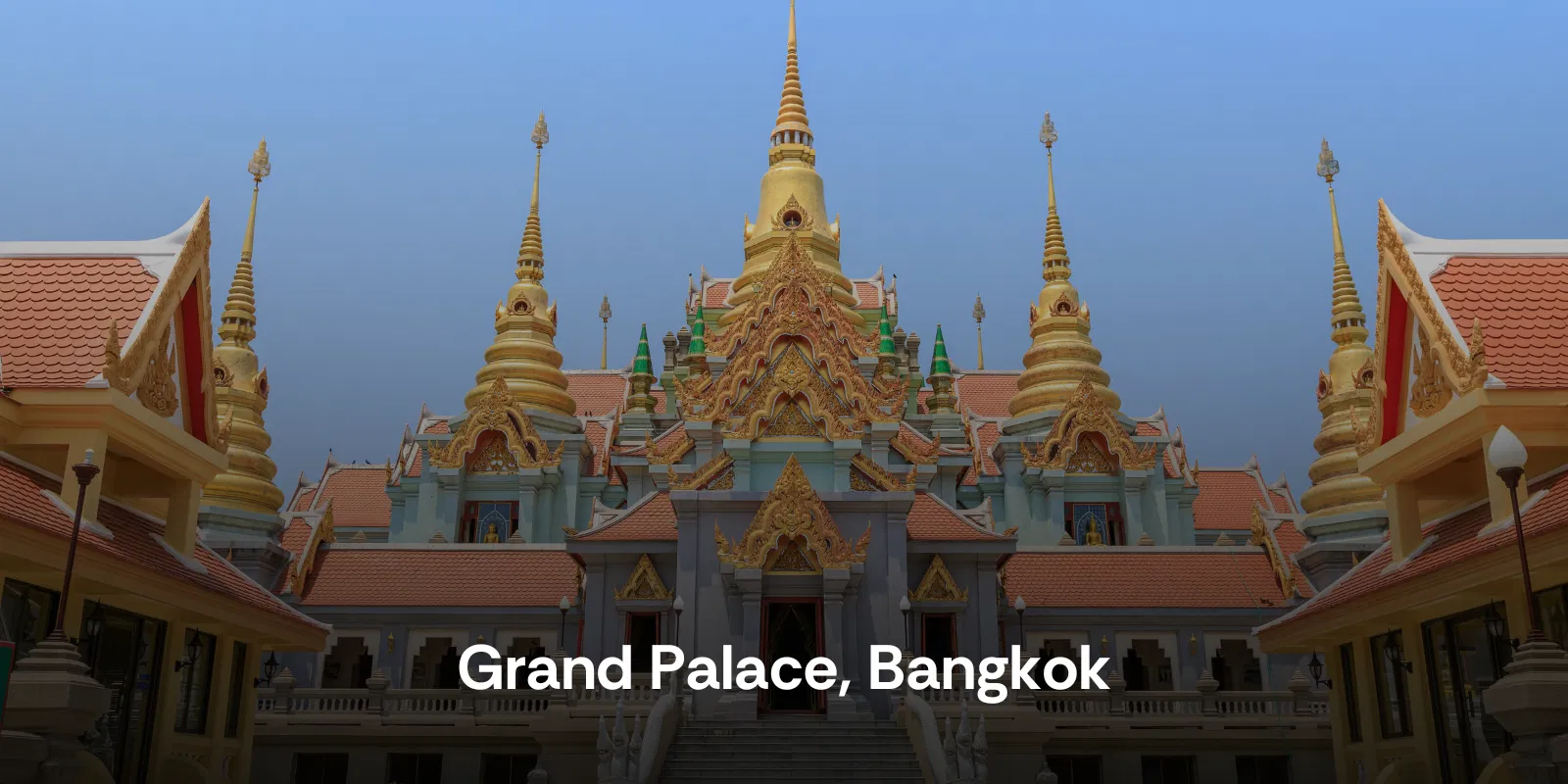
- Architecturally, the complex is a blend of Thai traditions, European influences, and successive additions by different kings, creating a patchwork that is fascinating to explore.
Because of all this, the Grand Palace is among the most visited Bangkok tourist attractions. Many GCC and European solo travellers include it in their early days in Bangkok, to get oriented with Thai history and culture.
Quick facts you need to know
| Item | Detail |
|---|---|
| Opening hours | Daily 8:30 am to 3:30 pm (last ticket sale). |
| Entrance fee | 500 Thai Baht (THB) (~£11–12 / ~₹1,030) for foreigners. |
| Free for Thai nationals | Yes, with ID. |
| Included in ticket | Access to the Grand Palace grounds, the Temple of the Emerald Buddha, and the Queen Sirikit Museum of Textiles (inside the compound). |
| Dress code | Shoulders covered, long pants or skirts (no shorts, sleeveless tops). If you arrive wrongly dressed, you might be offered wrap-arounds or refused entry. |
| Restricted zones / closures | Some areas may be closed during royal ceremonies. |
| Duration to explore | Plan 2 to 4 hours (or more, if you love art or quiet corners). |
| Best time to visit | Early morning on weekdays to avoid large crowds and midday heat. |
Getting there: directions that aren’t obvious
You have several good ways to reach the Grand Palace — I’ll highlight options common among savvy travellers (including GCC and European solo travellers who often prefer comfort, safety, and clarity):
- By Chao Phraya River ferry + walk Ride the public or express boat to Tha Chang Pier (N9), then it’s a short walk to the palace. Alternatively, you can go to Tha Tien (N8) and walk.
- By BTS + boat transfer Use the BTS (Skytrain) to Saphan Taksin station, then walk to Sathorn Pier and catch the express boat to Tha Chang.
- By taxi or tuk-tuk Direct but may get caught in traffic, especially midday. You may also be subject to surcharge or route complaints — check you’re understood and negotiate or insist on the meter.
- By tour / guided transport Many guided city tours or Alike-partner day tours include pick-ups and drop-offs, which is convenient especially for solo travellers from GCC or Europe.
When you're close, note the roads: Na Phra Lan to the north, Sanam Chai to the east, Maharat to the west — these border the palace walls.
What lies inside: the zones of the palace
The Grand Palace isn’t a single building. It’s a complex of courts, halls, gardens, temples, and hidden corners. As you wander, you’ll pass through different “courts” — each with its own character. Here’s how I’d break it down for you:
Outer Court — first impressions & public buildings
When you cross the gates, you’re in the Outer Court. This zone was once home to public offices, guardhouses, and places where officials gathered. Today, many of its original administrative functions are gone, but you’ll see some older structures and wall murals that hint at the once-busy hustle behind palace life.
Walking through the Outer Court gives you time to adjust your eyes to the glitter, colours, and decorative motifs. Also, many people start with murals here depicting scenes from the Ramakien (Thai version of Ramayana), which stretch along cloisters near the Temple of the Emerald Buddha.
The Temple of the Emerald Buddha (Wat Phra Kaew)
This is arguably the heart of the complex. Inside the walls of the palace lies Wat Phra Kaew, also known as the Temple of the Emerald Buddha. The palace ticket includes entry here.
Highlights:
- Emerald Buddha statue: A small statue carved from a single block of jade (not emerald), revered as the protector of Thailand. It changes its “costume” (seasonal robes) three times a year by the king — to mark the seasons.
- Surrounding cloisters: The temple is enclosed by walls, with beautifully detailed gates (seven gates in total).
- Murals and bas-reliefs: The walls of the Wat Phra Kaew cloisters are lined with vivid Ramakien murals — telling the Thai version of the Ramayana. Walk slowly. Patterns in dragons, landscapes, costumes all shift subtly.
- Ubosot (ordination hall): While visitors can’t enter certain sanctuaries, you’ll peer into spaces with gold trim, carved columns, and decorative pediments.
If you time it right in the early morning, you’ll have space to linger here before crowds arrive. (Many groups hit this as their first stop.)
Middle Court — throne halls, royal functions
Once you pass the temple zone, you enter the Middle Court. This area was the ceremonial and official core of the royal court. Some of its buildings:
- Phra Maha Monthien group These halls include Phra Thinang Phaisan Thaksin, once used for receptions, dinners, or private meetings. You’ll spot majestic throne chairs and mural scenes inside.
- Chakri Maha Prasat Throne Hall One of the few parts visible to public, this striking hall mixes Thai and European (Victorian) architectural styles. It was built under King Rama V. Its façade and interior are unique among palace buildings.
- Phra Maha Prasat group This group includes older throne halls and ceremonial spaces — built at different times, each with its own flavor. Some are ornate, some more austere, depending on the king who commissioned them.
- Royal Decorations & Thai Coins pavilions Though modest in scale, these showcase impressive collections of royal accoutrements, orders, medals, and numismatic history.
This zone is rich in architectural detail: gilded spires, layered roofs, stucco reliefs, and the changing light plays interesting games here.
Inner Court & Siwalai Gardens (less visited)
Beyond the middle courts lie quieter corners, often less accessible to the general public. The Inner Court was historically where queens and royal family resided — a more private area. Today, some portions are closed off or used for official functions.
The Siwalai Gardens border these inner parts; once they were simple palace gardens, but now they create green respite amid stone and gold. From here, you sometimes glimpse rooftops and hidden domes not visible from the main courtyards.
Also tucked away are smaller pavilions, some meant for private royal ceremonies, some for rest. Because these areas see fewer visitors, they reward quiet attention — look for decorative roof finials, small bas reliefs, or architectural flourishes that might be overlooked from busier corridors.
In-depth architectural notes
To truly appreciate the Grand Palace architecture, here are key angles to keep in mind (especially as a curious traveller):
- Mix of styles: The palace combines traditional Thai forms (tall, steep roofs, gilded ornament) with European (Neoclassical columns, Renaissance mouldings) especially in buildings built under King Rama V and later.
- Layered roof tiers (prang and chofah): Roofs often stack levels; roof edges sometimes end in “chofah” (bird-like finials). Watch how sunlight glints off metal tiles.
- Stucco, glass mosaic, and tile: Many surfaces are built from tiny mosaic tiles, mirrored glass pieces, and meticulous stucco work — close inspection rewards you.
- Murals and storytelling: The narrative murals (especially in the Wat Phra Kaew cloisters) are not just decorative, they tell the Ramakien epic.
- Courtyard layout and axes: The palace doesn’t follow one simple line — buildings were added over time, meaning wings and paths skew, overlap, and intersect in interesting ways.
- Symbolic proportions: Even the heights and alignments were often chosen for ritual or symbolic meaning (e.g. viewlines to stupas, alignment with the river).
If you’re someone who loves architectural detail, walk slowly, look up, and carry a lens with zoom — some of the finest details are well above eye level.
What to see, in order, to get the most out of your visit
Here’s how I’d recommend walking through, with stops you shouldn’t rush:
- Enter early, via the main gate Pause outside and take in the outer façade and walls — they’re part of the story too.
- Walk the outer cloisters and murals Stretch your legs, let your eyes wander along the Ramakien murals, and gradually adjust to the palace colours.
- Visit Wat Phra Kaew (Temple of the Emerald Buddha) Move inside the walls. Visit the Buddha statue, the cloisters, and soak in the spiritual energy and craftsmanship.
- Cross to Middle Court Explore Phra Maha Monthien, then head to the Chakri Maha Prasat Throne Hall for a stylistic contrast.
- Maha Prasat and related halls Move north through the older halls; inspect throne rooms, decorative lintels, and side rooms.
- Check the decorations / coins pavilion, smaller annexes Take side detours — the coin and decorations museum can tell you fascinating bits about Thai monarchy and court life.
- Inner court fringes and gardens If accessible, straggle into quiet corners or garden edges — these let you experience the palace with fewer people around.
- Exit via a different gate (if permitted) or retrace Sometimes you’ll end up leaving via a different exit; keep note of your entry gate for direction.
If possible, pace yourself — take short breaks in shade, and avoid trying to sprint through every hall. Many travellers (including European and GCC solo travellers) find they appreciate the quieter approach more than trying to tick every room.
Practical tips & insider hacks (things only experienced travellers often notice)
- Arrive just before opening (8:30 am) — that way you’re ahead of large tour groups.
- Ignore touts promising “faster entry” or “skip the line” — official ticketing is more reliable. Some travellers say such offers are scams.
- Dress strictly — no shorts, no sleeveless tops — I’ve seen less flexible guards refuse entry. Always carry a scarf or wrap just in case.
- Bring water — it’s hot and humid inside. There are small refreshment points, but it’s best to carry your own.
- Use a good guide or audio guide — the palace doesn’t always have full interpretation signage in English. A guide can unpack stories hidden in murals or architectural quirks.
- Take breaks under shade or in quieter side corridors — especially midday when the sun is harsh and crowds push you forward.
- Watch pockets and stray vendors — some vendors just outside the walls will try to sell pricey artefacts; bargain or walk away.
- Be cautious of timing — last entry is 3:30 pm — though the palace may remain open till later, you’ll be barred from entering new areas.
- Avoid weekends or peak public holidays — the place gets packed.
- Set aside more time than you think — many people finish in 2–3 hours; I’d budget 3–4 (or more) if you want to linger.
When to go, what time is best
- High season: November to February — cooler, less rain, but more visitors.
- Shoulder seasons: March–May (hot) or June–October (some rain). Early morning in these months helps avoid midday heat or afternoon rain bursts.
- Best time of day: The first hour after opening. The light is better for photos, the place more serene. After 11 am, crowds and heat build up.
- Watch for closures: If there’s a royal event, parts of the palace may be closed. Always check the official Grand Palace website ahead.
Tips on cost, what’s allowed & not allowed
- Ticket cost: 500 THB (~£11–12 / ~₹1,030) for foreign visitors.
- Included: The ticket gives access to the Grand Palace compounds, Wat Phra Kaew, and Queen Sirikit Museum of Textiles (inside).
- Renting cover-ups: If your clothing does not meet the dress code, there is often a booth renting wrap-arounds or trousers (with deposit).
- No drones, no pets, no revealing outfits allowed.
- Cameras are allowed in most areas, except inside some sacred halls (always respect signs).
- Food and large drinks are often disallowed within inner courtyards — better to eat before or after.
Also read - Best time to visit Thailand on a budget.
Who will especially enjoy it — and who might struggle
- Solo travellers (GCC, European, etc.) will enjoy the flexibility. Arriving early gives you personal time to absorb without group coaching. It’s fairly safe, though pickpockets may be drawn to crowd edges.
- Families: Younger kids might tire, so plan breaks. But the vivid colours and murals can captivate older children.
- Couples / honeymooners: The quieter corners (inner garden edges, side pavilions) can feel intimate. If you time the visit just right (early or late), you can have softer light and fewer crowds for shared moments.
- Older or less mobile travellers: Some walking and steps are involved. You may need rest stops. It’s doable, but pace yourself.
- Religious or culturally curious visitors will find deep meaning in the symbolism, the role of the Emerald Buddha, and the Thai royal court rituals.
Suggested walk plan for 1.5 to 3 hours
If you have limited time, here’s a lean itinerary to get the essence:
- 8:30–8:40: Enter via main gate, take in outer walls and murals
- 8:40–9:10: Explore Wat Phra Kaew — Emerald Buddha and surrounding cloisters
- 9:10–9:40: Move to middle court — Phra Maha Monthien halls
- 9:40–10:10: Continue to Chakri Maha Prasat Throne Hall
- 10:10–10:30: Visit decorations / coin pavilion
- 10:30–10:50: Slip into quieter corridors or garden edges
- 10:50–11:00: Exit, linger outside under shade, perhaps retrace steps or take photos
If you have more time, stray into the inner court fringes or rest and revisit favourite halls.
Learn about public transportation in Thailand before planning your trip!
What travellers often miss
- Seasonal robe changing of Emerald Buddha — a ritual where the king changes the statue’s attire three times a year (summer, rainy, cool seasons). Many visitors aren’t aware of this annual event.
- Queen Sirikit Museum of Textiles — tucked within the palace compound, this museum often gets bypassed. It holds exquisite royal garments, symbolism, and weaving stories.
- Small side pavilions and roofs — most people focus on big halls; few look at decorative gables, rooftop finials, or structural supports high above.
- Cultural schedule nuances — sometimes a royal or state ceremony forces partial closure. Locals or recent travellers may warn you.
- Quiet corners for rest and shade — many go non-stop through halls without resting in side corridors that are cooler and less crowded.
Etiquette, safety & behaviour
- Always bow your head slightly if you pass images of the Buddha or monks.
- Remove your shoes where required (e.g. in some temple halls).
- Speak quietly in sacred zones.
- Do not point your feet at Buddha images or monks. (Feet are considered the lowest part.)
- Respect “no photo” signage; in some inner sanctums, photography is forbidden.
- Keep personal belongings close — crowds can push you.
- Don’t touch or climb on decorative features.
- Always follow the directions of palace guards or signs — some areas may be restricted unexpectedly.
What to eat / drink nearby
You won’t find grand restaurants inside the palace (deliberately). But just outside, along streets like Maha Rat, Na Phra Lan, and Sanam Chai, you’ll see small cafés, noodle stalls, iced drinks, coconut ice cream, and street vendors offering light snacks. After your visit, you can head toward old Bangkok food quarters or riverside cafés to recharge. Many travellers pair a visit to the palace with a lunch walk in the old city or a riverside meal near Wat Pho or Tha Tien pier.
As you walk away from the Grand Palace, glance back at the spires, walls, and rooftops shimmering in the sunlight. Think about the kings who walked these paths, the monks who chanted here, the artists who painted murals, and the many visitors before you. By the end of your stay, you’ll not merely have visited a palace — you’ll have traversed centuries of Thai royal court life, faith, and artistic wonder.
One small challenge for you: try to spot a tiny detail others miss — maybe a lone decorative bird carving, a faded mural’s hidden face, or the way a golden tip catches light at dusk. Let that memory be yours.
eSIMs have changed the way we connect. But it’s still a relatively new technology for a lot of people. Not many know its benefits and are still stuck to age-old plastic SIMs, even when they travel abroad.
In this guide to eSIMs, we have scoured every information possible to help you make the much-needed transition.
Keep reading to learn what an eSIMs is, how to use it, eSIM benefits, and much more.
What’s the best time to visit the Grand Palace?
What’s the best time to visit the Grand Palace?
How much does it cost for entry?
How much does it cost for entry?
Do I need to book in advance?
Do I need to book in advance?
What should I wear/pack?
What should I wear/pack?
How much time should I allocate?
How much time should I allocate?