
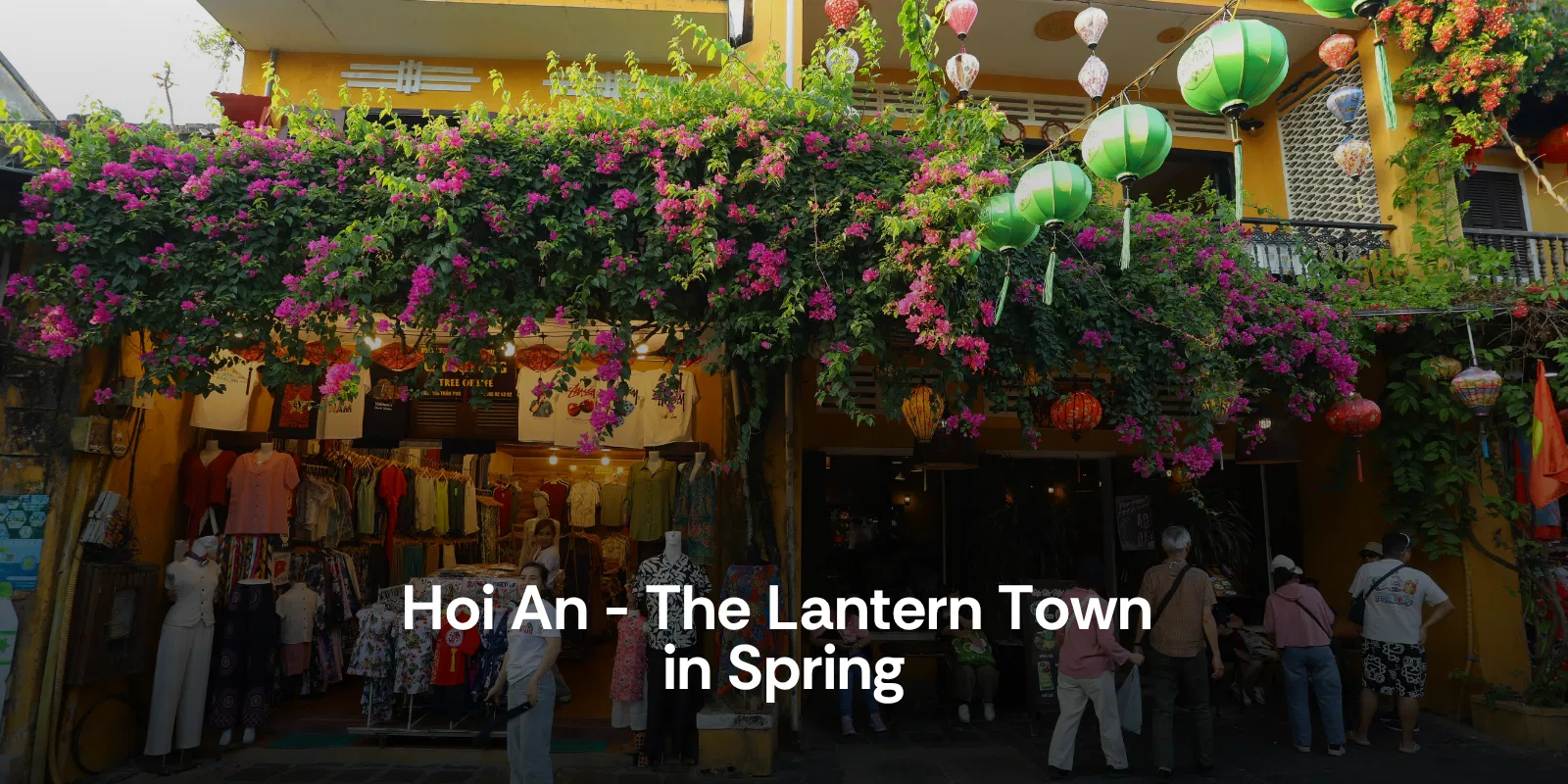
Hoi An in Spring: The Lantern Town That Looks Better in April Than in Any Guidebook
"Đèn lồng sáng, lòng người vui" – When the lanterns glow bright, hearts fill with joy. This Vietnamese saying captures exactly what happens when you arrive in Hoi An during spring, when the ancient town bathes in warm golden light without the suffocating humidity of summer or the relentless rains of autumn.
April in Hoi An feels like someone turned the saturation dial just right. The mustard-yellow French colonial buildings stand sharp against impossibly blue skies, while thousands of silk lanterns flutter in the gentle breeze along the Thu Bon River. The air smells of jasmine and fresh bánh mì, and café owners drag their low wooden stools onto the pavement, signalling that the weather—for now—is absolutely perfect.
Book your Hoi An holiday in Spring here.
Hoi An in Spring isn't just about ticking off sights; it's about experiencing Vietnam when nature, culture, and weather align in that rare sweet spot before the monsoon arrives and the crowds descend in July. If you've been wondering when to visit this UNESCO World Heritage ancient town, the answer is simple: come in spring, ideally late March through April, when Hoi An reveals its most photogenic, walkable, utterly enchanting self.
Make your Hoi An in Spring trip using Eia - Alike’s AI Trip Planner.
Know more about the trip planner here.
What is Hoi An in Spring?
Hoi An is a 2,000-year-old trading port on Vietnam's central coast, about 30 kilometres south of Da Nang. Once a bustling harbour where Chinese, Japanese, and European merchants converged, it's now one of Southeast Asia's most beautifully preserved historical towns—and spring is when the town truly shines.
Spring in Hoi An runs roughly from March through early May, with April being the absolute champion month. During this period, you get:
- Dry, sunny weather with temperatures hovering between 23°C and 30°C (73°F–86°F)
- Low humidity compared to summer's steam-bath conditions
- Fewer crowds than the peak winter season (December–February)
- Calm seas for beach trips to An Bang and Cua Dai
- Vibrant outdoor life, with evening markets, riverside cafés, and lantern displays at their liveliest
The town's famous Hoi An lanterns—those glowing silk orbs in every colour imaginable—look especially striking against clear spring skies. Unlike winter when occasional drizzle dampens the mood, or summer when oppressive heat sends everyone indoors by noon, spring offers that Goldilocks zone of comfortable exploring from sunrise to well past sunset.
Why travellers love Hoi An during spring months
Perfect weather for walking (and cycling)
The Old Town is a car-free pedestrian zone, which means you'll be doing a lot of walking. Spring temperatures make this an absolute pleasure rather than a sweaty ordeal. Many visitors rent bicycles (around €2–3/day or ₹200–250) and cruise along the river pathways or out to the rice paddies surrounding town, something that's far less enjoyable in the 35°C heat of June.
Lantern festivals without the chaos
While the famous Hoi An Lantern Festival happens on the 14th day of every lunar month year-round, experiencing it during spring means you avoid both the winter crush and summer's unpredictable rain. Read more about Hoi An Lantern Festival vs Hue Festival to understand what makes this event special compared to other Vietnamese celebrations.
Ideal for families and couples
Hoi An travel in spring suits every type of traveller. Families appreciate the manageable weather for keeping kids comfortable, while honeymooners and couples find the soft evening light along the river absurdly romantic. Solo travellers enjoy the active café culture and the ease of meeting other visitors in the balmy outdoor seating areas that spring evenings encourage.
Direct flight accessibility
From India, several carriers now offer direct or one-stop flights to Da Nang (the nearest international airport to Hoi An), with flight times around 5–6 hours from cities like Delhi, Mumbai, and Bengaluru. From the GCC, airlines like Emirates and Qatar Airways connect through hubs, making it a relatively straightforward 8–9 hour journey. Spring coincides with shoulder season pricing, so you'll often find better airfare deals than peak winter rates.
How to reach Hoi An from India and the GCC
| Route | Typical Flight Time | Airport | Transfer to Hoi An |
|---|---|---|---|
| Delhi/Mumbai to Da Nang | 5–6 hours (direct or one-stop via Bangkok/Singapore) | Da Nang International (DAD) | 45-minute taxi/shuttle (€10–15 or ₹850–1,250) |
| Dubai/Abu Dhabi to Da Nang | 8–9 hours (via Bangkok, Singapore, or Kuala Lumpur) | Da Nang International (DAD) | 45-minute taxi/shuttle (AED 45–60) |
| Alternative: Fly to Hanoi or Ho Chi Minh City | Add 2–3 hours + domestic connection | Domestic flight to Da Nang | 45-minute taxi/shuttle |
Once you land in Da Nang, things to do in Hoi An begin the moment you step into a taxi or pre-booked shuttle. The 30-kilometre drive takes you past fishing villages, rice paddies, and glimpses of the East Vietnam Sea—a gentle introduction to central Vietnam's coastal beauty.
Things to do in Hoi An: spring edition
Spring opens up options that simply aren't as comfortable or accessible in other seasons. Here are the top experiences:
Explore the Ancient Town on foot
The UNESCO-listed Old Town is a maze of narrow lanes, Japanese merchant houses, Chinese assembly halls, and the iconic Japanese Covered Bridge (Chùa Cầu). Things to do in Hoi An Vietnam always start here, and spring mornings—before 9 AM—offer the most atmospheric, crowd-free wandering.
Recently restored (reopened August 2024), the bridge has a fresh look — for best photography, shoot from the waterside promenade rather than crossing
Attend the Full Moon Lantern Festival
If your dates align with the 14th lunar day (check lunar calendars; in 2026, this falls around mid-April), you'll witness one of the most magical Hoi An attractions: the Full Moon Lantern Festival. Motorised vehicles are banned, lights are dimmed, and thousands of colourful Hoi An lanterns illuminate the streets. Locals and tourists alike release paper lanterns onto the river while traditional music and dance performances take over small squares. For a deeper dive into this event, see our guide to the Mid-Autumn Festival in Hoi An.
Get custom clothing made
Hoi An is legendary for its tailors. Within 24–48 hours, skilled artisans can whip up custom suits, dresses, or áo dài (traditional Vietnamese tunics) at prices far below Western equivalents. Expect to pay around €50–150 (₹4,200–12,500) for a full tailored suit, depending on fabric quality. Popular shops cluster around Le Loi and Tran Phu streets. Spring's comfortable weather means multiple fittings won't leave you drenched in sweat.
Take a cooking class
Learn to make bánh xèo (crispy Vietnamese pancakes), cao lầu (Hoi An's signature noodle dish), or fresh spring rolls in a hands-on cooking class. Most classes include a market visit in the morning—far more pleasant in spring's cooler temperatures—followed by cooking and eating your creations. Prices range from €25–40 (₹2,100–3,400) per person.
Cycle to the rice paddies and organic farms
Rent a bicycle and head into the countryside surrounding Hoi An. The Tra Que Vegetable Village, about 3 kilometres north, offers farm tours and cooking demonstrations. In spring, the rice paddies are lush green, often dotted with water buffalo, and the light at golden hour (around 5:30–6 PM) is simply extraordinary. This is one of the best free things to do in Hoi An if you skip the organised tours and just cycle independently.
Visit An Bang Beach
Just 5 kilometres from the Old Town, An Bang Beach is a long stretch of golden sand with beach clubs, seafood shacks, and remarkably calm waters in spring. Unlike summer, when jellyfish can be an issue, April seas are typically gentle and swimmable. Rent a sunbed for around €3–5 (₹250–420) for the day, order fresh grilled prawns, and enjoy the breeze.
Experience Hoi An at night
Things to do in Hoi An at night revolve around the riverside promenade. As darkness falls, the lanterns switch on, casting rippling reflections onto the Thu Bon River. Street vendors sell everything from fresh fruit smoothies to grilled skewers. You can take a traditional basket boat ride (around €3 or ₹250 for 20 minutes) or simply wander the lamplit streets, dipping into art galleries, silk shops, and open-air bars. The night market near the Japanese Bridge is lively but manageable in spring—not yet overwhelmed by peak-season crowds.
Where to eat and what to buy
Must-try dishes
| Dish | Description | Where to Find | Approximate Price |
|---|---|---|---|
| Cao lầu | Thick rice noodles with pork, herbs, and crispy crackers—unique to Hoi An | Morning Glory Restaurant, Banh Mi Phuong | €3–5 (₹250–420) |
| Bánh mì | Vietnamese baguette stuffed with pâté, meats, pickled vegetables | Bánh Mì Phượng (Madam Khanh), street stalls | €1–2 (₹85–170) |
| White rose dumplings | Translucent shrimp dumplings shaped like roses | White Rose Restaurant | €3–4 (₹250–340) |
| Vietnamese coffee | Strong drip coffee with condensed milk, served hot or iced | Mia Coffee, Faifo Coffee | €1.50–2.50 (₹125–210) |
Spring is also mango season in central Vietnam, so don't miss the fresh mango smoothies and sticky rice with mango sold at market stalls.
Shopping for lanterns, silk, and handicrafts
Hoi An lantern shops line nearly every street in the Old Town. Prices start around €5–10 (₹420–850) for small lanterns and can go up to €50+ for large, intricately designed pieces. Many shops will pack them carefully for international shipping if you're worried about luggage space.
Silk scarves, hand-embroidered bags, and lacquerware make excellent souvenirs. For authenticity, look for shops with visible workshops where artisans are actively sewing or painting—this ensures you're not buying mass-produced imports. The Central Market (Chợ Hội An) offers a more local shopping experience with fresh produce, spices, and household goods, though bargaining is expected.
Insider travel tips for spring visitors
Book accommodation in advance (but not too far)
Spring is shoulder season, so you'll have more availability than winter, but Hoi An travel picks up significantly in April due to the pleasant weather. Book at least 2–3 weeks ahead for mid-range hotels; boutique properties in the Old Town fill up faster. Budget guesthouses and homestays can sometimes be secured last-minute.
Avoid midday heat (even in spring)
While spring temperatures are mild, midday sun can still be strong. Plan active sightseeing and cycling for early morning (6–10 AM) or late afternoon (3–7 PM). Use the midday hours for indoor activities like tailoring appointments, cooking classes, or museum visits.
Bargain respectfully, pay fairly
Bargaining is part of the culture at markets and with street vendors, but it's reached absurd levels in Hoi An, with some tourists haggling over pennies. A good rule: if the quoted price seems reasonable (and it often is), just pay it. For big-ticket items like tailored clothing or large lantern purchases, polite negotiation of 10–20% off the initial quote is acceptable.
Download offline maps
Not all areas have strong mobile data coverage, especially in rural spots around the rice paddies. Download Google Maps offline sections for Hoi An and surrounding areas before you arrive.
Learn basic Vietnamese greetings
A simple xin chào (hello) and cảm ơn (thank you) will earn smiles and often better service. Locals appreciate when visitors make even the smallest effort with the language.
Nearby attractions and day trips
Hoi An places to visit extend well beyond the Old Town. Spring weather makes these excursions particularly enjoyable:
Marble Mountains (Ngũ Hành Sơn)
Located between Hoi An and Da Nang, these five limestone peaks contain Buddhist sanctuaries, caves with altars, and panoramic viewpoints. The climb involves steep steps, so spring's cooler weather makes the ascent far more comfortable. Entry is around €2 (₹170), with an optional elevator ticket for €1.50 (₹125).
Da Nang city
Just 30 kilometres north, Da Nang offers modern beachfront resorts, the Dragon Bridge (which "breathes fire" on weekend evenings), and excellent seafood restaurants along My Khe Beach. It's an easy day trip or even a base for exploring Hoi An if you prefer contemporary hotels and nightlife.
Cham Islands (Cù Lao Chàm)
A speedboat ride offshore, these islands offer snorkelling, diving, and pristine beaches. Spring seas are typically calm and clear, making it one of the best times for underwater visibility. Day trips cost around €25–40 (₹2,100–3,400) including boat transfer, lunch, and snorkelling gear. Explore more Hoi An attractions in our dedicated guide.
Photography tips for capturing spring in Hoi An
Spring light in Hoi An is a photographer's gift. Here's how to make the most of it:
Golden hour is genuinely golden
Sunrise (around 5:30–6 AM in April) along the Thu Bon River delivers soft, golden light that makes the yellow buildings glow. Similarly, sunset (around 6–6:30 PM) offers warm tones perfect for capturing Hoi An lanterns as they begin to illuminate.
Blue hour for lantern shots
The 20–30 minutes just after sunset—when the sky turns deep blue but isn't yet fully dark—creates stunning contrast with the lit lanterns. This is the moment to position yourself along the riverside or on the Japanese Bridge for iconic shots.
Respect local customs
Always ask permission before photographing people, especially elderly locals, vendors, or worshippers at temples. A smile and gesture toward your camera usually communicates your request clearly. Many will happily pose if asked respectfully.
Best vantage points
- Japanese Covered Bridge: Arrive early (before 7 AM) to avoid crowds
- An Hoi Bridge pedestrian walkway: Offers river views with lantern-lit boats in foreground
- Riverside cafés: Many have balconies overlooking the water—order a coffee and shoot from your table
- Rice paddies at Tra Que: Wide-angle landscapes work beautifully here, especially with farmers in traditional conical hats
Bring a waterproof bag
Even in spring, sudden brief showers can occur, though far less frequently than in summer. A simple waterproof camera cover or ziplock bag protects your gear during unexpected drizzles.
Seasonal highlights for families, couples, and solo travellers
For families
Spring weather keeps children comfortable for all-day exploring. The free things to do in Hoi An like beach visits, riverside walks, and cycling through villages offer excellent family activities without constant expense. Kid-friendly cooking classes teach them how to roll spring rolls, and the boat rides on the Thu Bon River usually captivate younger travellers.
Accommodation options include family rooms and villas with pools; mid-range resorts just outside the Old Town often have children's play areas and babysitting services. April's school holiday periods (Easter break in many countries) can see a slight uptick in families, but it's nowhere near peak-season crowding.
For honeymooners and couples
Hoi An in Spring practically begs for romantic strolls. The evening lantern glow, riverside dining under twinkling lights, and couples' spa treatments at resorts create an inherently romantic atmosphere. Many boutique hotels offer private balconies overlooking the river or rice paddies—perfect for sunrise coffee together.
Consider splurging on a private cooking class for two, a sunset basket boat ride, or a couples' massage at one of the many spas. Prices are reasonable (€30–50 or ₹2,500–4,200 for an hour's massage), and the quality is genuinely excellent. Please note that basket boats (thuyền thúng) are circular, woven craft, not flat-bottomed boats.
For solo travellers
The Old Town's compact layout and pedestrian-friendly streets make solo exploration safe and straightforward. Spring's pleasant weather encourages café culture, where solo travellers can easily strike up conversations with other visitors or locals over iced coffee. Many cooking classes and day tours group solo travellers together, creating natural social opportunities.
Hostels and guesthouses in the backpacker areas (around An Hoi Island) organise nightly meet-ups, pub crawls, and shared dinners. However, even solo travellers preferring quieter experiences will find Hoi An's bookshops, riverside benches, and contemplative temple spaces welcoming for introspective travel.
Plan your Vietnam holiday
Hoi An vietnam things to do fit perfectly into a broader Vietnam itinerary. Most travellers combine Hoi An with Hanoi in the north and Ho Chi Minh City in the south for a comprehensive trip, or focus on central Vietnam by adding Hue (the former imperial capital, 3 hours north) and Phong Nha-Ke Bang National Park for cave adventures.
Typical Hoi An stays range from 2–4 nights, which allows time to explore the Old Town, take a cooking class, visit nearby temples or islands, and enjoy beach time without feeling rushed. If you're planning a multi-destination trip, consider using Eia – Alike's AI Trip Planner to map out your route and timings, or explore Vietnam holiday packages tailored for Indian and GCC travellers.
For those considering Southeast Asia more broadly, Hoi An pairs beautifully with Thailand beach destinations, Cambodia's Angkor Wat, or even Singapore for a modern contrast to Hoi An's historical charm. Learn more in our comprehensive guide to the best things to do in Vietnam.
Ready to start planning? Browse holiday packages that include flights, accommodation, and curated experiences across Vietnam and beyond.
Frequently Asked Questions (FAQ)
Is Hoi An in Spring the best time to visit compared to other seasons?
Is Hoi An in Spring the best time to visit compared to other seasons?
What are the must-try activities for first-time visitors during spring?
What are the must-try activities for first-time visitors during spring?
How much should Indian and GCC travellers budget for a Hoi An spring trip?
How much should Indian and GCC travellers budget for a Hoi An spring trip?
Can I visit Hoi An's lantern festival every month, or is it seasonal?
Can I visit Hoi An's lantern festival every month, or is it seasonal?
What are the best free or low-cost activities in Hoi An during spring?
What are the best free or low-cost activities in Hoi An during spring?
How does spring in Hoi An compare to visiting other Vietnamese destinations during the same season?
How does spring in Hoi An compare to visiting other Vietnamese destinations during the same season?