London Eye Guide: Everything You Need to Know Before You Visit (2026)
About halfway through a London Eye capsule rotation, the city opens up in a way that no map quite prepares you for. The Thames bends silver in both directions. The Palace of Westminster sits close enough to read the stonework. Further out, Canary Wharf stacks up on the horizon, the Wembley arch curves over the suburbs, and on a clear day you can trace the ground all the way to Windsor. Thirty minutes passes very quickly up there.
This guide covers everything you need before you go, ticket prices, timing, photography, and how to pair the Eye with the rest of a Westminster day to get the best value from your visit.
What Is the London Eye?
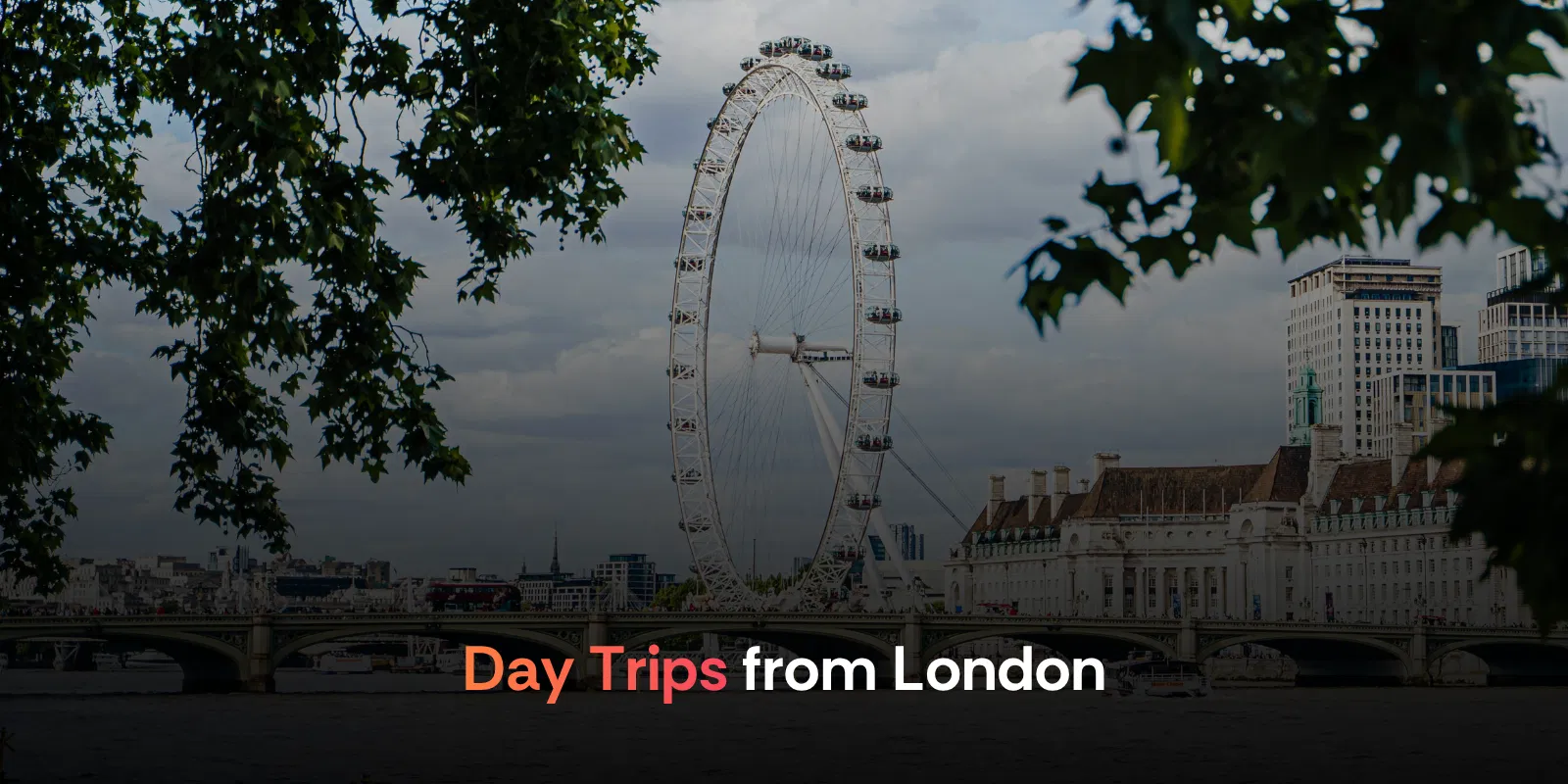
The London Eye is a 135-metre observation wheel on the South Bank of the Thames, directly facing the Houses of Parliament. It opened in March 2000 as the tallest observation wheel in the world and still draws around three million visitors a year.
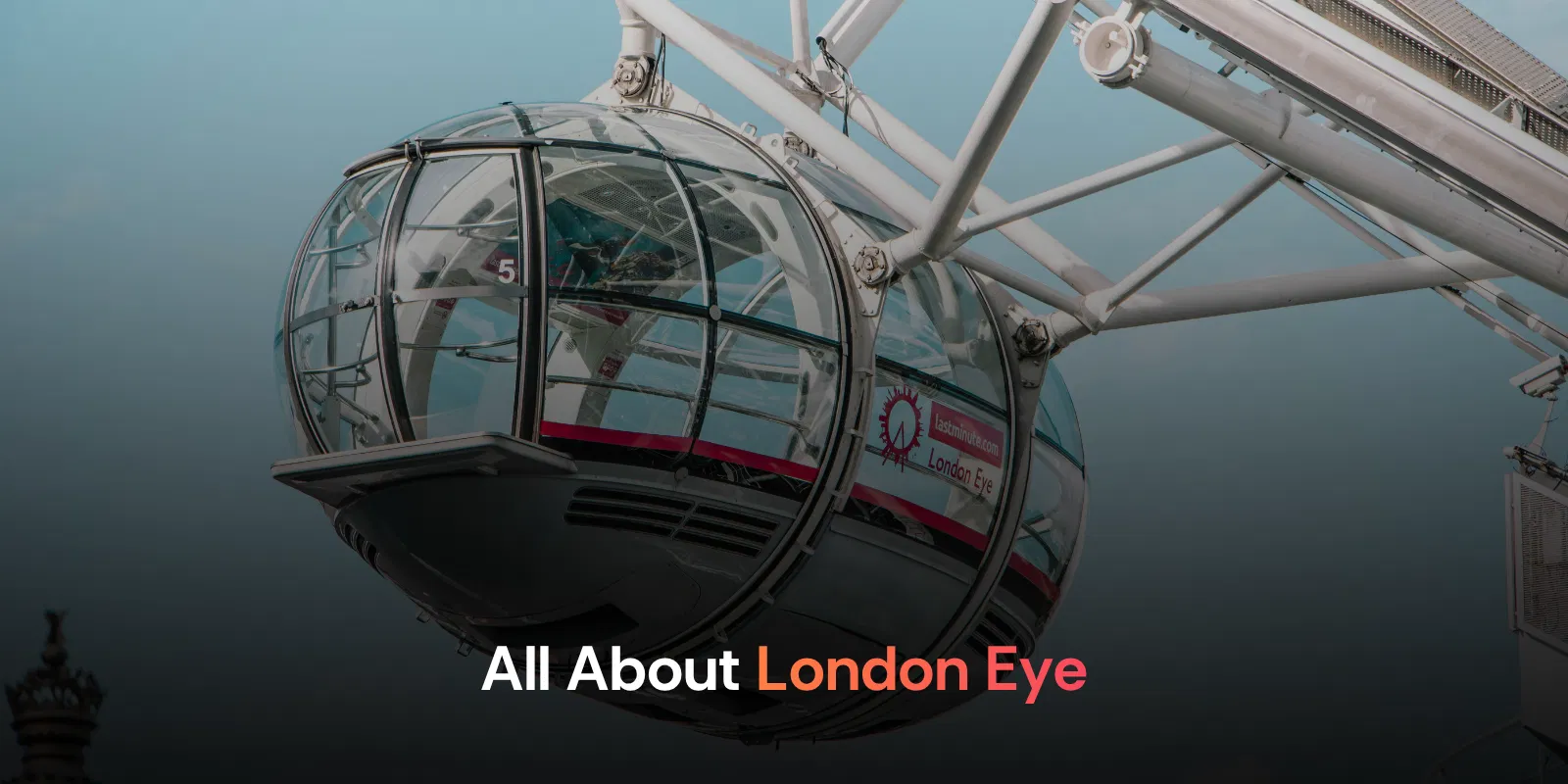
The 32 air-conditioned glass capsules each hold up to 25 people and take 30 minutes to complete one full rotation. The wheel moves slowly enough that you can walk around freely inside, shift position as the view changes, and take your time with the panorama. No rushing to the window for a three-second look, the whole rotation is yours. Operated by Merlin Entertainments, it sits at the heart of the South Bank, one of London's most rewarding stretches of riverfront to walk before or after your visit.
Is the London Eye Worth It?
At walk-up prices of £29–35 for an adult, it is not the cheapest thing on your London itinerary. But it offers something London's free museums cannot: a complete, unobstructed view of how the city actually fits together. You will see how far Shoreditch is from Westminster. You will clock that the Shard and St Paul's are not as close to each other as they look on a map. That spatial orientation is useful for the days ahead, not just the thirty minutes you spend up there.
The capsules are step-free, spacious, and suitable for pushchairs and wheelchairs. Children tend to go very quiet once the capsule clears the roofline, the good kind of quiet. Adults who have lived in London for years crane their necks just as hard as first-time visitors.
London Eye Ticket Prices (2026)
Prices vary by season, day, and time of day. These figures are based on published 2025–2026 rates, always confirm current pricing at the official London Eye website before booking.
| Ticket Type | Approx. Walk-up Price (adult) |
|---|---|
| Standard (off-peak) | ~£29 |
| Standard (peak / weekend) | ~£33–35 |
| Fast Track | ~£38–45 |
| Family (2 adults + 2 children) | ~£89–100 |
| Children under 4 | Free |
With the London Tourist Pass: Adding the London Eye to your Build Your Own Pass saves roughly 20–25% on adult entry versus walk-up pricing. For a family of four doing a full Westminster day, London Eye, Westminster Abbey, Tower Bridge, the savings across all three combined are substantial, and every pass includes a free seasonal bonus on top.
Prices verified May 2026. Check the official London Eye website for the latest rates.
The London Tourist Pass and the London Eye
The London Eye is one of the most popular anchors for a London Tourist Pass Build Your Own Pass. On its own, the adult ticket runs £29–35. Add two or three more attractions and the progressive savings model starts doing real work.
| Attractions added | Approximate saving |
|---|---|
| 2 | ~10–15% |
| 3 | ~20–25% |
| 4 | ~30–35% |
| 5 | ~40% |
| 6 | ~45% |
| 7+ | Up to 50% |
The London Eye makes a natural first anchor for a Westminster day pass. Pair it with Westminster Abbey and Tower Bridge and you have a three-attraction combination delivering around 20–25% saving, with a walking route between them that requires almost no transport. Every London Tourist Pass also includes a free seasonal bonus, currently a free eSIM. Check the London Tourist Pass site for the current offer at the time of booking.
Best Time to Visit the London Eye
Time of day: The single best slot is roughly one hour before sunset. The light turns low and golden, the city's skyline sharpens against it, and the Thames picks up the sky's colour in a way that looks implausible in photographs. Midday light in summer is flat and the queues are at their worst. After dark, the illuminated city is spectacular but you lose definition on the horizon, distances compress and landmarks blur into one lit-up mass.
Season: The Eye runs year-round and each season has its case. Summer (June–August) gives the longest evenings and the best chance of a clear forty-kilometre horizon, but also the biggest crowds. Spring (April–May) offers shorter queues, mild temperatures, and London's parks in full leaf, visible from the capsule as distinct green patches between the buildings. Autumn (September–October) is probably the strongest overall: crisp air, excellent visibility, and noticeably thinner crowds than summer. Winter visits trade horizon clarity for something else, low cloud, a pink dusk, the Christmas lights threading along the Embankment below.
Day of the week: Weekdays are consistently quieter. Tuesday, Wednesday, or Thursday, outside school holiday periods, will give you the smoothest experience.
| Month | Weather | Crowd Level | Best For |
|---|---|---|---|
| Jan–Feb | Cold, occasionally grey | Low | Short queues, lower prices |
| Mar–Apr | Mild, unpredictable | Medium | Spring light, parks in bloom |
| May–Jun | Warm, often sunny | High | Long evenings, best visibility |
| Jul–Aug | Warm to hot | Very High | Peak season, book well ahead |
| Sep–Oct | Mild, crisp | Medium | Best balance of weather and crowds |
| Nov–Dec | Cold, festive | Medium-High | Christmas lights, moody low-light skies |
What to See From the Top
On a clear day, views stretch up to 40 kilometres in every direction. Key landmarks by bearing:
- West: Buckingham Palace, Hyde Park, Kensington's green expanse
- North: St Paul's Cathedral, the City of London skyline, the Shard
- East: Tower of London, Tower Bridge, Canary Wharf
- South: Battersea Power Station (hard to miss), Crystal Palace transmitter mast
Information panels inside each capsule point out landmarks by name, which is useful for first-time visitors still building their mental map of the city. The Visit London app also has a self-guided audio tour that works from inside the capsule, worth downloading before you board.
Insider Tips for Visiting the London Eye
Book in advance. Walk-up queues in peak season add 30–60 minutes before you even board. Pre-booking, whether via a standalone ticket, London Tourist Pass BYOP inclusion, or a Bestseller Bundle, gives you a timed slot and removes the ticket counter from your morning entirely.
Arrive 15 minutes early. Boarding is timed. Getting there early lets you position yourself in the queue, which affects which side of the capsule you are on for the climb, and that determines what you see first.
Travel light. Large bags go through airport-style security screening. A small day bag makes the whole process faster.
Photography: As the capsule rises, face east, St Paul's and the City sit in the background with the Thames curving away below. At sunset, turn west for the Battersea and Kensington skyline, which goes a deep orange when the light is right.
The walk after: Head south along the Albert Embankment after your rotation for the best ground-level view back at the Eye across the water. Then cross Westminster Bridge to reach the Palace of Westminster, Westminster Abbey, and St James's Park, a natural loop that works particularly well with a London Tourist Pass Westminster day.
Build Your Westminster Day
The London Eye sits at the centre of London's most walkable cluster of major attractions:
- Westminster Abbey (~10 minutes on foot), one of Britain's most significant historic sites, with a visit that takes a full two hours to do properly
- Tower Bridge (~25 minutes on foot or a short Tube ride), the Victorian Gothic original
- Madame Tussauds (~20 minutes on foot or one Tube stop), the most popular family addition
- Buckingham Palace area, free to walk, worth the ten minutes for the ceremonial framing
Adding the London Eye, Westminster Abbey, and Tower Bridge to a London Tourist Pass BYOP delivers 20–25% saving across all three and makes for a full London day with almost no wasted time between stops. Planning your trip? Eia, Alike's AI trip planner, can sequence your attractions, flag the best visiting order, and factor walking times between each stop.
Ready to Visit?
The London Eye earns its place on the itinerary. Book via the London Tourist Pass and save up to 25% on adult entry, with savings that increase the more attractions you add. Build your pass and watch your savings update live at London Tourist Pass.
Frequently Asked Questions (FAQ)
Is the London Eye worth visiting in 2026?
Is the London Eye worth visiting in 2026?
What is the best time of day to visit the London Eye?
What is the best time of day to visit the London Eye?
How much do London Eye tickets cost in 2026?
How much do London Eye tickets cost in 2026?
How long does the London Eye take?
How long does the London Eye take?
Can I use the London Tourist Pass for the London Eye?
Can I use the London Tourist Pass for the London Eye?
What other attractions are near the London Eye?
What other attractions are near the London Eye?