Phu Quoc Summer Escape: Beaches, Sunsets, and Why Indian Travellers Are Choosing Vietnam Over Bali
"Biển xanh, cát trắng, nắng vàng" — Blue seas, white sands, golden sun. This Vietnamese saying perfectly captures what awaits you at Phu Quoc, Vietnam's largest island, which has quietly surpassed both Bali and Phuket as Southeast Asia's hottest beach destination in 2026. While the world was busy booking Bali villas and Phuket resorts, something remarkable happened. Indian travellers discovered a Phu Quoc summer escape that offers everything Bali promises — pristine beaches, luxury resorts, vibrant culture — but with better value, fewer crowds, and a refreshing sense of discovery.
Recent data from Agoda reveals a staggering 700% surge in Phu Quoc searches among Indian travellers, with the island claiming sixth position in India's top 10 honeymoon destination searches for the first time. Hotel occupancy rates tell an even more compelling story: while Bali sits at 60% and Phuket at 80%, Phu Quoc island has achieved a remarkable 90% occupancy in early 2026, marking it as the fastest-recovering resort market in the region.
The shift is palpable at Phu Quoc International Airport, where direct charter flights from New Delhi now land weekly, bringing affluent Indian families, honeymooners, and adventure seekers to this emerald gem in the Gulf of Thailand. What was once an off-the-beaten-path secret has transformed into a must-visit Vietnam tourist destination for Indian travellers, and the reasons extend far beyond simple wanderlust.
What is Phu Quoc and why has it become the talk of Indian travel circles?
Phu Quoc sits approximately 45 kilometres west of Ha Tien on Vietnam's southern coast, floating serenely in the Gulf of Thailand just below Cambodia. Spanning 574 square kilometres, this teardrop-shaped island has earned its reputation as "Pearl Island" not just for its once-thriving pearl farming industry, but for the way sunlight dances across its turquoise waters, creating an iridescent shimmer that photographs simply cannot capture.
For Indian travellers Vietnam has become an increasingly attractive proposition, and Phu Quoc represents the pinnacle of what the country offers. Unlike Bali's over-touristed Seminyak or Phuket's commercialized Patong, Phu Quoc retains an authentic charm whilst delivering world-class infrastructure. You will find five-star resorts from JW Marriott, InterContinental, and Radisson standing alongside traditional fishing villages where locals still mend nets at dawn.
The island's appeal transcends simple beach lounging. Within its boundaries lies a UNESCO Biosphere Reserve covering over 50% of the island's area, home to 929 plant species and 208 animal species. Vinpearl Safari, Southeast Asia's largest wildlife conservation park, allows you to spot Bengal tigers, giraffes, and rhinoceros without leaving the island. VinWonders theme park rivals anything in Singapore or Dubai, whilst Grand World Phu Quoc — a 24-hour entertainment complex — pulses with energy long after sunset.
Why Indian travellers are saying "chào" instead of "om swastiastu"
The Phu Quoc vs Bali comparison dominated Indian travel forums throughout late 2025 and early 2026, and the verdict has become increasingly clear. A December 2025 wedding hosted by an Indian billionaire with 1,131 guests at InterContinental Phu Quoc Long Beach Resort sparked a 186% surge in searches from India. What began as celebrity-driven curiosity evolved into genuine enthusiasm as travellers discovered Phu Quoc's compelling value proposition.
Price comparisons reveal stark differences. A week-long Phu Quoc summer escape for a couple, including flights, accommodation at a beachfront resort, meals, and activities, ranges from ₹80,000 to ₹1,20,000 (approximately $960 to $1,440). The equivalent Bali experience typically costs ₹1,00,000 to ₹1,60,000. Phuket pricing sits even higher. Phu Quoc delivers comparable luxury at 20-25% lower costs, a distinction that resonates strongly with value-conscious Indian travellers Vietnam.
Beyond pricing, Phu Quoc offers something Bali increasingly struggles to provide: space to breathe. Whilst Seminyak's beaches resemble urban beaches at peak times, and Ubud's rice terraces now feature more selfie-takers than farmers, Phu Quoc beaches like Bai Dai and Bai Khem remain relatively uncrowded even during high season. You can walk kilometers along powdery white sand, encountering perhaps a handful of other visitors. The island received 8.1 million visitors in 2025 — impressive growth, certainly, but distributed across an island with significantly more space than Bali's congested southern peninsula.
Cultural authenticity represents another decisive factor. Bali's transformation into a Western-oriented tourist haven has diluted much of its local character, particularly in popular areas. Phu Quoc's rapid development has been more carefully managed. Traditional fishing villages like Ham Ninh and Rach Vem continue operating as they have for generations. The island's famous fish sauce factories welcome visitors, demonstrating centuries-old fermentation techniques. Local markets in Duong Dong town sell fresh seafood, tropical fruits, and Phu Quoc's prized black pepper without the hard-sell tactics common in Bali's tourist zones.
Vietnamese hospitality has earned particular praise from Indian travellers. Resort staff demonstrate genuine warmth rather than rehearsed politeness. English proficiency in tourist areas is excellent, eliminating communication frustrations. Importantly, vegetarian travelers find Vietnam remarkably accommodating — the country's Buddhist heritage means plant-based cuisine enjoys mainstream acceptance rather than being treated as a dietary restriction.
The visa situation deserves nuanced discussion. Phu Quoc offers visa-free entry for up to 30 days, but this applies only to direct arrivals and departures from the island. If your itinerary includes Ho Chi Minh City or Hanoi, you will need a standard e-visa. The e-visa process for Indian nationals is straightforward, costing approximately ₹2,000-₹4,200 ($25-$50) with processing typically completed within three business days. Compare this to Indonesia's visa-on-arrival, which whilst convenient, costs $35 and allows only 30 days with one extension.
Direct flight connectivity: The game-changer
December 2025 marked a watershed moment when charter flights from New Delhi to Phu Quoc commenced, operating until January 2026 with strong load factors. Whilst these were initially temporary, their success has prompted Vietnam Airlines and Vietjet to explore regular scheduled services from Mumbai and Delhi. Currently, most Indian travellers reach Phu Quoc via one-stop connections through Ho Chi Minh City, Hanoi, Bangkok, or Singapore. Flight times range from 6-9 hours total, with ticket prices typically between ₹20,000-₹35,000 return during non-peak periods.
Location and how to reach Phu Quoc from India
Phu Quoc International Airport (PQC) sits approximately 10 kilometers from Duong Dong town, the island's commercial heart. The airport underwent major expansion in 2024-2025, increasing capacity to handle 20 million passengers annually. Its modern terminals rival those in Singapore and Bangkok, featuring efficient immigration processing, duty-free shopping, and comfortable waiting areas.
Flight options from major Indian cities:
| Origin City | Route | Approximate Duration | Typical Fare (INR) |
|---|---|---|---|
| Mumbai | BOM-SGN-PQC | 7-8 hours | ₹25,000-₹38,000 |
| Delhi | DEL-HAN-PQC | 7-9 hours | ₹28,000-₹40,000 |
| Bangalore | BLR-SGN-PQC | 6-7 hours | ₹23,000-₹35,000 |
| Hyderabad | HYD-BKK-PQC | 8-9 hours | ₹26,000-₹37,000 |
| Chennai | MAA-SGN-PQC | 5-6 hours | ₹22,000-₹33,000 |
Prices verified as of April 2026, subject to seasonal variation. Always verify latest fares directly with airlines.
Vietnam Airlines, Vietjet, Thai Airways, and Singapore Airlines all serve Phu Quoc with varying frequencies. Booking three to four months ahead typically secures best rates, particularly for travel during December through March peak season.
Upon arrival, airport transfers are straightforward. Grab operates extensively on the island, with rides to popular beaches costing ₹250-₹500 (approximately $3-$6). Pre-arranged hotel transfers typically range from ₹800-₹1,500. Many resorts include complimentary airport pickup for stays of three nights or longer.
What makes Phu Quoc's beaches genuinely special
The Phu Quoc summer escape experience centers on its coastline, and what a coastline it is. Stretching 150 kilometers around the island, you will find beaches catering to every preference — from the 20-kilometer expanse of Long Beach to hidden coves accessible only by boat.
Bai Dai Beach (Long Beach) forms the island's most famous stretch, running along the entire western coast from Duong Dong southward. This is where sunset becomes a nightly spectacle, with the sun dropping into the Gulf of Thailand in gradations of orange, pink, and purple. Numerous beach clubs have established themselves here — Rory's Beach Bar and Sunset Sanato stand out — but spacing ensures you are never fighting for loungers or feeling crowded. The sand possesses that powdery quality that squeaks underfoot, whilst the water remains calm and swimmable year-round, making it ideal for families with young children.
Bai Sao Beach (Sao Beach or Star Beach) on the island's southeast coast competes for the title of Vietnam's most beautiful beach. Its crescent of blindingly white sand stretches approximately three kilometers, bordered by coconut palms and casuarina trees. The shallow, crystal-clear water creates a gradient from pale turquoise to deep azure. Unlike Bali's Nusa Dua or Phuket's Kata, which have been heavily developed, Sao Beach retains a relatively natural appearance with just a handful of small restaurants and bamboo loungers available for rent at ₹250-₹400 per day.
Bai Khem Beach (Cream Beach) offers even more seclusion, accessible via a rough road that discourages casual visitors. This kilometer-long strand features the same white sand and clear water as Sao Beach but with even fewer facilities — just one or two simple seafood shacks. The eastern location means calmer waters during the May-October rainy season, when western beaches can experience larger waves.
Ong Lang Beach on the northwest coast appeals to those seeking a more upscale, resort-centric beach experience. Several luxury properties line this stretch, including Mango Bay Resort and Chen Sea Resort & Spa. The beach itself combines sandy patches with rocky outcrops, creating interesting snorkeling spots just offshore. Ong Lang's position makes it popular for sunset viewing, particularly from beachfront restaurants.
Ganh Dau Beach at the island's northern tip remains one of the most undeveloped areas, with dirt roads, fishing villages, and very few tourists. The payoff for the journey includes stunning Cambodia views across the narrow strait and some of the island's best snorkeling around the coral reefs. A handful of boutique resorts have opened here for travellers seeking complete tranquility.
Beach activities and water sports
The calm, warm waters surrounding Phu Quoc create ideal conditions for water activities from November through April. Snorkeling and diving rank among top pursuits, with coral reefs around An Thoi archipelago in the south offering excellent visibility (often 15-20 meters) and abundant marine life. Half-day snorkeling trips cost ₹1,500-₹2,500 per person, including equipment and lunch. Full-day diving excursions for certified divers range from ₹4,000-₹6,000.
Kayaking through the mangrove forests presents a unique perspective on the island's ecosystem. Several operators offer guided kayak tours through Rach Vem mangrove area, where you will paddle through narrow channels whilst guides explain the important role mangroves play in coastal protection and marine life nurseries. These half-day tours typically cost ₹1,800-₹2,800.
Stand-up paddleboarding has grown increasingly popular, particularly along Long Beach's calm waters. Rental rates hover around ₹500-₹800 per hour. For adrenaline seekers, jet skiing, parasailing, and banana boat rides are available at major beaches, with prices comparable to those in Thailand or Bali.
Where to stay: From budget guesthouses to ultra-luxury resorts
Phu Quoc's accommodation landscape has evolved dramatically since 2020, now offering options across every price bracket and preference. The island features over 3,000 registered accommodations, from simple family-run guesthouses to internationally branded luxury resorts.
Luxury resorts (₹12,000-₹35,000 per night):
JW Marriott Phu Quoc Emerald Bay stands as arguably the island's most architecturally distinctive resort, designed by famed architect Bill Bensley to resemble a fictional French colonial university. Its 244 rooms and villas spread across manicured gardens, with direct beach access, multiple pools, and five restaurants. The resort's attention to detail extends to vintage bicycles for guest use and a fascinating collection of antiques throughout public spaces.
InterContinental Phu Quoc Long Beach Resort occupies a prime stretch of Bai Dai Beach with 459 rooms ranging from standard to multi-bedroom villas. Its massive lagoon-style swimming pool winds through the property, whilst six restaurants cover cuisine from Vietnamese to Italian to Japanese. The resort hosted the aforementioned billionaire wedding, testament to its MICE (meetings, incentives, conferences, exhibitions) capabilities.
Premier Village Phu Quoc Resort consists entirely of private pool villas, appealing strongly to honeymooners and families seeking maximum privacy. Each villa features indoor-outdoor living spaces, private plunge pools, and direct beach access. The resort's service-to-guest ratio remains impressively high, ensuring personalized attention.
Mid-range resorts (₹5,000-₹12,000 per night):
La Festa Phu Quoc, part of Hilton's Curio Collection, brings Italian-inspired design to Vietnam. Located along Bai Truong (Long Beach), the resort features 270 rooms, multiple pools, and a rooftop bar with panoramic sunset views. Its beachfront position and competitive pricing make it popular among Indian travellers seeking brand reliability without ultra-luxury pricing.
Novotel Phu Quoc Resort offers family-friendly accommodation with interconnecting rooms, kids' club, and extensive pool facilities. AccorHotels' mid-tier brand delivers consistent quality at reasonable rates, typically ₹6,000-₹9,000 nightly during peak season.
Sol Beach House Phu Quoc by Meliá Vietnam caters to the young and young-at-heart with contemporary design, swim-up bars, and lively evening entertainment. Its all-inclusive packages can represent excellent value, particularly for families wanting predictable costs.
Budget options (₹1,500-₹5,000 per night):
Numerous boutique hotels and guesthouses dot Duong Dong town and quieter beach areas. Casamia Boutique Hotel, Tropicana Resort Phu Quoc, and Lahana Resort Phu Quoc all offer clean, comfortable rooms with air conditioning, hot water, and swimming pools at budget-friendly rates. These properties typically lack direct beach access but sit within walking or short motorbike distance of beaches.
Practical accommodation advice for Indian travellers:
Book directly with hotels when possible, as many offer "best rate guarantees" and include perks like complimentary breakfast or resort credits not available through third-party booking sites. For groups or extended families, consider villa rentals, which can offer better value and space compared to multiple hotel rooms. Platforms like Airbnb and Vrbo feature numerous villas with private pools, often with household staff included.
Most resorts offer excellent vegetarian and vegan dining options, but confirming this when booking provides peace of mind. Many Indian families appreciate having small kitchenettes or at least kettles for preparing tea, so specify this preference when reserving.
What to experience, eat, and explore beyond the beaches
A Phu Quoc summer escape extends well beyond lounging on pristine sand, though that certainly holds appeal. The island offers diverse experiences combining nature, culture, and modern entertainment.
VinWonders Phu Quoc and Vinpearl Safari form two parts of an integrated complex that could easily consume two full days. VinWonders theme park features five zones including a massive water park, adventure park, and Viking village. The attached Vinpearl Safari allows you to drive or take guided tours through African and Asian safari zones, observing over 150 species in semi-natural habitats. Combined tickets cost approximately ₹1,800-₹2,500, representing remarkable value compared to similar attractions in Singapore or Dubai. Check best things to do in Vietnam for more activity ideas across the country.
Grand World Phu Quoc, dubbed the "sleepless city," operates 24 hours, offering shopping, dining, entertainment, and shows without entry fees. The Venice-inspired architecture features canals with gondola rides, European-style plazas, and nightly multimedia performances. Evenings bring particular energy with light shows, street performers, and lively restaurants and bars. For families with children or those seeking evening activities beyond their resort, Grand World provides genuine appeal without the hard-sell of Bali's Kuta.
Phu Quoc National Park protects over 31,000 hectares of evergreen forest, mountains, and coastline. Several marked trails allow exploration, ranging from easy one-hour walks to challenging full-day treks. Suoi Tranh waterfall, about 15 minutes from Duong Dong, makes an accessible introduction to the island's interior. During dry season, the waterfall reduces to a trickle, but the walk through forest remains pleasant. Rainy season transforms it into a proper cascade. Entry costs just ₹50.
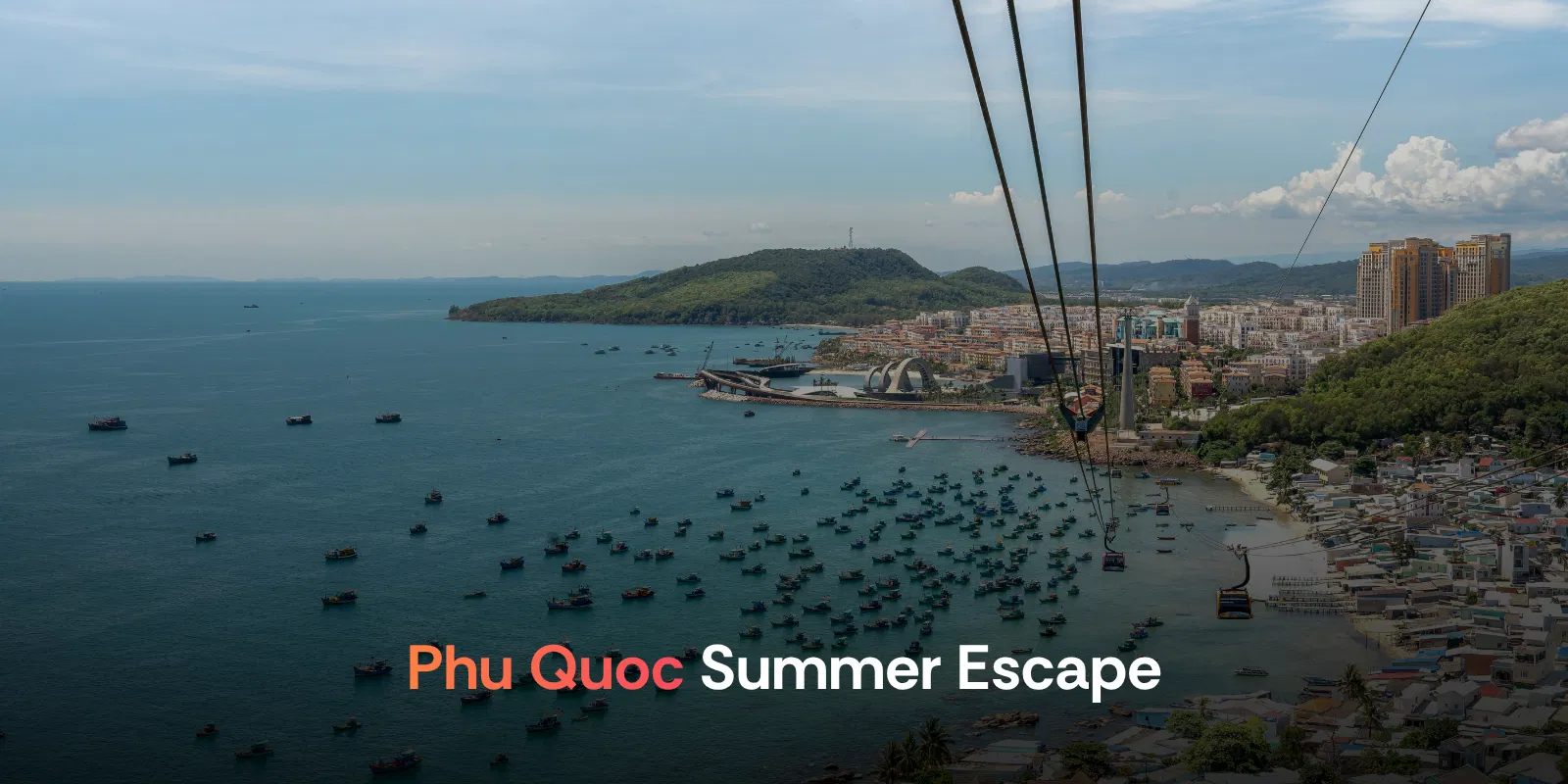
Hon Thom Cable Car holds the Guinness World Record for longest three-rope cable car over sea, spanning nearly eight kilometers from An Thoi port to Hon Thom island. The 20-minute journey offers breathtaking views of the archipelago below. Hon Thom itself features a water park, beach clubs, and restaurants. Return cable car tickets cost approximately ₹1,200-₹1,500.
Culinary adventures: What to eat in Phu Quoc
Phu Quoc's culinary scene centers on seafood, naturally given its fishing heritage, but vegetarian travelers find ample options thanks to Vietnam's Buddhist influence and growing awareness of dietary preferences.
Gỏi cá trích (herring salad) ranks among the island's signature dishes. Fresh herring is finely sliced and mixed with fried garlic, roasted peanuts, fresh herbs, and tossed with Phu Quoc's famous fish sauce. The combination delivers an umami punch that converts even fish-skeptical diners.
Cua Ham Ninh (Ham Ninh crab) from Ham Ninh fishing village has achieved almost legendary status. These crabs, smaller and sweeter than typical sea crabs, are typically boiled or steamed and eaten with salt, pepper, and kumquat dipping sauce. Expect to pay ₹800-₹1,200 per kilogram at local restaurants.
Ghẹ xào (stir-fried crab) prepared with tamarind sauce, lemongrass, or black pepper showcases Phu Quoc's renowned pepper, grown on the island since the 19th century. The pepper's unique terroir produces a complex, aromatic heat without excessive burn.
Bún quậy (hand-stirred noodles) represents Phu Quoc's most distinctive local dish. Rice noodles served at room temperature are topped with raw fish, shrimp, vegetables, and herbs, then mixed together with sweet-spicy fish sauce dressing. Watching vendors prepare it becomes part of the experience.
For vegetarians, seek out com chay (vegetarian rice) restaurants, typically found near temples. These serve extensive buffets of Buddhist temple-style vegetarian dishes, often labeled as such. Phrases like "tôi ăn chay" (I eat vegetarian) or showing the Vietnamese "vegetarian" symbol on your phone helps communicate dietary needs.
Pepper plantations offer tours showing cultivation, harvesting, and processing of Phu Quoc's premium black pepper, which holds Protected Geographical Indication status from the European Union. Khu Tuong Pepper Garden welcomes visitors, charging modest entrance fees of ₹100-₹200. You can purchase organic pepper at significantly lower prices than international markets — a worthwhile souvenir for home cooks.
Fish sauce factories provide insight into production of nước mắm Phú Quốc, Vietnam's most prized fish sauce. Khai Hoan and Hung Thanh represent two largest producers offering tours. The fermentation process, whilst initially aromatic, fascinates once you understand the 12-month minimum aging in massive wooden barrels. Small bottles make excellent gifts for foodie friends.
Shopping: What to bring home
Phu Quoc's main shopping venues include Duong Dong Market for local atmosphere and browsing, and Vincom Plaza Phu Quoc for air-conditioned mall shopping. Most visitors purchase:
- Black pepper: Whole peppercorns or ground, certified organic varieties available
- Fish sauce: Small bottles of premium fish sauce
- Pearl jewelry: Given the island's pearl farming heritage
- Sim wine: Local liqueur made from rose myrtle berries, distinctive purple color and sweet-tart flavor
- Dried seafood: Dried squid, dried fish, and other preserved seafood popular gifts in Vietnam
- Handicrafts: Wooden carvings, woven goods, and paintings by local artists
Bargaining remains acceptable at markets, with friendly negotiation typically yielding 10-20% discounts. Fixed-price establishments clearly display prices with no expectation of bargaining.
Insider tips for Indian travellers: What the guidebooks miss
Currency and money matters: Vietnamese Dong (VND) serves as official currency, though US dollars enjoy widespread acceptance at tourist establishments. Current exchange rates hover around 1 INR = 290-300 VND (approximate as of April 2026, subject to fluctuation). ATMs widely available dispense up to 5,000,000 VND (approximately ₹17,000) per transaction, with typical fees around ₹400-₹600 per withdrawal. Many ATMs now display balances and menus in English.
Credit cards work at resorts, larger restaurants, and tourist attractions, but carry cash for markets, street food, and smaller establishments. Visa and Mastercard enjoy better acceptance than American Express. Inform your Indian bank about Vietnam travel beforehand to avoid card blocks.
Mobile connectivity: Purchase a Vietnamese SIM card upon airport arrival for optimal connectivity. Viettel, Vinaphone, and Mobifone all offer tourist SIM packages with 30 days validity, 5-10GB data, and reasonable call minutes for ₹400-₹700. This proves far more economical than international roaming charges whilst providing reliable 4G coverage across most of the island.
Drinking water and hygiene: Tap water is not potable. Bottled water remains extremely inexpensive — 500ml bottles cost ₹25-₹40 at convenience stores. Most hotels provide complimentary bottled water daily. Restaurant ice is generally safe in tourist areas as establishments use filtered water, but if concerned, specify "không đá" (no ice).
Power and plugs: Vietnam uses 220V, 50Hz electricity with Type A, C, and D plugs (same as Indian two-pin plugs). Most modern devices featuring universal voltage (phone chargers, laptop chargers) work without converters. Three-pin Indian plugs require adapters, available at convenience stores for ₹200-₹300.
Tipping culture: Tipping remains less expected than in Western countries but increasingly appreciated in tourist areas. Restaurant bills at resorts often include 5-10% service charge, making additional tipping optional. For exceptional service, 5-10% represents appropriate acknowledgment. Spa treatments warrant 10% tips. Taxi and Grab drivers do not expect tips but rounding up fares is appreciated.
Motorbike rental: Whilst tempting given the freedom it provides, be aware that driving without a valid Vietnamese or International Driving Permit risks fines and invalidates travel insurance in case of accidents. If you choose to rent (₹350-₹600 daily), wear helmets (legally required), drive defensively, and stick to quieter roads until comfortable with traffic patterns.
Respect local customs: Vietnam is conservative regarding public displays of affection. Dress modestly when visiting temples or venturing into local villages — covering shoulders and knees shows respect. Shoes must be removed before entering temples and many restaurants. These small courtesies earn warm responses from locals.
Weather realities: Whilst November through April delivers ideal Phu Quoc summer escape weather, understand that April marks the transition toward rainy season. October to March offers most reliable sunny weather. May through September brings frequent rain showers, but these typically last 1-2 hours rather than all day. The rain cools temperatures and brings lush greenery, whilst hotel rates drop by 30-40%. For budget-conscious travelers willing to work around occasional showers, this represents genuine value.
Family travel considerations: Phu Quoc proves remarkably family-friendly. Most resorts offer kids' clubs with supervised activities. Beaches feature gentle, shallow waters ideal for children. Vietnamese culture adores children, with locals often offering sweets or playing with young tourists. High chairs and children's menus are standard at tourist restaurants. Many resorts provide complimentary adjoining rooms or family suites for bookings of four or more nights.
Honeymoon privacy: Couples seeking romantic seclusion should consider northern beaches (Ganh Dau, Bai Thom) or private pool villas at resorts like Premier Village or Salinda Resort. These properties cater specifically to honeymooners with intimate dining setups, couple's spa packages, and secluded beach areas. Several resorts offer complimentary honeymoon amenities (room upgrades, champagne, turndown services) when booking includes "honeymoon" in special requests.
Photography hotspots: Capturing your Phu Quoc memories
Sunset at Rach Vem Beach with its iconic "starfish beach" reputation creates Instagram-worthy moments. The shallow, clear water hosts numerous orange starfish (please observe only, don't remove them). The best time arrives roughly one hour before sunset when soft light illuminates the starfish whilst the sky begins its color transition.
Hon Thom Cable Car offers dramatic aerial perspectives, particularly during the golden hour. Photograph fellow cable cars suspended over turquoise water, with dozens of small islands dotting the seascape below.
Pepper plantations provide that quintessentially Vietnamese agricultural photo opportunity. The contrast of bright green pepper vines against red earth, often with Vietnamese women in conical hats tending crops, yields striking compositions.
Grand World Phu Quoc's Venetian-style architecture, particularly the canals with gondolas, creates European ambiance without the European price tag or crowds. Evening photographs with illuminated buildings reflecting in water rival anything from actual Venice.
Fishing villages like Ham Ninh and Rach Vem display authentic working harbors with colorful fishing boats, nets hanging to dry, and weathered wooden stilt houses. Early morning (5-7am) captures fishing boats returning with catches and offers soft, warm light. Always ask permission before photographing local residents.
Photography etiquette tips: Vietnamese people generally enjoy being photographed but appreciate being asked first, particularly at temples or in villages. A friendly smile and gesture usually receives smiling permission. Respect any "no photography" signs at military installations or certain temple areas. For the best beach photos, avoid midday harsh light in favor of early morning or late afternoon's warmer tones.
Seasonal highlights: When to plan your Phu Quoc escape
Understanding Phu Quoc's seasonal rhythm helps align your visit with preferred experiences.
December to March (Peak dry season): This represents the island's busiest period, with hotel occupancy often exceeding 85% and sometimes completely sold out during Christmas, New Year, and Chinese New Year. Weather remains consistently sunny with minimal rainfall, calm seas, and temperatures between 25-28°C. All outdoor activities operate reliably. Expect premium pricing for accommodations and advance booking essential. The Phu Quoc International Marathon in December attracts running enthusiasts worldwide, creating additional demand.
April (Transition month): Weather begins shifting toward rainy season but remains predominantly sunny. Temperatures rise to 28-35°C, with occasional afternoon showers bringing relief. This shoulder season offers reduced crowds and slightly lower rates whilst maintaining good beach weather. An excellent compromise period for Phu Quoc summer escape experiences.
May to October (Rainy season): Frequent rain showers characterize these months, typically arriving in afternoon or evening bursts lasting 1-2 hours rather than all-day downpours. Eastern beaches (Sao Beach, Khem Beach) remain calmer than western beaches during this period due to wind patterns. Hotel rates drop significantly — 30-50% lower than peak season. Fewer tourists create a more relaxed, authentic atmosphere. Indoor attractions, spa days, and resort amenities become more appealing. Interestingly, diving conditions actually improve during rainy season in southern areas due to reduced surface traffic stirring sediment.
November (Transition month): Weather improves toward dry season standards whilst rates remain moderate. Rain becomes less frequent, seas calm noticeably, and temperatures moderate to comfortable levels (26-29°C). This represents perhaps the island's "sweet spot" for value-conscious travelers seeking good weather without peak crowds.
Planning around Indian holidays and family travel seasons
Diwali period (October-November): Increasingly popular among Indian families, as timing often coincides with transition toward dry season. Flights from India see increased demand with corresponding price rises. Book 4-5 months ahead for best rates.
Christmas and New Year: Extremely busy as both Indian and global tourists converge. Expect resort minimum stays (often 5-7 nights), premium pricing, and fully booked properties. Book six months in advance minimum. Gala dinners at resorts typically cost ₹5,000-₹15,000 per person.
Indian summer holidays (April-June): April offers reasonable weather as detailed above. May-June brings rainy season but can represent excellent value for families comfortable with afternoon rain interruptions. Schools across India typically break May-June, creating demand despite weather.
Pongal/Sankranti (January): Coincides with peak dry season, creating demand from South Indian families. Many resorts recognize Indian festival celebrations, with some offering special menus or decorations.
Phu Quoc vs Bali: The honest comparison table
| Factor | Phu Quoc | Bali |
|---|---|---|
| Beach quality | Pristine, less crowded, white sand beaches. 90% hotel occupancy but space remains. | Beautiful but very crowded in south. Private beach clubs charge premiums for space. |
| Value for money | 20-25% cheaper overall. Luxury resorts ₹8,000-₹15,000/night. Meals ₹300-₹800. | More expensive. Comparable resorts ₹12,000-₹20,000/night. Western dining ₹600-₹1,200. |
| Crowds | Still discovering phase. Major beaches remain spacious. | Extremely crowded in Seminyak, Canggu, Ubud. Traffic congestion significant. |
| Authenticity | Fishing villages still genuine. Local markets authentic. Development balanced. | Heavily westernized. Local culture diluted in tourist areas. Expat-run businesses dominate. |
| Visa | Visa-free for island (30 days). E-visa needed for mainland. | Visa-on-arrival or e-visa. Straightforward but costs $35. |
| Flights from India | 6-9 hours via Singapore/Bangkok/HCMC. Fewer direct options currently. | 5.5-6.5 hours direct from major Indian cities. More flight choices. |
| Vegetarian food | Excellent availability due to Buddhist tradition. Improving awareness. | Very good. Long-established vegetarian culture. More options. |
| Cultural experiences | Vietnamese culture, fishing villages, pepper farms, historical sites. | Hindu temples, rice terraces, traditional dance. More established cultural tourism. |
| Family-friendly | Excellent theme parks, calm beaches, welcoming culture toward children. | Very family-friendly. More established kids' activities and clubs. |
| Nightlife | Growing scene. Beach clubs, Grand World complex. More subdued overall. | Extensive nightlife. Beach clubs, bars, parties. Much livelier scene. |
For Indian travellers seeking undiscovered beauty, better value, and less tourist saturation, Phu Quoc emerges as the compelling choice in 2026. For those prioritizing direct flights, extensive nightlife, and maximum vegetarian food options, Bali retains advantages. For comprehensive guidance on other Vietnamese destinations, explore our Thailand guide to see how the region compares, or review best places to visit in Thailand for neighboring options.
Nearby attractions worth exploring
Ha Tien and Mekong Delta (mainland Vietnam): If you have secured a Vietnamese e-visa allowing mainland travel, Ha Tien sits just 45 kilometers across from Phu Quoc. This riverside town serves as gateway to the Mekong Delta, where floating markets, pagodas, and river life create quintessentially Vietnamese experiences. Day trips or overnight tours are available.
Cambodia's coastal region: Cambodia's Kep and Kampot provinces lie within reach for adventurous travelers, though border crossings require appropriate visas. Kep offers famous pepper crab dining and French colonial architecture, whilst Kampot produces world-renowned pepper and provides river cruises.
An Thoi archipelago island hopping: Daily tours visit smaller islands around Phu Quoc, combining snorkeling at coral reefs with beach time at uninhabited islands. May Rut Island, Mong Tay Island, and Gam Ghi Island each offer different appeals. Full-day tours including lunch cost ₹2,000-₹3,500 per person.
Seven days in Phu Quoc: A suggested itinerary
Day 1 (Arrival and acclimatization): Check into resort, enjoy pool and beach, simple dinner to adjust. Sunset viewing from resort or nearby beach club.
Day 2 (Northern exploration): Hire private car/taxi for northern circuit. Visit Ganh Dau Beach and fishing village, stop at Coconut Tree Prison (historical site), lunch at Rach Vem (starfish beach), pepper plantation tour, sunset at Ong Lang Beach.
Day 3 (Theme park adventure): Full day at VinWonders and Vinpearl Safari. Arrive at opening (8:30am) for optimal experience. Allow 6-8 hours. Evening at Grand World for dinner and entertainment.
Day 4 (Beach day and water activities): Morning snorkeling or diving tour around An Thoi archipelago. Afternoon relaxation at Bai Sao Beach. Evening couples' spa treatment or casual beachfront dinner.
Day 5 (Cultural immersion): Visit Duong Dong Market early morning, fish sauce factory tour, lunch at local restaurant, afternoon visit to Ho Quoc Pagoda, evening free for resort enjoyment or shopping.
Day 6 (Hon Thom and southern beaches): Hon Thom Cable Car journey, time at Hon Thom island's water park and beaches, return via cable car, visit Bai Khem Beach, seafood dinner at Ham Ninh fishing village.
Day 7 (Departure): Morning swim, final resort breakfast, airport transfer. Evening flight allows maximum beach time.
This itinerary balances activities with relaxation, covers major attractions without feeling rushed, and can be adapted based on weather, energy levels, and specific interests. Families with young children might substitute some active days with additional resort time. Honeymooners might add romantic beach dinners and reduce activity intensity.
Practical planning: Final checklist for your Phu Quoc summer escape
Three months before departure:
- Book international flights when fare sales appear
- Research and book accommodation, particularly if traveling during peak season (December-March)
- Apply for Vietnamese e-visa if planning mainland portions of trip
- Check passport validity (minimum six months beyond return date)
- Review travel insurance options covering Asia
One month before departure:
- Finalize accommodation bookings and confirm special requests (honeymoon amenities, dietary requirements, airport transfers)
- Book popular activities requiring advance reservation (specific dive sites, private tours)
- Arrange airport parking or departure transport in India
- Inform credit card companies of international travel dates
- Download useful apps: Grab (transport), Google Translate (offline Vietnamese), Maps.me (offline maps)
One week before departure:
- Check weather forecasts and pack accordingly
- Confirm all booking references and print copies as backup
- Purchase Vietnamese Dong currency or confirm ATM card international functionality
- Pack essential medicines with prescriptions
- Share itinerary and accommodation details with family/emergency contact
Pack essentials:
- Lightweight, breathable clothing suitable for tropical weather
- Modest coverage for temple visits (covering shoulders and knees)
- Reef-safe sunscreen (critical for marine ecosystem protection)
- Insect repellent for evening beach walks and nature areas
- Portable charger for phones and cameras
- Universal adapter (though Indian two-pin plugs work directly)
- Small medical kit with common medications, any prescription medicines
- Waterproof bag for phone and electronics during boat trips
- Light rain jacket if traveling May-October
Why Alike makes planning your Vietnam holiday effortless
Planning international travel involves countless decisions and bookings. Alike's AI trip planner Eia simplifies this entire process, creating personalized itineraries based on your preferences, budget, and travel style. Whether you are interested in a Phu Quoc summer escape, exploring other Vietnamese destinations, or combining multiple countries, Eia organizes logistics whilst ensuring you experience the best each destination offers. Plan your holiday with Eia – Alike's AI Trip Planner and discover how intelligent travel planning transforms vacation preparation from overwhelming to enjoyable. Read more about how Alike's AI Trip Planner works.
For travelers seeking curated experiences beyond individual destination planning, explore how tourist passes streamline sightseeing in major Asian cities including Singapore and Dubai.
Final thoughts on your Phu Quoc summer escape
Vietnam's pearl island has quietly positioned itself as Southeast Asia's most compelling beach destination for 2026, offering that rare combination of pristine natural beauty, world-class infrastructure, genuine local culture, and remarkable value that once characterized Bali or Phuket before mass tourism reshaped those islands. The 700% surge in searches from Indian travelers represents not trend-following but genuine discovery — travelers recognizing that Phu Quoc delivers everything they seek from tropical island holidays without the downsides accumulating elsewhere.
Whether you come for pristine Phu Quoc beaches, luxury resorts at accessible prices, family adventures at VinWonders, romantic honeymoon seclusion, or simply that intangible quality of arriving somewhere before everyone else discovers it, Phu Quoc in 2026 represents perhaps the last moment to experience Southeast Asia's newest star whilst it retains its emerging-destination charm. The infrastructure exists for comfortable travel, the beaches rival anywhere globally, the Vietnamese hospitality creates genuine warmth, yet you are still writing your own story rather than following influencer itineraries.
The comparison between Phu Quoc vs Bali ultimately comes down to what you value in travel. If your perfect holiday means lively beach clubs, extensive nightlife, thousands of restaurant choices, and maximum convenience of direct flights, Bali retains its crown. But if you seek that feeling of discovery, beaches where you can walk for kilometers encountering perhaps a handful of other visitors, authentic fishing villages where daily life continues largely unchanged by tourism, and all of this at 20-25% less cost than Bali, then pack your bags for Phu Quoc. The Indian travellers Vietnam are discovering what savvy Asian travelers have known for several years — Vietnam's islands offer the next chapter in Southeast Asian beach tourism, and Phu Quoc leads that story.
Book early for dry season travel, embrace the adventure of one-stop flights, prepare your Vietnamese phrases, and get ready to discover why 90% hotel occupancy in early 2026 makes Phu Quoc not just Southeast Asia's hottest destination, but potentially the beach holiday you will remember and return to for years ahead.
Have you experienced Phu Quoc or planning your first visit? Share your experiences or questions with fellow travelers, and let us know what aspect of this Vietnam holiday package destination excites you most. For more Southeast Asian destination guides, explore our Singapore guide for family holidays and honeymoon or discover things to do in Bali to compare these top tropical destinations.
Frequently Asked Questions (FAQ)
Is Phu Quoc really better value than Bali for Indian families?
Is Phu Quoc really better value than Bali for Indian families?
What are the visa requirements for Indian passport holders traveling to Phu Quoc?
What are the visa requirements for Indian passport holders traveling to Phu Quoc?
When is the absolute best time to visit Phu Quoc for beach weather and value?
When is the absolute best time to visit Phu Quoc for beach weather and value?
Are flights from India to Phu Quoc difficult to arrange?
Are flights from India to Phu Quoc difficult to arrange?
Is Phu Quoc suitable for families with young children or only honeymooners?
Is Phu Quoc suitable for families with young children or only honeymooners?