Thailand's Floating Markets Guide
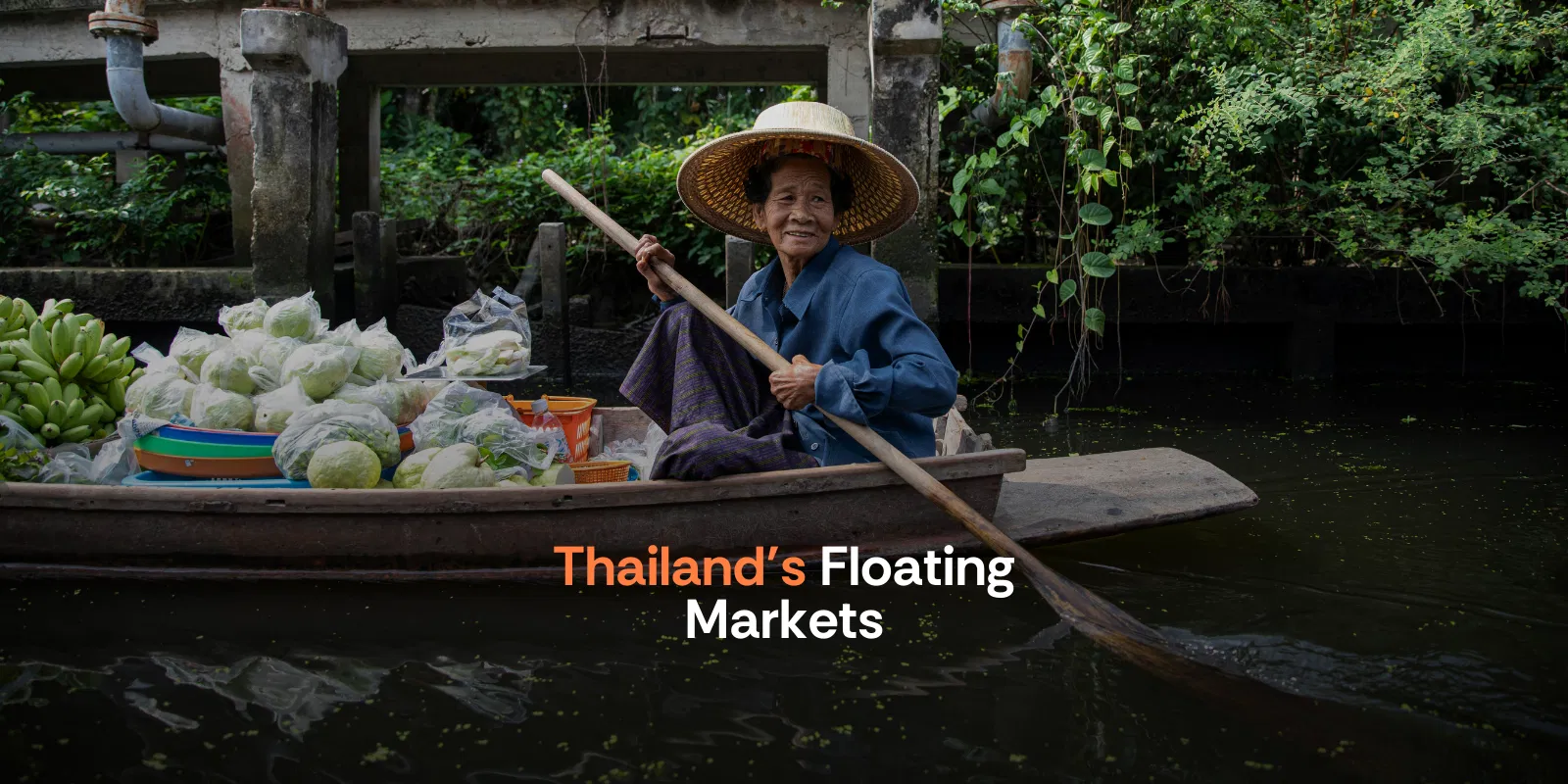
If you've ever dreamt of gliding down a narrow canal while vendors in straw hats paddle up with steaming bowls of noodles, piles of tropical fruit, and colourful souvenirs—welcome to Thailand's floating markets. These bustling waterways are more than just postcard-perfect scenes; they are living, breathing cultural experiences.
For Indian travellers planning family holidays, honeymoons, or short Bangkok breaks, floating markets are a must-see. From the UAE and GCC, weekend trips here are a cultural escape. And for Europeans, especially during the cold winters, Thailand's markets bring a burst of warmth, flavours, and chaos that feel like stepping into another world.
What are Thailand's floating markets in 2025?
Floating markets are canalside bazaars where vendors sell goods directly from boats. They date back to when Bangkok was dubbed the "Venice of the East," and rivers were the main highways. Today, these markets mix heritage with tourism—offering everything from local food and handicrafts to photo-friendly chaos.
Whether you're at Damnoen Saduak, the most famous, or the more authentic Amphawa, each market is a cultural window into Thailand's riverside traditions.
Why travellers love floating markets
- Indian families love the shopping bargains—think silk scarves, wooden crafts, and spices.
- Foodies from UAE & GCC enjoy the sizzling Thai street food cooked on boats, often savoured in the cooler morning hours.
- Europeans are drawn to the heritage feel, combining floating market trips with wider cultural tours of Bangkok.
It's not just a place to shop; it's a cultural performance on water, where every turn of the canal reveals another story.
Location and accessibility in 2025
- From Bangkok: Most famous floating markets like Damnoen Saduak are ~1.5 hours away (100 km).
- Transport:
- Taxis: THB 1200–1500 (₹3,200–4,000 / AED 120–150 / USD 35–45, approx. August 2025).
- Tours: THB 700–1000 per person (₹1,800–2,600 / AED 70–100 / USD 20–30).
- Best time to visit: Early mornings (7–9 AM) to avoid crowds and heat. For Europeans, November–February is perfect for cooler weather.
Cost & experience snapshot of top floating markets
| Market | Location from Bangkok | Highlights | Food cost (avg) | Best visiting time | Notes |
|---|---|---|---|---|---|
| **Damnoen Saduak** | 100 km (~1.5 hrs) | Famous, colourful, touristy | THB 50–100 | 7–9 AM | Beware tourist-trap tours, ask for non-shopping packages |
| **Amphawa** | 90 km (~1.5 hrs) | Evening firefly tours, seafood | THB 60–120 | Late afternoon–evening | Open Fri–Sun evenings only |
| **Taling Chan** | 12 km (~30 min) | Small, authentic, less crowded | THB 50–80 | 9–11 AM | Weekend-only market, ideal for short trips |
What you can experience
Shopping in floating markets
Expect a mix of authentic handicrafts and touristy souvenirs. Top buys: hand-carved wooden elephants, Thai silk, spices, herbal oils, and quirky t-shirts. Bargaining is expected, but keep it friendly.
Local food in floating markets
The true magic lies in the food:
- Boat noodles (kuaitiao ruea)
- Mango sticky rice
- Grilled river prawns
- Coconut ice cream served in its shell
Meals cost THB 50–100 (₹130–260 / AED 5–10 / USD 1.5–3, approx. August 2025).
Cultural vibes
- Amphawa: evening firefly boat rides.
- Taling Chan: weekend music and seafood stalls.
- Some markets host cultural shows, blending heritage with entertainment.
Insider tips for floating markets in 2025
- Arrive early to beat both heat and tourists.
- Bring cash; most boats don't take cards.
- Check opening days (Amphawa & Taling Chan = weekends only).
- Ask for "non-shopping tours" at Damnoen Saduak to avoid forced souvenir stops.
- Light clothes, hat, and sunscreen—humidity is high on the water.
- Families with small children or elderly travellers should be cautious boarding boats; lifejackets are not always enforced.
- Smaller private tours = calmer, more authentic experience.
Nearby attractions and food
- Maeklong Railway Market – famous for trains passing through narrow stalls.
- Amphawa Night Market – great for seafood dinners.
- Bangkok's Chinatown (Yaowarat) – a food crawl heaven in the evenings.
Photography and travel tips
- Wide-angle lens or phone with panorama mode works best.
- Ask before taking close-ups of vendors; most are happy, but courtesy matters.
- Avoid monsoon season (July–September)—rain can disrupt market hours.
Whether you're a foodie, a photographer, or just curious about cultural markets in Thailand, floating markets will charm you with their blend of chaos and calm.
Planning your Thailand holiday? Let Alike help you design a personalised trip with authentic market experiences, cultural insights, and smooth logistics.
Check out our Thailand Travel Guide and start planning today.
FAQs
Which is the best floating market in Thailand in 2025?
Which is the best floating market in Thailand in 2025?
How much does a floating market trip cost in 2025?
How much does a floating market trip cost in 2025?
What food should I try at Thai floating markets in 2025?
What food should I try at Thai floating markets in 2025?
Are floating markets worth visiting for families?
Are floating markets worth visiting for families?
When is the best season to visit floating markets in Thailand?
When is the best season to visit floating markets in Thailand?
Are floating markets safe for tourists in 2025?
Are floating markets safe for tourists in 2025?