

Travellers' favourite
things to do in leh
Must-have travel
essentials in leh
Explore Leh

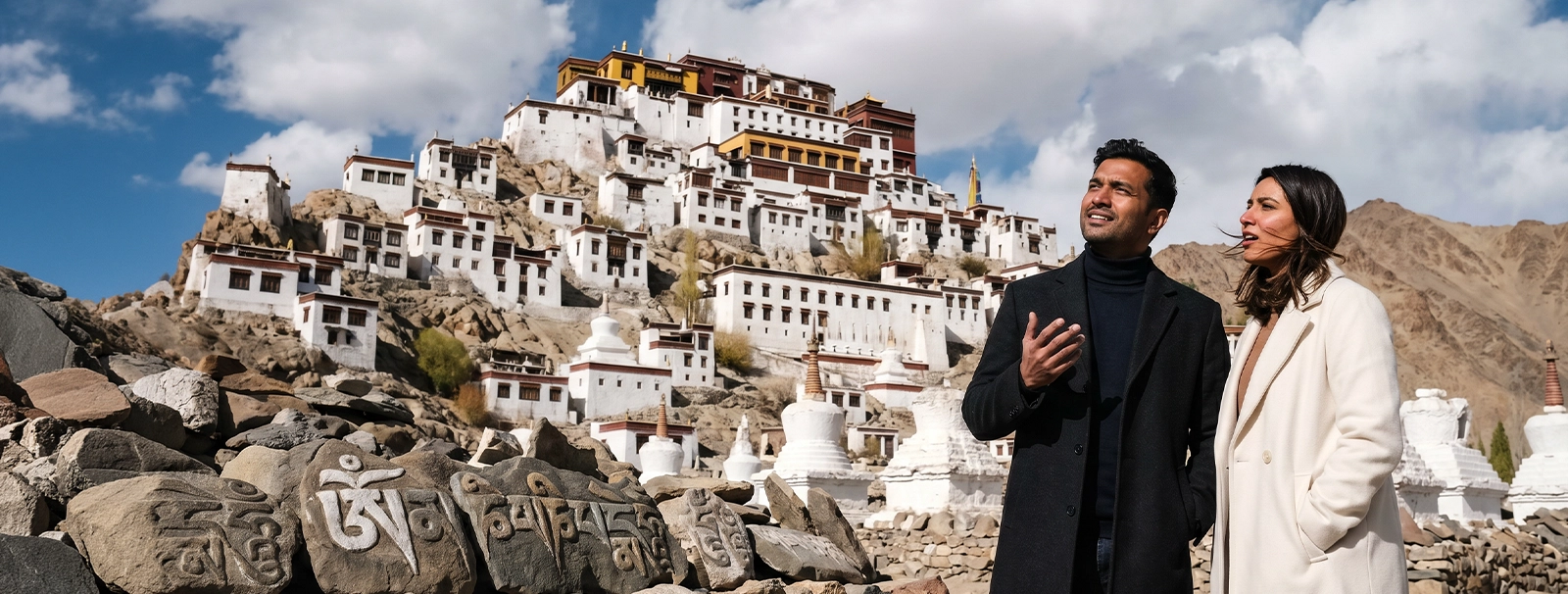
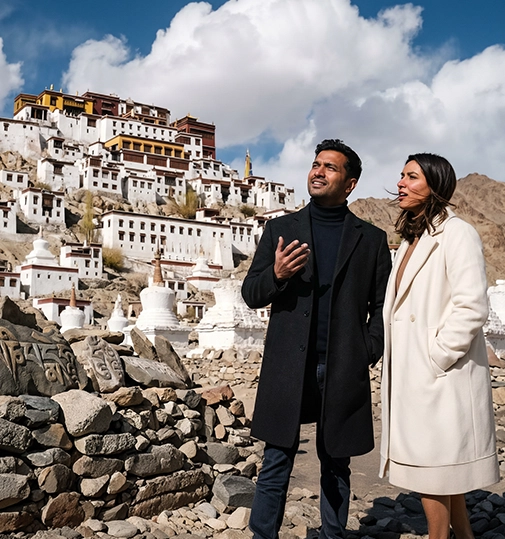
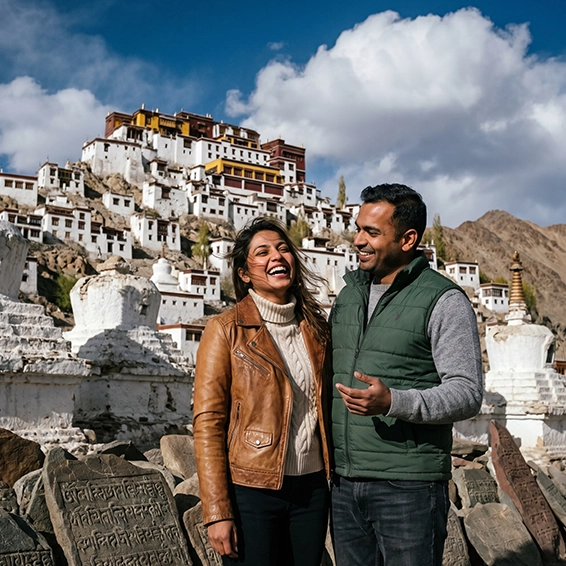
Leh sits at 3,500 metres in the Indus Valley of Ladakh-a trans-Himalayan plateau where the Himalayan range to the south and the Karakoram range to the north create a high-altitude desert of spectacular aridness. The landscape is not green or lush. It is red rock, blue sky, and white glaciers-an extreme reduction of colour that, after 24 hours of acclimatisation, produces a kind of attentiveness that more visually complex landscapes do not. The altitude is the defining physical fact. Leh at 3,500 metres has approximately 65% of the oxygen available at sea level. Most travellers from Mumbai, Bangalore, or Delhi arrive feeling light-headed-a normal response that requires 24-48 hours of rest before any altitude travel. Alike's Leh packages build this acclimatisation period into the structure: the first day and a half is Leh-city-level sightseeing (Leh Palace at 3,576 metres, Shanti Stupa at 3,510 metres, local Leh market) with no high-altitude driving. Nubra Valley (via Khardung La at 5,359 metres) and Pangong Lake (at 4,350 metres) come on Day 3 and after. Pangong Tso is a 134-kilometre glacial lake that straddles the India-China border, lying mostly in Tibet. At 4,350 metres, it is one of the world's largest high-altitude saltwater lakes. The lake is best known for its colour changes: in the morning, it is a deep blue. By midday, it has turned turquoise. By sunset, it can appear almost purple. This is not photography filtration-it is the interaction of different glacial sediment concentrations at different times of day. The private dawn walk arranged by Alike reaches the shoreline before other tourists arrive, with a naturalist guide who can explain the geology. Nubra Valley is accessed via Khardung La (5,359 metres)-one of the highest motorable passes in the world. The Shyok and Nubra rivers converge at the bottom of the valley, which contains the Bactrian camel (double-humped, a direct descendant of the Silk Road camel stock), the village of Diskit with its 300-year-old monastery, the Hunder Sand Dunes (an anomaly in an otherwise rocky desert), and the Siachen Glacier to the north-the world's highest battlefield. The monastery circuit-Hemis (the largest Buddhist monastery in Ladakh, with a significant collection of thangka paintings and the annual Hemis Festival in June), Thiksey (12th century, compared architecturally to the Potala Palace in Lhasa), and Shey (the former summer palace of Ladakhi kings, with a 7.5-metre copper Buddha)-represents three distinct periods of Ladakhi Buddhist architecture. Alike's guided monastery circuit includes a specialist guide in Buddhist art and history.