


Travellers' favourite
things to do in udaipur
Must-have travel
essentials in udaipur
Explore Udaipur

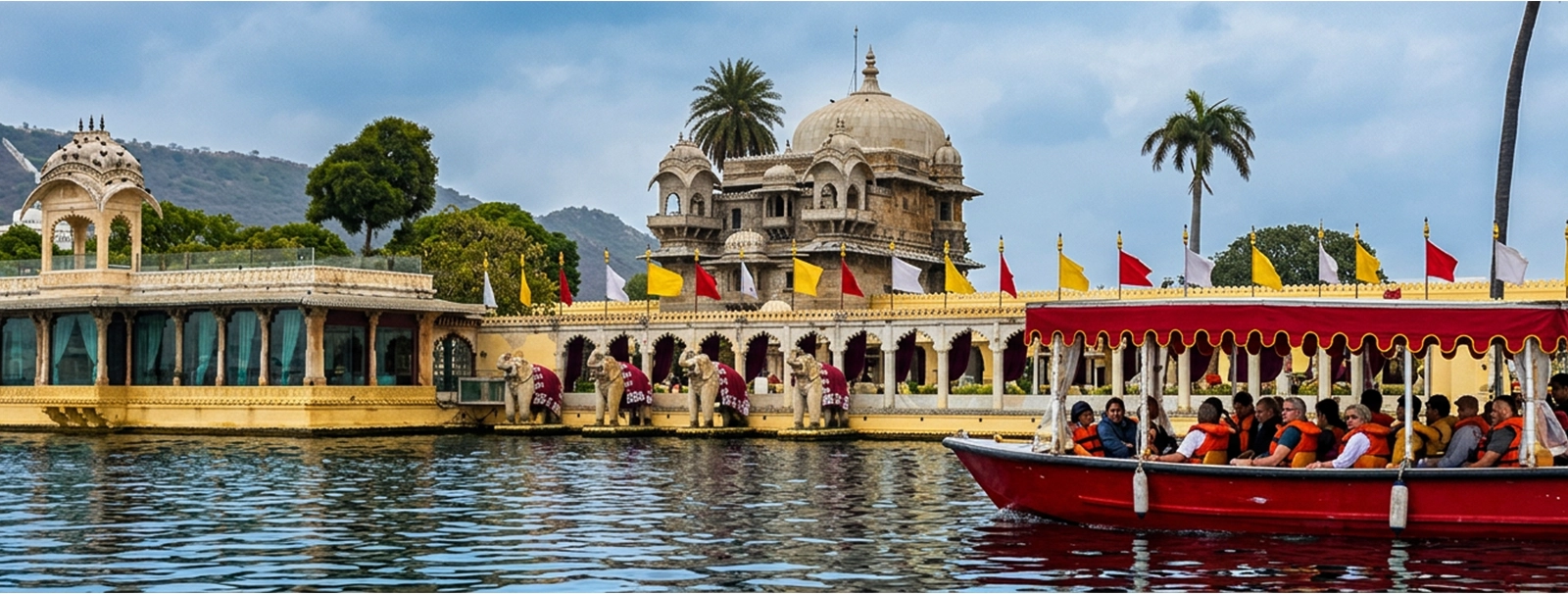
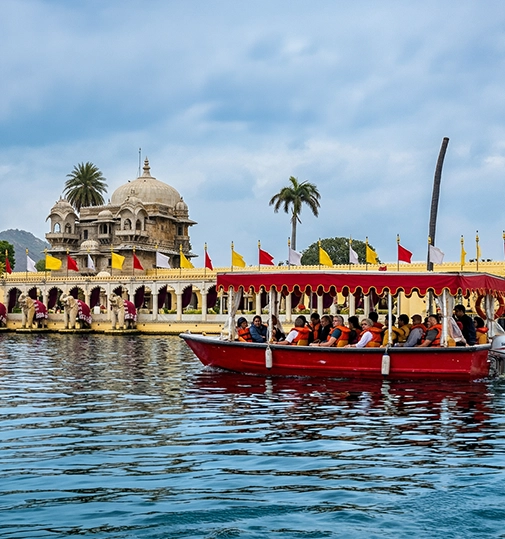
Lake Pichola is the reason Udaipur exists. The artificial lake was created by a local tribesman, Pichhu Banjara, in 1362-over 100 years before the city was formally founded by Maharana Udai Singh II in 1559. The Maharanas of Mewar, Rajasthan's most uncompromising Rajput dynasty (the only major Rajput lineage to never submit to either Mughal or British rule on terms of subjugation), built their most ambitious structures on and around the lake: the City Palace on its eastern bank, Jag Niwas (the floating palace, now the Taj Lake Palace) on its central island, and Jag Mandir on its southern island, begun in 1620 and never fully completed-the 17th-century conception of an island palace garden larger than anything the Mughals had built in the plains. The Taj Lake Palace, which sits on the 1.5-hectare Jag Niwas island with no road access, is reached by a 5-minute boat from the City Palace ghat. The property has been operating as a hotel since 1971. There are 66 rooms; all face the water. The City Palace and Aravalli Hills are visible on three sides. To stay there is to be inside the lake rather than alongside it. The Oberoi Udaivilas, on the western bank of Lake Pichola, is built in the Mewar palace tradition with domes, courtyards, and hand-painted murals. It has been rated one of the finest hotels in the world by multiple hospitality lists. The two properties represent opposite interpretations of luxury in Udaipur-Taj Lake Palace is the historic island palace, intimate and completely lake-surrounded; Oberoi Udaivilas is the modern interpretation of Mewar grandeur, larger, more amenity-rich, and with a pool overlooking the City Palace skyline. City Palace, Udaipur's primary heritage complex, is the largest palace complex in Rajasthan-built cumulatively by 22 Maharanas from 1559 to 1955. The complexity of the architecture-each Maharana added his own wing in the style of his era-is what makes it different from the Amber Fort in Jaipur or the Mehrangarh in Jodhpur. The Crystal Gallery inside the palace holds the largest personal crystal collection in the world, ordered from F&C Osler of London by Maharana Sajjan Singh in 1877-crystal beds, crystal sofas, and crystal items that were never used because the Maharana died before they arrived. Kumbhalgarh, 85 kilometres from Udaipur, is a 15th-century fort on a Aravalli ridge with a 36-kilometre perimeter wall-the longest wall in the world after the Great Wall of China. The fort is the birthplace of Maharana Pratap, Mewar's most celebrated ruler. The Kumbhalgarh Wildlife Sanctuary surrounding the fort holds wolves, leopards, sloth bears, and chinkaras. Alike's Kumbhalgarh day trip combines the fort's heritage walk with a wildlife drive.