
Balinese Rituals & Festivals You Can Attend for Free
Bali isn't just beaches and sunsets – it's a living, breathing culture. The island is steeped in traditions that are celebrated through festivals, temple rituals and vibrant ceremonies. The best part? Many of these experiences cost nothing at all. If you're curious about Balinese culture without splurging on expensive tours, you're in for a treat.
For Indian travellers, these free festivals are a cost-friendly way to experience Bali's culture. For GCC and UAE visitors, Balinese rituals offer a unique contrast to urban lifestyles. European travellers often combine beach holidays with these community-led ceremonies.
This guide will walk you through authentic festivals, temple events, and rituals that are completely free to attend. Think of it as your cultural passport to the island.
Why Bali's rituals matter?
Religion and community life in Bali revolve around ceremonies. These aren't tourist shows; they're deeply spiritual events that locals open to visitors with genuine warmth. When you attend, you're not just watching – you're witnessing living traditions that have been passed down for centuries. And the best part? Respectful visitors are welcome at no cost.
Top free festivals and ceremonies you can experience
Galungan and Kuningan: The soul of Balinese culture
Galungan is one of the most important festivals in Bali. It celebrates the victory of good (dharma) over evil (adharma). You'll see beautifully decorated bamboo poles (penjor) lining the streets and families dressed in traditional attire heading to temples. Kuningan, which comes ten days later, marks the end of this period. Both festivals take place every 210 days according to the Balinese calendar, so check the dates before you go.
Cost: Free to observe from public areas or temple gates.
Traveller tip: Villages look their most festive during these days. Head to Ubud or Gianyar for authentic celebrations without crowds of commercialised shows.
Odalan: Temple anniversaries worth attending
Every Balinese temple has its own birthday celebration called Odalan. These happen on the temple's anniversary according to the Balinese calendar, so there's one happening somewhere almost every day. Odalan ceremonies involve music, offerings, dance and traditional costumes.
Where to go: If you're near Ubud, Pura Taman Saraswati often has open rituals. In Seminyak, Petitenget Temple is a great spot to see Odalan ceremonies.
Cost: Free if you observe respectfully. Donations are appreciated but not mandatory.
Nyepi: The Balinese Day of Silence
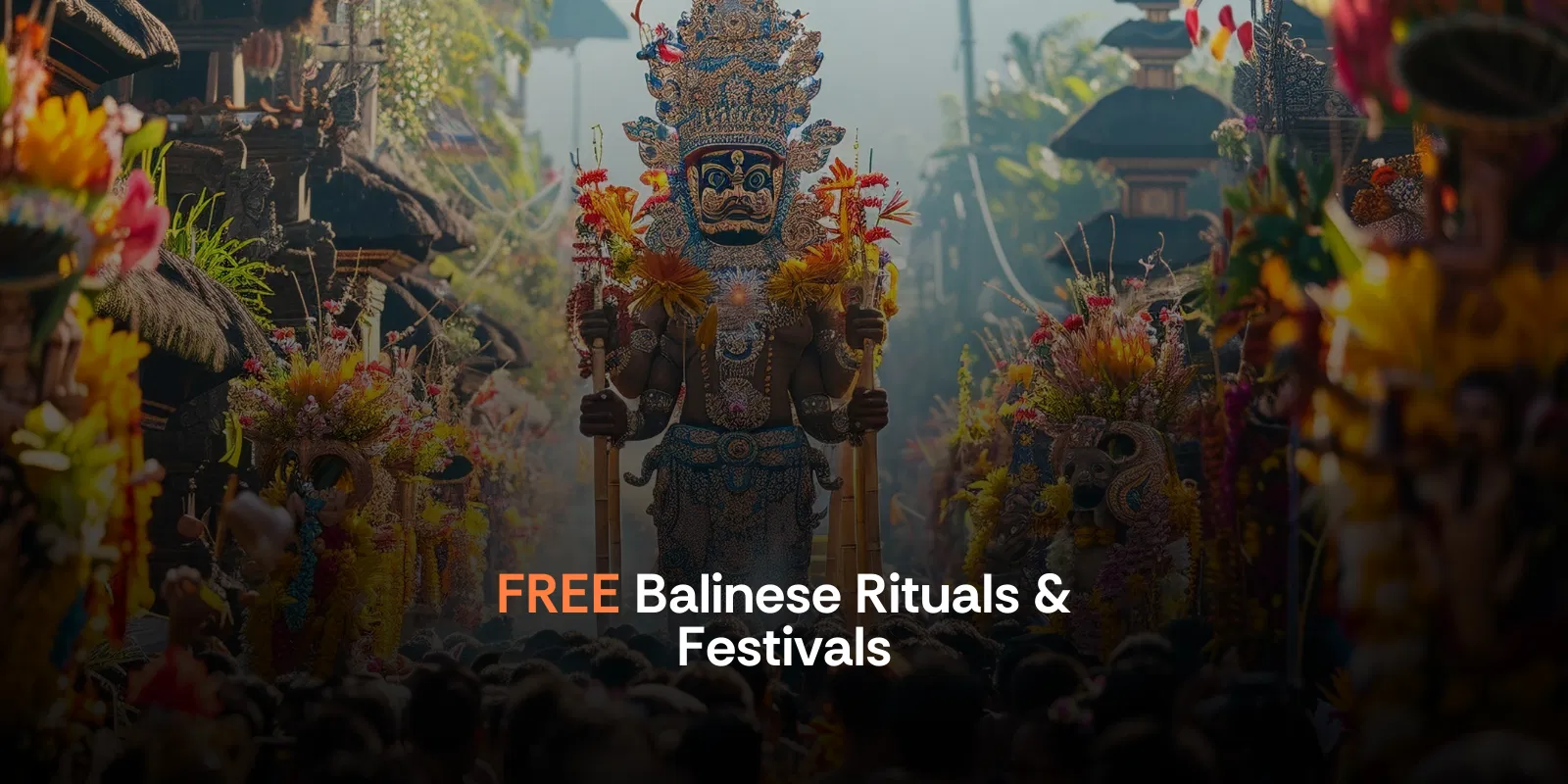
Nyepi is unlike anything you've ever seen. The entire island shuts down for a day – no flights, no vehicles, no noise. It's a day of silence and self-reflection. The evening before, though, is full of energy with Ogoh-Ogoh parades – giant demon statues paraded through the streets to symbolise cleansing negative energy. Watching these parades is completely free.
When: Usually in March (check the exact date each year).
Tip: The parade night is lively in Denpasar and Ubud. Get there early for a good spot.
Free temple events worth attending
Temples are the core of Balinese life, hosting regular ceremonies that visitors can quietly observe. Some highlights include:
- Pura Besakih temple ceremonies – Known as the 'mother temple', it hosts grand rituals throughout the year, often lasting several days.
- Uluwatu evening dances – Though famous for ticketed Kecak performances, smaller dance rituals occur at no charge during religious events.
- Village temple odalan – These are anniversary celebrations of temples, complete with music, offerings, and traditional attire. Entry is usually free if you're dressed appropriately.
Read about Balinese culture before planning your 2025 itinerary.
Costs to expect (even at free events)
While entry is free, you can contribute in small ways. Sarong rental, temple donations, or transport to rural villages may cost a few pounds. As a guide:
- Sarong hire: IDR 20,000-30,000 (£1-1.50 / ₹85-130)
- Temple donation: IDR 10,000-50,000 (£0.50-2.50 / ₹40-210)
- Transport to events: IDR 100,000-200,000 (£5-10 / ₹420-840)
Best spots to witness authentic culture
- Ubud: Known for traditional ceremonies and temple festivals.
- Gianyar: Smaller villages often allow visitors to watch Odalan events without any tourist crowds.
- East Bali (Karangasem): Great for major temple anniversaries like at Besakih Temple.
When to plan your visit
Bali's ceremonial calendar is based on a 210-day cycle, so events don't always fall on the same date each year. To catch major festivals, visiting between March–July or November–January gives you a good chance. Local banjar boards and temple notice signs often display upcoming ceremonies.
Etiquette when attending free rituals
Even though many festivals and ceremonies have no entry fee, respect is key. Here's what experienced travellers know:
- Dress modestly – A sarong and sash are essential for temple visits.
- Do not stand higher than the priest – It is seen as disrespectful.
- Photography is allowed in some places – but always ask first.
- Avoid blocking pathways or ritual areas – Stand back and observe quietly.
If you are a solo woman planning a Bali holiday in 2025, read this - Travel Hacks Every Solo Woman Traveller Needs in Bali.
Why are these experiences free?
Balinese culture values community over commerce. Most rituals are for the gods and ancestors, not for tourists. If you're respectful, locals often welcome you warmly without asking for money. That said, carrying a small donation (10,000–20,000 IDR) for the temple upkeep is a nice gesture.
Insider tips from experienced travellers
- Carry a sarong in your day bag: It saves time and shows respect.
- Ask your homestay owner: Locals know when and where ceremonies happen and can guide you.
- Avoid big-ticket performances: Many paid shows are staged for tourists. The real beauty lies in spontaneous, local temple dances.
- Travel with time flexibility: Festivals don't always stick to exact schedules – go with the flow.
Experiencing Balinese rituals doesn't require a big budget. In fact, the most authentic cultural encounters on the island often come free. All you need is curiosity, respect and a bit of local knowledge. So next time you're in Bali, don't just stick to the beaches – step into a temple courtyard, listen to the gamelan music, and soak in the spirit of this incredible culture.
FAQs
Are all Balinese festivals open to tourists?
Do I need special clothing to attend a Balinese ritual?
When is the best time to experience Bali's cultural events?
Can I take photographs during free temple events?
Are there any costs involved, even if the event is free?
Is it suitable for families and children?